Make this page easier to read
Your choices are saved on this device.
Inside the shuttered basement or school alcove, photography relied on physical timing, trays of developer, and the quiet patience of analog printmaking.
"You held your breath, peering into the shallow tray, waiting for a landscape to materialize from the blank white paper."
The heavy wooden door clicked shut, sealing out every trace of ordinary daylight and leaving behind an absolute, disorienting blackness. After a moment for your eyes to adjust, the amber-red bulb overhead flickered on, washing the small room in a deep, crimson hue. The air immediately registered the sharp, chemical tang of acetic acid and developing agents—a scent that defined hours spent hunched over wet tabletops. Around the room sat three shallow plastic trays arranged in strict order: developer, stop bath, and fixer. Above the first tray stood the enlarger, its metallic column and adjustable head waiting to cast light downward through a developed negative.
Making a print started with sliding a black-and-white negative into the carrier of the enlarger and focusing the projected image onto a baseboard. You laid a blank sheet of resin-coated or fiber-based photographic paper flat on the board, securing its borders with a metal easel. By pressing a mechanical timer button, you turned on the enlarger lamp for a measured count of seconds, exposing the light-sensitive silver halides on the paper to the projected shadows and highlights. Every adjustment of the aperture ring or the lens focus dictated how sharp or dense that hidden exposure would become.
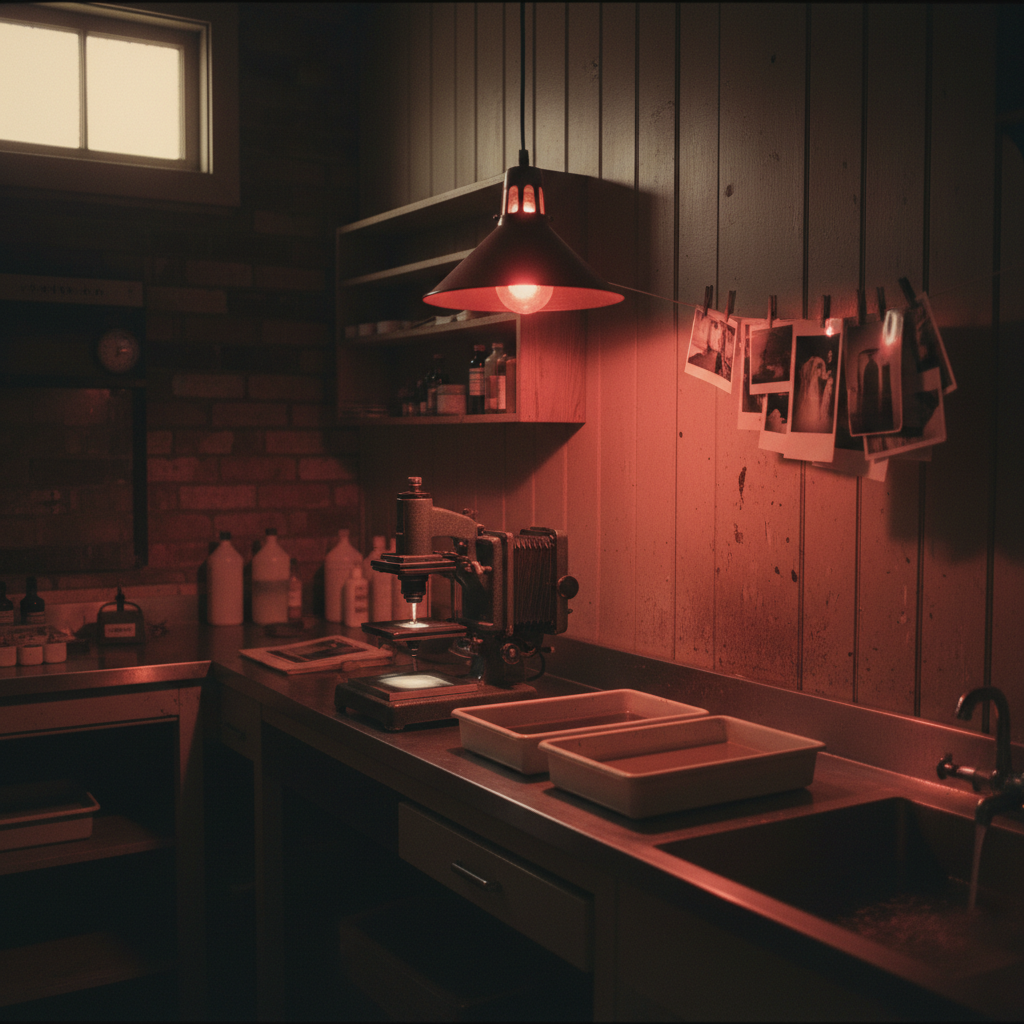
Once the timer clicked off, you picked up the blank sheet by the corner using plastic tongs and slipped it beneath the surface of the developer liquid. At first, the paper remained obstinately white, resting quietly in the sloshing fluid under the red lamp. Then, faint gray outlines began to push through the emulsion, tracing the contours of a horizon line or the sharp angle of a building. Within a minute, the full picture darkened into crisp contrast as the chemical reaction completed its work on the exposed silver particles.
Moving the tongs swiftly, you transferred the dripping paper into the middle tray containing the acidic stop bath, which halted the developer instantly. Thirty seconds later, the print went into the fixer bath to clear away any remaining unexposed silver and make the image permanent under normal room light. Only then could you flick on the overhead fluorescent lights to inspect your work, squinting at wet edges curled against the tray walls. If the highlights looked blown out or the shadows blocked up, you washed the paper, adjusted the timer dial by two seconds, and cut a fresh strip to try again.
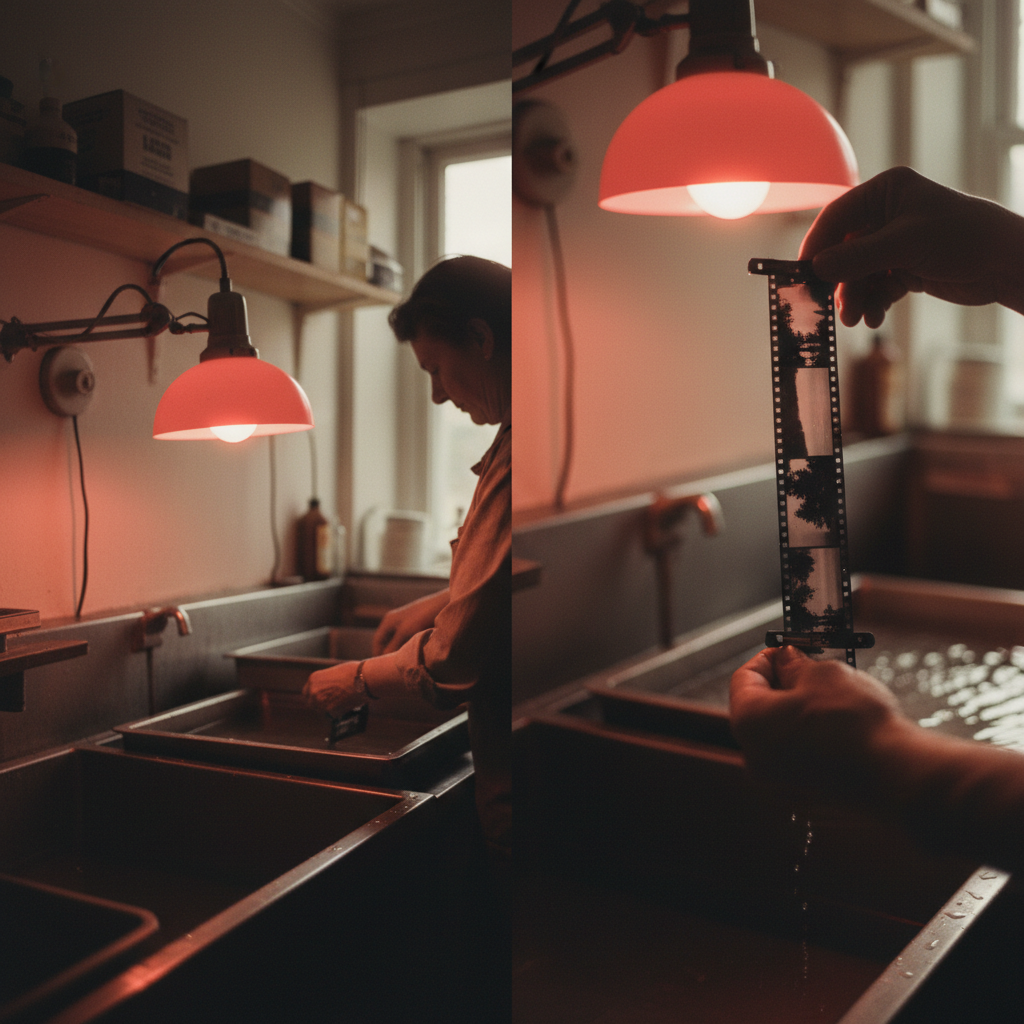
Advanced sessions involved dodging and burning, which meant using your hands or small cardboard cutouts beneath the lens to block or add light during exposure. You could hold back a bright sky with your fingertips or darken a muddy foreground by letting the beam hit it a fraction longer. This physical manipulation turned printing into an interpretive craft where no two copies came out identical. The rhythm of the work depended on precise movements, steady hands, and constant attention to water temperatures and chemical freshness.
As commercial laboratories shifted toward automated processing and consumer cameras gained digital sensors, these dedicated spaces steadily emptied out. Enlarger lamps burned out and were left unreplaced, chemical bottles collected dust on basement shelves, and school darkrooms were converted into storage closets or computer labs. The deliberate ritual of timing exposures by the ticking of a clock gave way to the instantaneous LCD screen and the inkjet printer. Yet the routine of the safelight era remains tied to an era when pictures required physical space, patience, and a pair of wet hands to exist.
Does this bring back memories?
Share this story with someone who would remember.
Relive the Memory
Find Vintage Treasures on eBay
Searching for: vintage darkroom red safelight
Shop the Memory on eBayAs an eBay Partner, WistMem may earn from qualifying purchases.