Make this page easier to read
Your choices are saved on this device.
Before wall-to-wall television coverage took over, the portable radio anchored countless summer days with the rhythmic sound of leather hitting willow.
"The radio dial glowed in the dim corner, bringing the hum of the test match straight into the living room."
The transistor radio lived on the kitchen windowsill or sat propped beside a deckchair, its plastic casing warm from the afternoon sun. Adjusting the small metal aerial required a delicate touch to clear the static and lock onto the BBC Home Service or Test Match Special frequency. That familiar crackle of atmospheric interference was the opening chord of every June, July, and August across the decades.
Commentators like John Arlott and Brian Johnston did not merely report the score; they constructed an entire landscape out of descriptive cadence and pauses. Their voices carried a distinct cadence that matched the slow, deliberate pace of a five-day Test match. Listeners at home or in gardens followed every boundary, maiden over, and bowling change through verbal imagery alone.
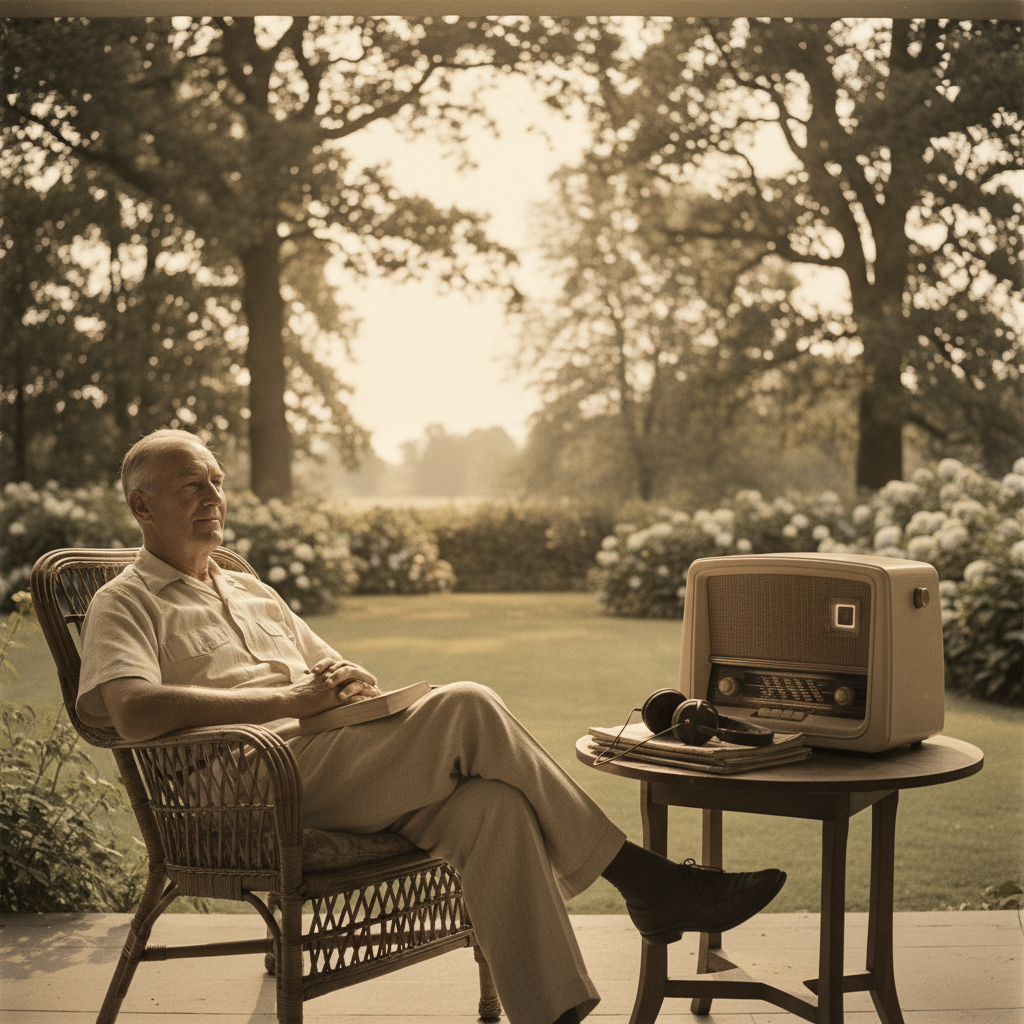
Families structured their afternoons around the tea interval and the fluctuating fortunes of the batting order. A glass of squash sat on a wooden armrest while neighborhood lawns were mowed in fits and starts between dramatic spells of fast bowling. The radio turned solitary chores into shared experiences, keeping factory workers, shopkeepers, and children home from school tethered to the same unfolding narrative.
Technical limitations often added a distinct charm to the broadcast. Distant thunderstorms over distant counties caused sudden bursts of white noise, forcing listeners to readjust the tuner or angle the telescopic antenna toward a better signal. Transistor batteries required careful conservation, leading to whispered warnings not to leave the set running in an empty room.
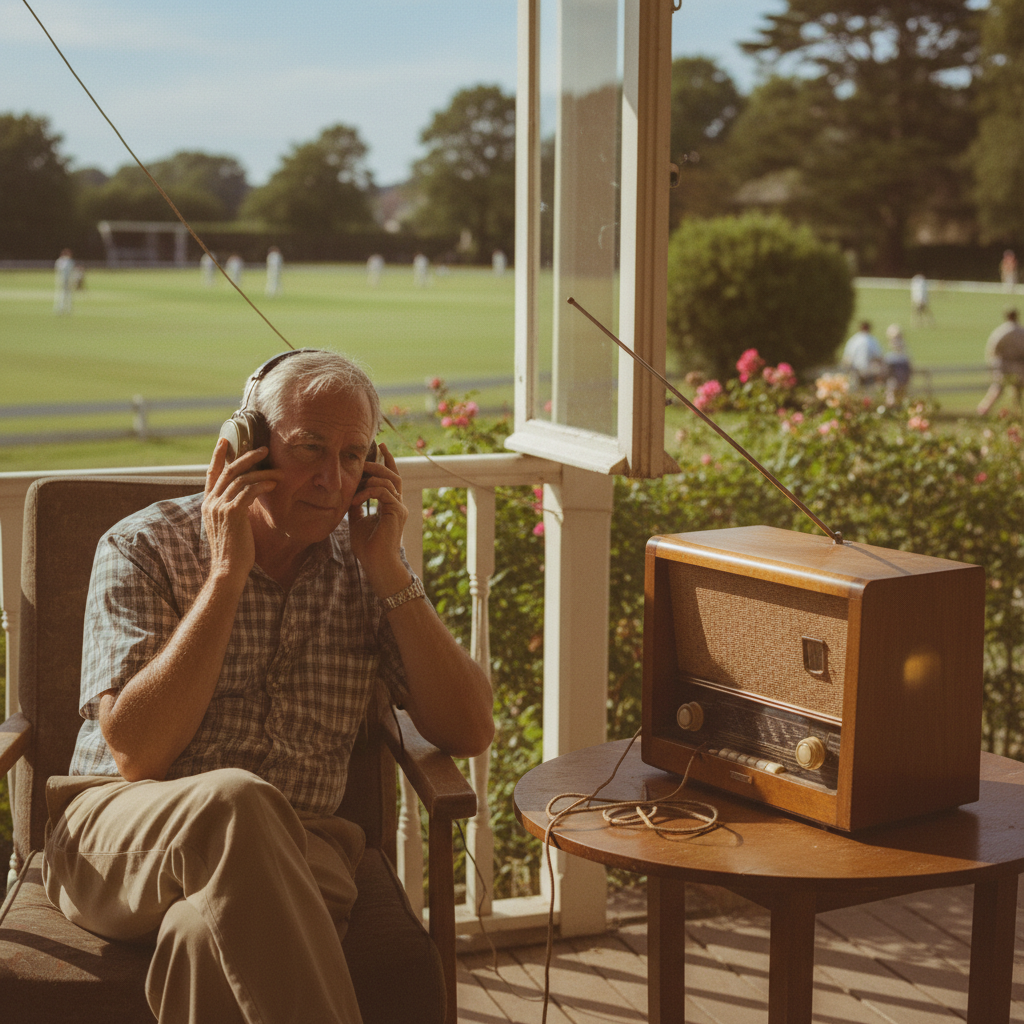
As television cameras gradually crept closer to the boundary rope and satellite dishes appeared on suburban chimneys, the reliance on audio-only description faded. Broadcasters shifted toward visual formats, and the portable radio was replaced by multi-channel screens and digital updates. The communal hum of commentary echoing across back gardens slowly gave way to closed windows and private headphones.
Today, the ambient soundtrack of summer has largely changed its character, leaving the wooden-cased or plastic-backed radios as relics of an era defined by patience. Yet the specific cadence of those vintage broadcasts still triggers an immediate mental return to long afternoons when time seemed measured entirely by overs and innings.
Does this bring back memories?
Share this story with someone who would remember.
Relive the Memory
Find Vintage Treasures on eBay
Searching for: vintage cricket radio summer long
Shop the Memory on eBayAs an eBay Partner, WistMem may earn from qualifying purchases.