Make this page easier to read
Your choices are saved on this device.
For generations, the arrival of the county fair meant months of saved pennies, dazzling midway lights, and a slow, breathless ascent above the fairgrounds.
"The carny pulled the heavy iron safety bar down with a sharp clang, and the car lurched upward into the cooling dusk."
A folded paper ticket, damp with sweat from a back pocket, was the only currency that mattered once the midway gates swung open in late August. Families arrived in station wagons and pickup trucks, parking in stubbled cornfields that had been mown flat for the week. The air filled instantly with a heavy mixture of diesel exhaust from the generator trucks, frying oil, and the dry, sweet scent of crushed hay drifting from the livestock pavilion.
Preparation for the fair began months in advance for many households. Children polished 4-H steers until their coats shone like mahogany, while bakers measured out flour for blue-ribbon pies housed under glass domes in the agricultural hall. Every town had its own rhythm, but the fairgrounds operated on a universal schedule of flashing lights, calliope recordings played at top volume, and the steady, hypnotic thrum of electric generators powering the entire temporary city.
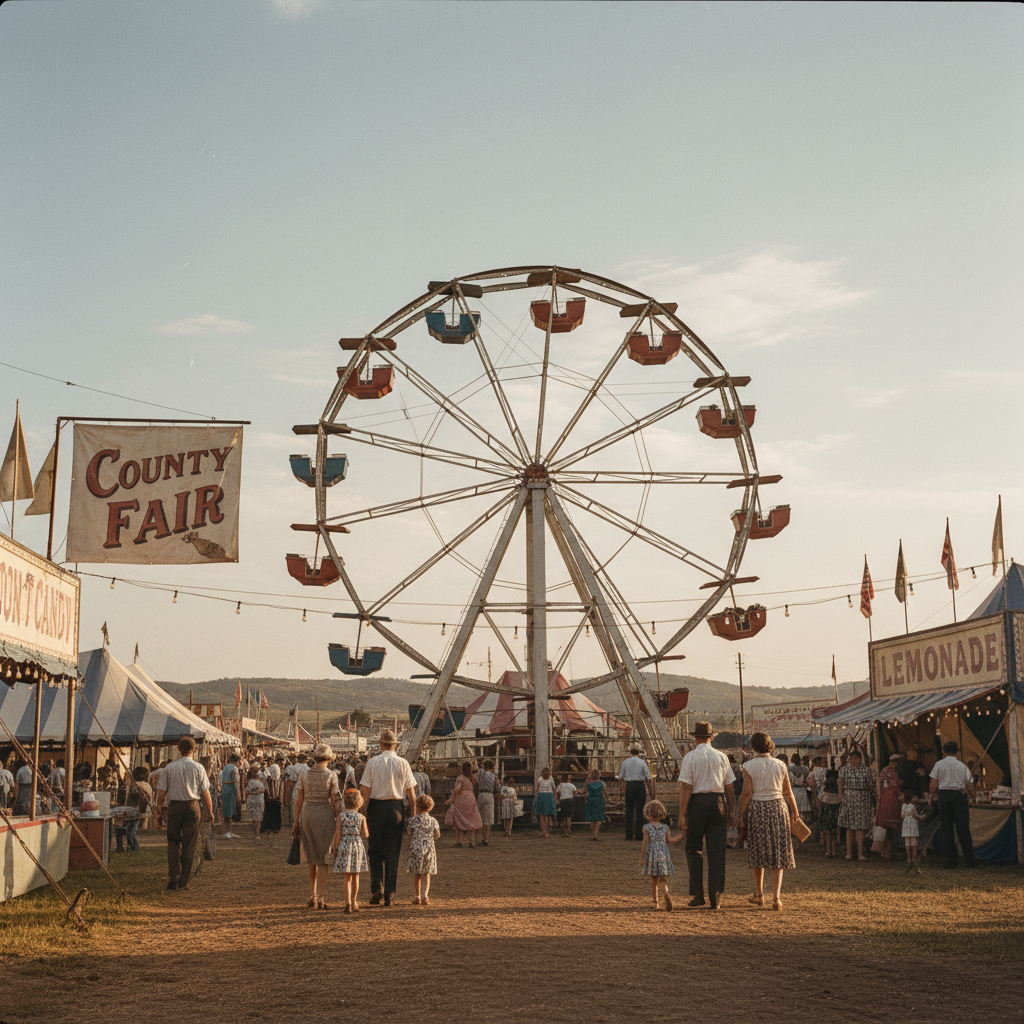
Navigating the crowds required patience and a sharp eye on loose change. The midway was lined with wooden booths offering stuffed pandas with asymmetrical eyes and plastic water guns that inevitably leaked. Carnies in faded denim shirts coaxed teenagers to test their strength at the high striker or throw baseballs at weighted milk bottles, their raspy patter blending into the general roar of the crowd. Next to them stood the food stands, where hot dogs rolled on chrome cylinders and thick slabs of onions sizzled on black flattops.
The undeniable anchor of the grounds was the Ferris wheel, an intricate lattice of bolted steel that rose higher than any building in the county. Waiting in line meant watching the wheel rotate in increments, punctuated by the metallic clank of the brake engaging each time a new car reached the loading platform. When your turn arrived, the operator swung the gate shut and dropped the latch, a simple piece of hardware that felt entirely inadequate as the platform rose into open space.
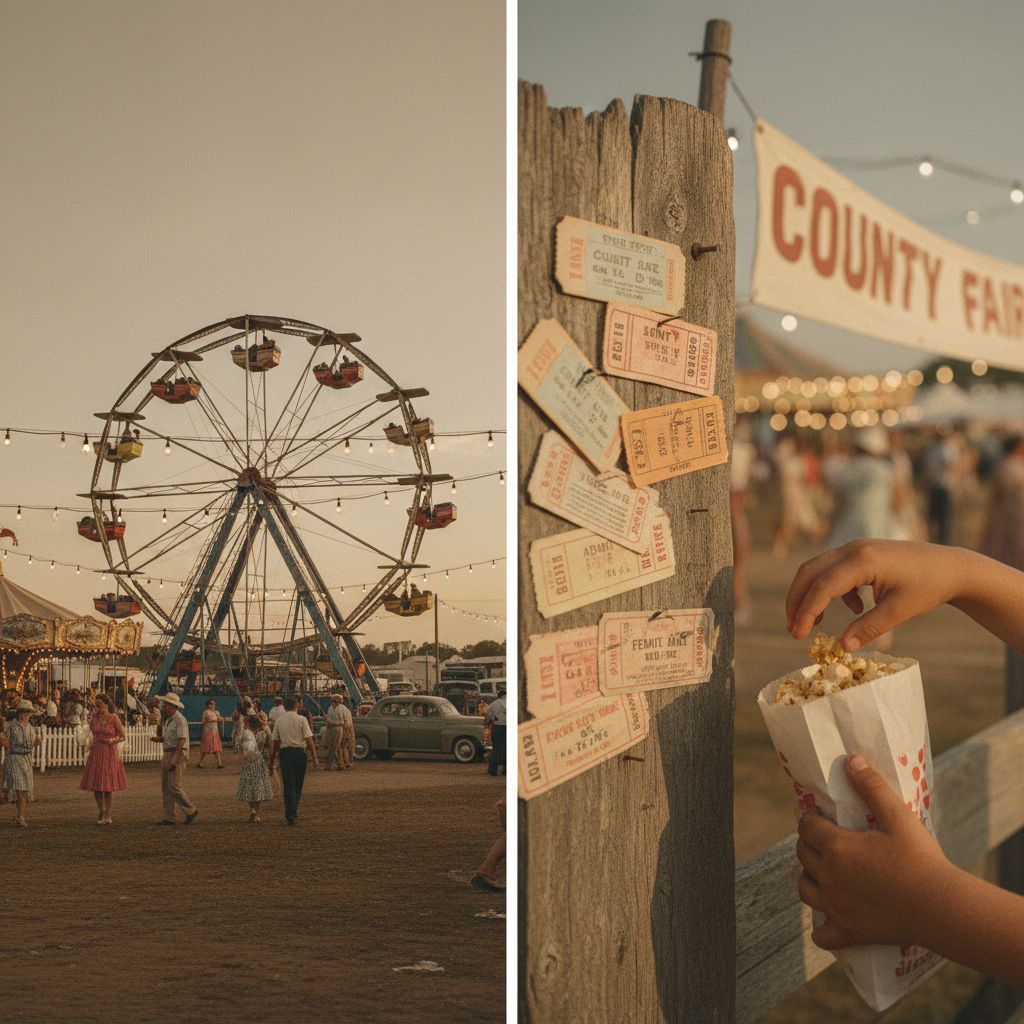
Reaching the apex offered a sudden, quiet perspective that the noisy midway below denied. The entire county layout spread outward in a grid of darkening fields, distant farmhouse lights, and the dense ribbon of the state highway. The wind picked up at that height, carrying the faint sound of barkers and laughter away into the darkening sky before the wheel advanced and brought the car back down to earth.
Eventually, the crowds thinned as the grandstand shows ended and families walked back toward the parking lots with sticky fingers and oversized prizes tucked under their arms. Over time, many of these independent fairgrounds gave way to suburban developments, corporate sponsorships, or county budget cuts, replacing permanent wooden exhibition halls with empty asphalt lots. Yet the specific choreography of the midway—the smell of sawdust, the glare of incandescent bulbs, and the slow turn of the wheel—remains a distinct marker of mid-century summers.
Does this bring back memories?
Share this story with someone who would remember.
Relive the Memory
Find Vintage Treasures on eBay
Searching for: vintage county fair ferris wheel
Shop the Memory on eBayAs an eBay Partner, WistMem may earn from qualifying purchases.