Make this page easier to read
Your choices are saved on this device.
Before drive-thrus and convenience stores, the neighborhood drugstore soda fountain was the social anchor of Main Street.
"The soda jerk moved with a practiced rhythm, scooping ice cream from frosty tubs with a metallic scrape."
The bell above the screen door gave a high, bright jingle every time someone pushed their way inside out of the summer heat. Stepping past the rack of greeting cards and the glass cases of patent medicines, you headed straight for the back where the marble counter waited. It was a long, narrow stretch of polished stone flanked by heavy metal stools with round red vinyl seats that spun freely if you gave them a quick push with your hand.
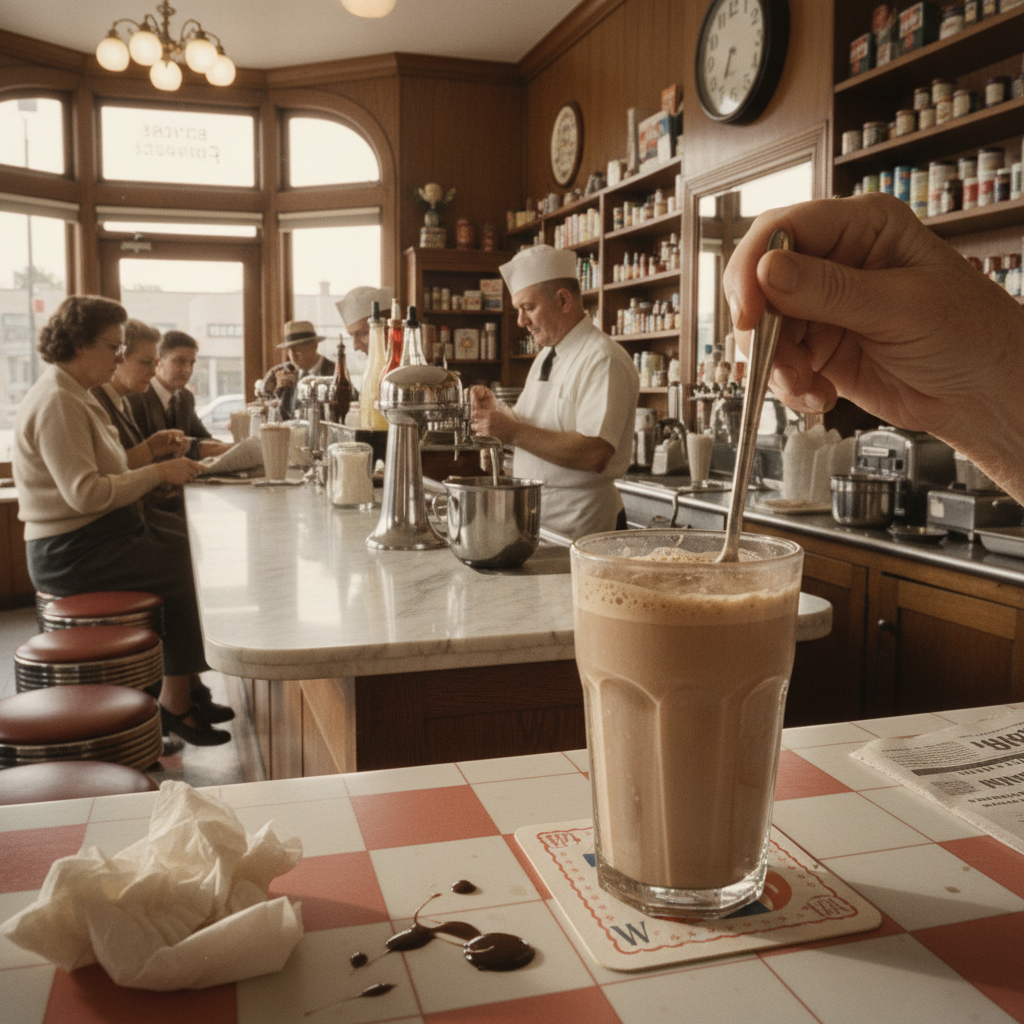
Behind the counter stood the soda jerk, usually a high school student in a crisp white paper hat and a matching apron. The station was lined with heavy glass syrup pumps, a rack of stainless steel mixing cups, and the prized chrome draft arm for carbonated water. When you ordered a malted or a cherry phosphate, you watched the mechanics of the trade in action. The jerk pumped a dark stream of syrup into the bottom of a thick glass, added a splash of soda water, and stirred it briskly with a long-handled spoon before adding the ice cream.
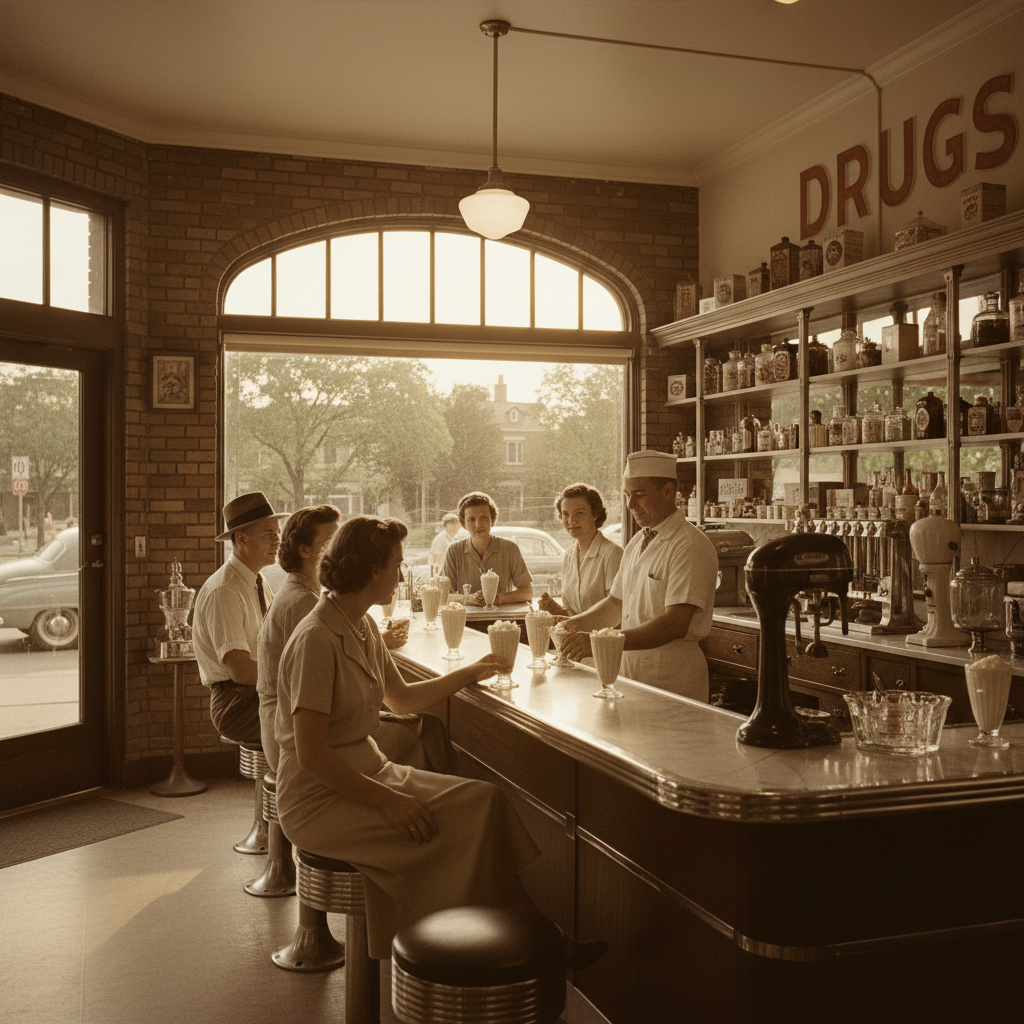
The equipment made a distinct soundtrack for the afternoon. There was the sharp clink of heavy glassware, the heavy thud of the ice cream scoop digging into frozen tubs, and the steady hiss of the carbonator under the counter. A proper malted came served in the metal mixing container alongside the glass itself, letting you pour out every last drop of the thick, frothy liquid while the metal cup still held a frosty rim.
Beyond the drinks, the counter functioned as the informal town hall of the neighborhood. High schoolers occupied the corner stools after the afternoon bell rang, sharing a single basket of fries or whispering over a banana split loaded with whipped cream and chopped nuts. Further down, older residents sat with the morning newspaper spread flat against the counter, nursing a cup of black coffee and discussing the local school board elections or the weather.
The transition away from these community hubs happened gradually through the late 1960s and 1970s as independent pharmacies remodeled to maximize retail floor space. Independent drugstores could not compete with the rising popularity of suburban strip malls, chain supermarkets, and drive-in fast-food restaurants that prioritized speed over lingering. Counter stools were unbolted to make room for extended cosmetic aisles and greeting card displays, and the old stainless steel fountain equipment was sold off or hauled away for scrap.
Today, finding an original operational soda fountain requires visiting a specialized museum or a restored historical district that preserves mid-century Americana. While commercial pharmacy chains and convenience stores handle prescriptions and quick snacks with maximum efficiency, they lack the physical gathering space that once anchored the neighborhood block.
The neighborhood drugstores of the mid-twentieth century proved that a commercial business could double as a community living room. Though those counters are largely gone, the sensory details of crushed ice, sweet syrup, and spinning red stools remain a clear marker of how daily life used to connect neighbors.
Does this bring back memories?
Share this story with someone who would remember.
Relive the Memory
Find Vintage Treasures on eBay
Searching for: vintage antique corner drugstore soda
Shop the Memory on eBayAs an eBay Partner, WistMem may earn from qualifying purchases.