Make this page easier to read
Your choices are saved on this device.
Long before modern non-stick coatings arrived, a heavy, black cast iron skillet sat permanently on the back burner, ready to fry chicken or bake cornbread.
"That dark, seasoned surface carried the culinary history of an entire family."
The skillet arrived on the kitchen counter with a dull, heavy thud that rattled the porcelain. Measuring ten or twelve inches across, it was forged from coarse pig iron, bearing the faint ghost of a maker's mark or a raised heat ring on the bottom. It required two hands to lift safely from the lower cabinet, and its weight was a guarantee of thermal mass. Once heated over a gas flame or an electric coil, it held that temperature with stubborn consistency, radiating steady heat long after the burner clicked off.
Caring for the pan was an unwritten household law passed down without fanfare. After supper, while the gravy was still warm, the skillet received no harsh dish soap or scouring pads. Instead, it was rinsed with hot water and scrubbed with a stiff-bristled brush, then placed back over a low flame to dry completely so rust could not take hold. While still warm, a few drops of lard or vegetable oil were rubbed into the pores with a folded rag until the entire surface gleamed with a dull, black sheen.
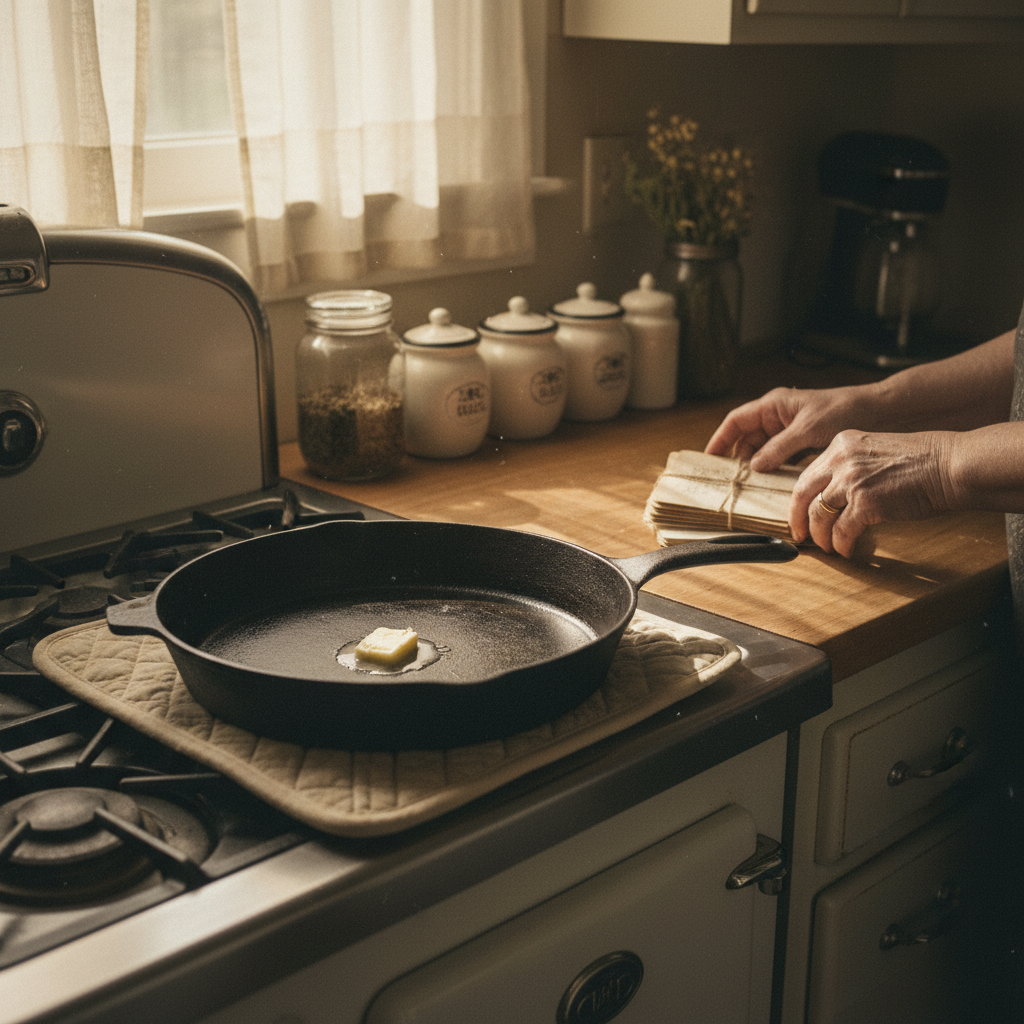
Through the 1950s and 1960s, this pan produced the bulk of everyday family meals. Sunday mornings meant thick bacon strips rendering their fat before pancakes were poured directly into the drippings, turning the edges lacy and crisp. On weeknights, it handled pork chops, fried potatoes swimming in onions, and skillet cornbread baked until the crust turned dark brown and fragrant. The handle grew hot during cooking, requiring a folded flour sack or a knitted wool cozy kept close at hand for safe gripping.
By the late 1970s and 1980s, the rhythm of the American kitchen shifted toward convenience. Shiny aluminum cookware and lightweight pans coated in slippery polytetrafluoroethylene began appearing on department store shelves, promising effortless cleanup without the ritual of oiling and heating. Many households tucked their heavy iron pans away into dark lower cupboards, replacing them with modern utensils that required far less attention.
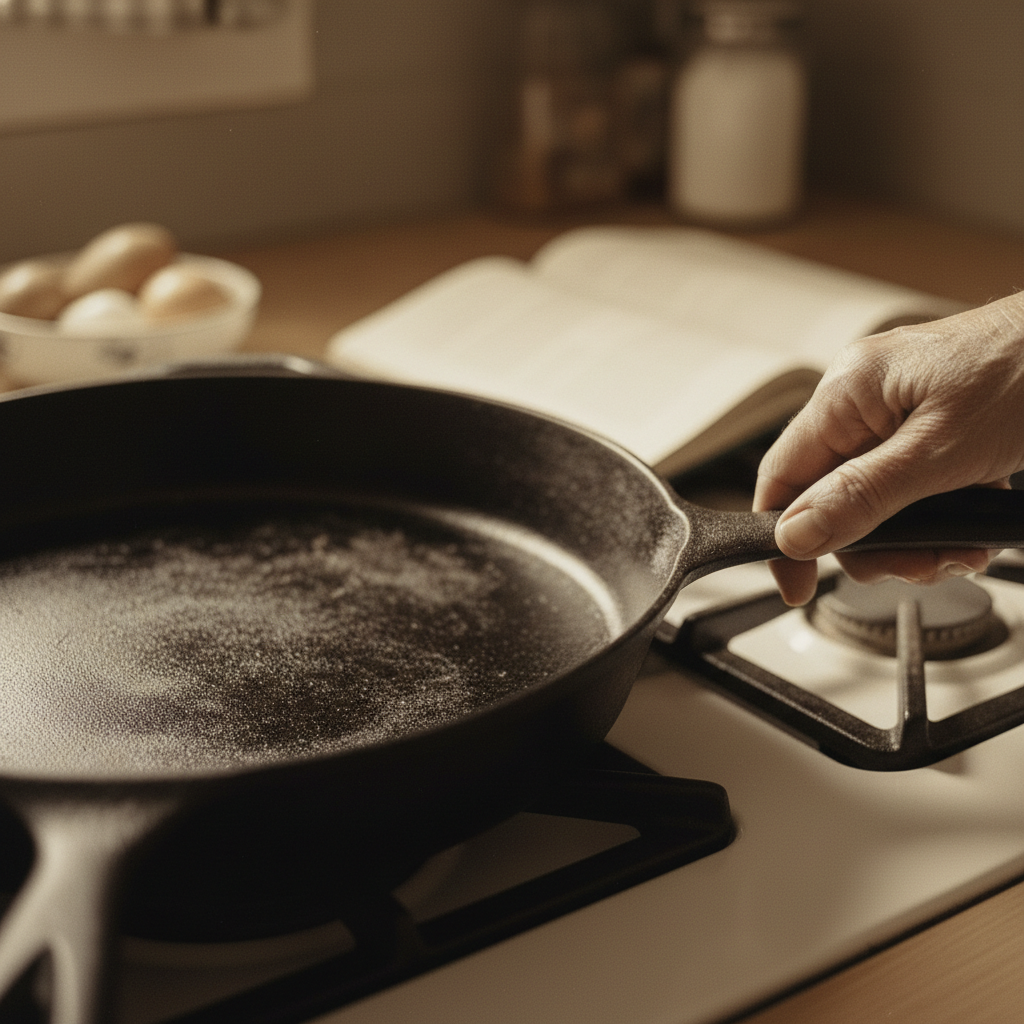
Yet the cast iron skillet never truly wore out. While lighter pans warped under high heat or scratched away their coatings within a few years, the old iron remained structurally unchanged, impervious to metal spatulas and high oven temperatures. Its seasoning only deepened over decades of use, building a natural non-stick quality that outlasted the trends designed to replace it.
Today, pulling that heavy skillet from storage feels like an encounter with a reliable tool from another era. The surface remains smooth from generations of stirring and scraping, holding fast to the quiet utility that kept kitchens running for decades.
Does this bring back memories?
Share this story with someone who would remember.
Relive the Memory
Find Vintage Treasures on eBay
Searching for: vintage kitchen cast iron skillet
Shop the Memory on eBayAs an eBay Partner, WistMem may earn from qualifying purchases.