Make this page easier to read
Your choices are saved on this device.
When August heat peaked, the kitchen stove became the center of a communal preservation ritual that stocked pantries for winter.
"Every surface was covered with glistening jars waiting for their turn in the hot water bath."
The heavy glass jars sat soaking in the deep ceramic basin, waiting for the sterilizing scald of boiling water. Outside, the late summer garden was bursting past its limits with overgrown cucumbers, heavy beefsteak tomatoes, and freestone peaches that yielded instantly to the thumb. Countertops disappeared beneath mounds of produce, alongside yellowed recipe cards splattered with decades of sugar and brine. This annual August labor transformed the kitchen into a steamy haven where windows fogged up regardless of the outdoor temperature.
A heavy aluminum pressure canner or a deep galvanized water-bath tub sat centered on the burners, hissing and chuffing for hours at a time. Mothers, grandmothers, and visiting neighbors tied flour-sack aprons around their waists and moved with the practiced efficiency of an assembly line. Calloused hands peeled skins away from blanched tomatoes with swift, practiced flicks of a paring knife. The sharp, biting aroma of pickling spice, vinegar, and dill cut sharply through the heavy sweetness of bubbling fruit preserves.
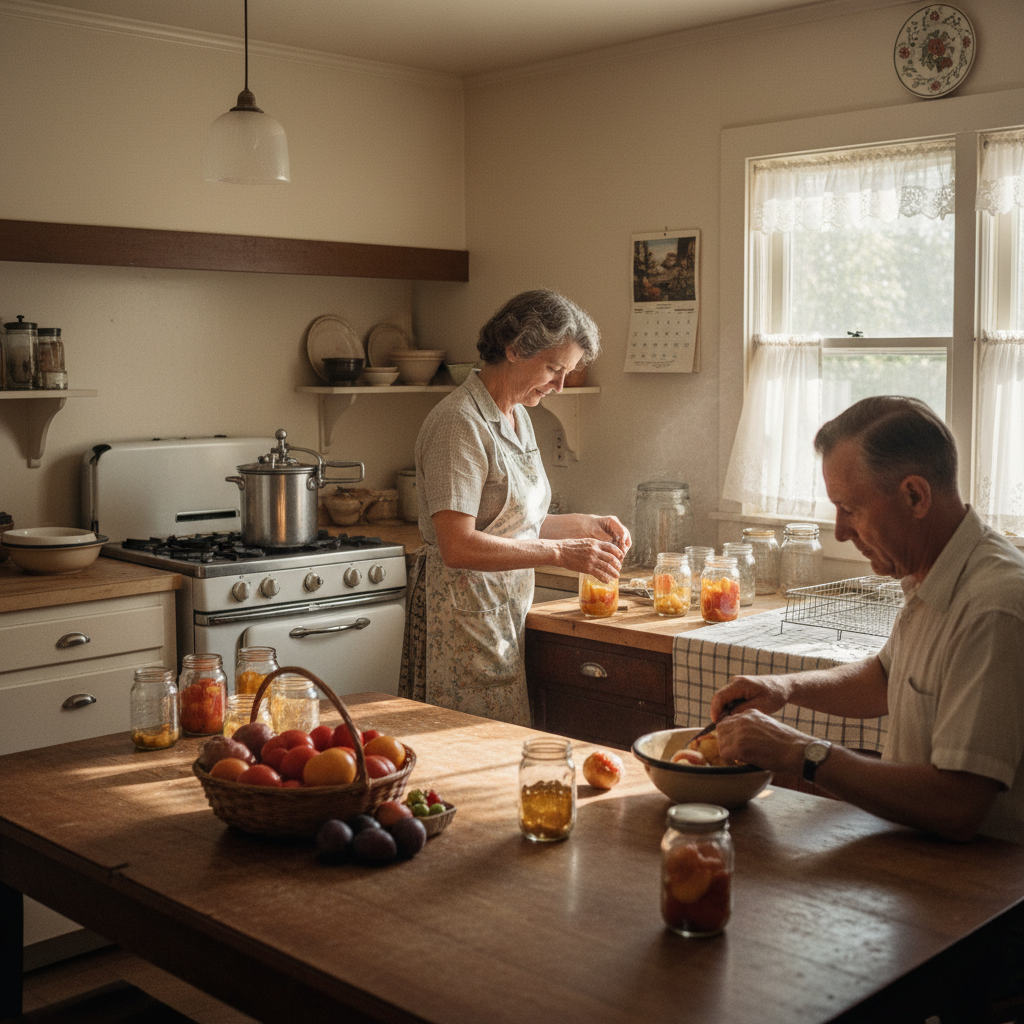
Children sat at the oilcloth-covered table with bowls in their laps, tasked with snapping green beans or rubbing the fuzzy skins off small pickling cucumbers. Every small hand had a defined role, whether it was wiping down jar rims with a damp cloth or handing flat metal lids to the adults. Hearing the metal tongs click against the glass was the cue that another batch was ready for extraction. Placing each hot jar onto a folded burlap sack on the wooden table was a delicate operation requiring absolute focus.
The cooling process had its own distinct soundtrack as the metal lids contracted and produced a sharp, metallic ping. That sudden pop signaled a successful vacuum seal and guaranteed that the contents would remain preserved well into January. Rows of amber peach halves, ruby strawberry jam, and emerald dill spears lined the pantry shelves like stained glass. Those glowing colors represented hours of physical endurance and an insurance policy against the lean months ahead.
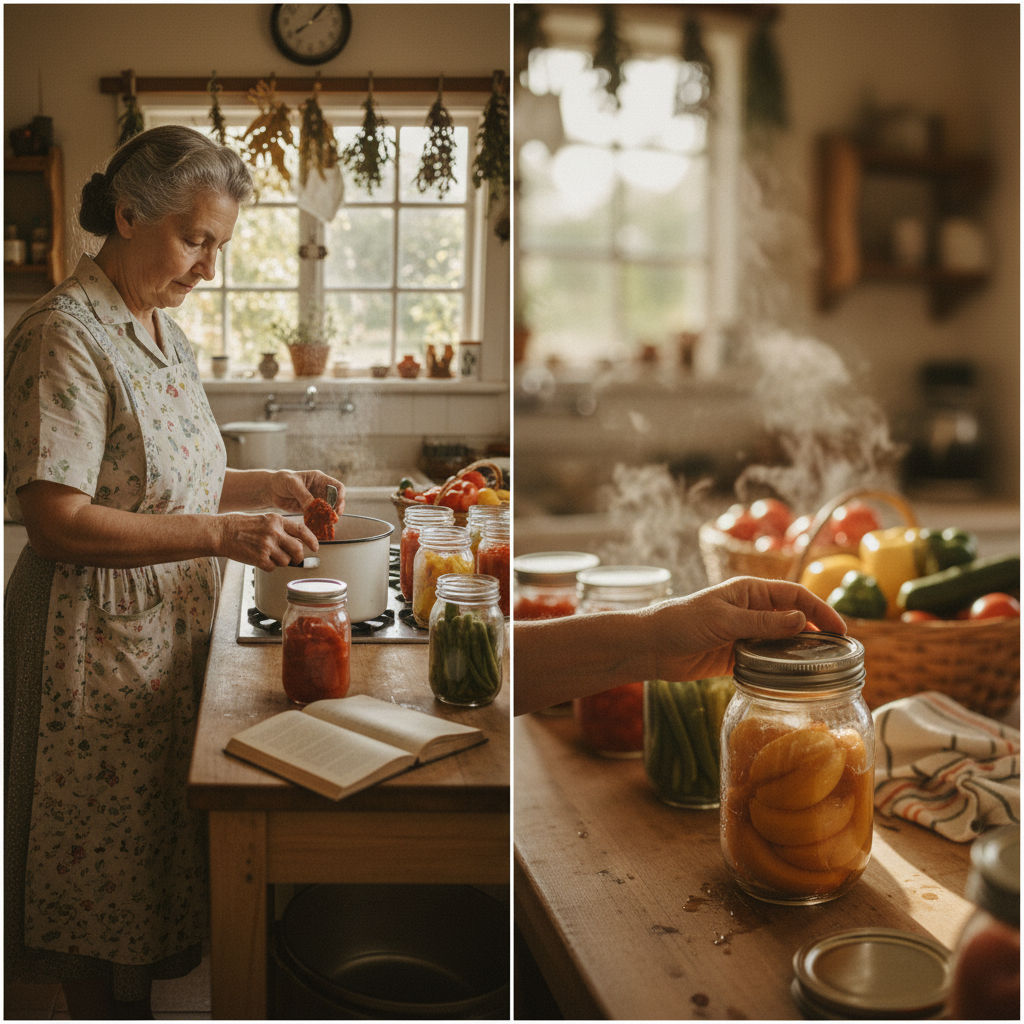
As supermarkets expanded their refrigerated aisles in the decades that followed, the absolute necessity of home canning began to recede. Fresh vegetables arrived from distant states in January, and commercial jars lined store shelves at low prices. The long hours spent hovering over a boiling stove grew less appealing when convenience foods offered an immediate alternative. Younger generations moved away or took up office jobs, leaving the heavy wire-bail jars and copper-bottomed boilers to gather dust in cellars and barns.
Today, those packed shelves exist mostly as artifacts of a domestic economy that valued self-sufficiency over speed. The physical strain of the work remains vivid to anyone who spent August afternoons sweating over a wood or gas range. While few households maintain the practice on that scale anymore, the mechanics of sealing summer into glass left an indelible mark on how families viewed provision and the turn of the seasons.
Does this bring back memories?
Share this story with someone who would remember.
Relive the Memory
Find Vintage Treasures on eBay
Searching for: vintage kitchen canning season late
Shop the Memory on eBayAs an eBay Partner, WistMem may earn from qualifying purchases.