Make this page easier to read
Your choices are saved on this device.
Stepping into the local bowling alley on league night meant navigating a sensory landscape of polished wood, rolling spheres, and fierce neighborhood loyalty.
"The score machine, a clunky marvel of lights and numbers, kept our triumphs and failures in stark, glowing display."
The counterman at the shoe rental station handed over a pair of scuffed white-and-red leather oxfords, already warm from the feet of the previous shift. You slid your feet into them, adjusting the laces over stiff tongues, and walked toward Lane 14 where your team was already unboxing their gear. The air carried a thick, unmistakable mixture of floor wax, stale cigarette smoke, and the sharp chlorine tang coming from the snack bar's deep fryers.
League night was governed by an unspoken code of conduct and precise mechanics. Before every frame, bowlers wiped their chosen house ball or custom-drilled reactive resin sphere with a specialized towel, removing the heavy coat of lane oil that protected the maple and pine boards. Stepping up to the foul line required absolute concentration, syncing the four-step approach with the pendulum swing of the arm before releasing the ball smoothly onto the oiled surface.
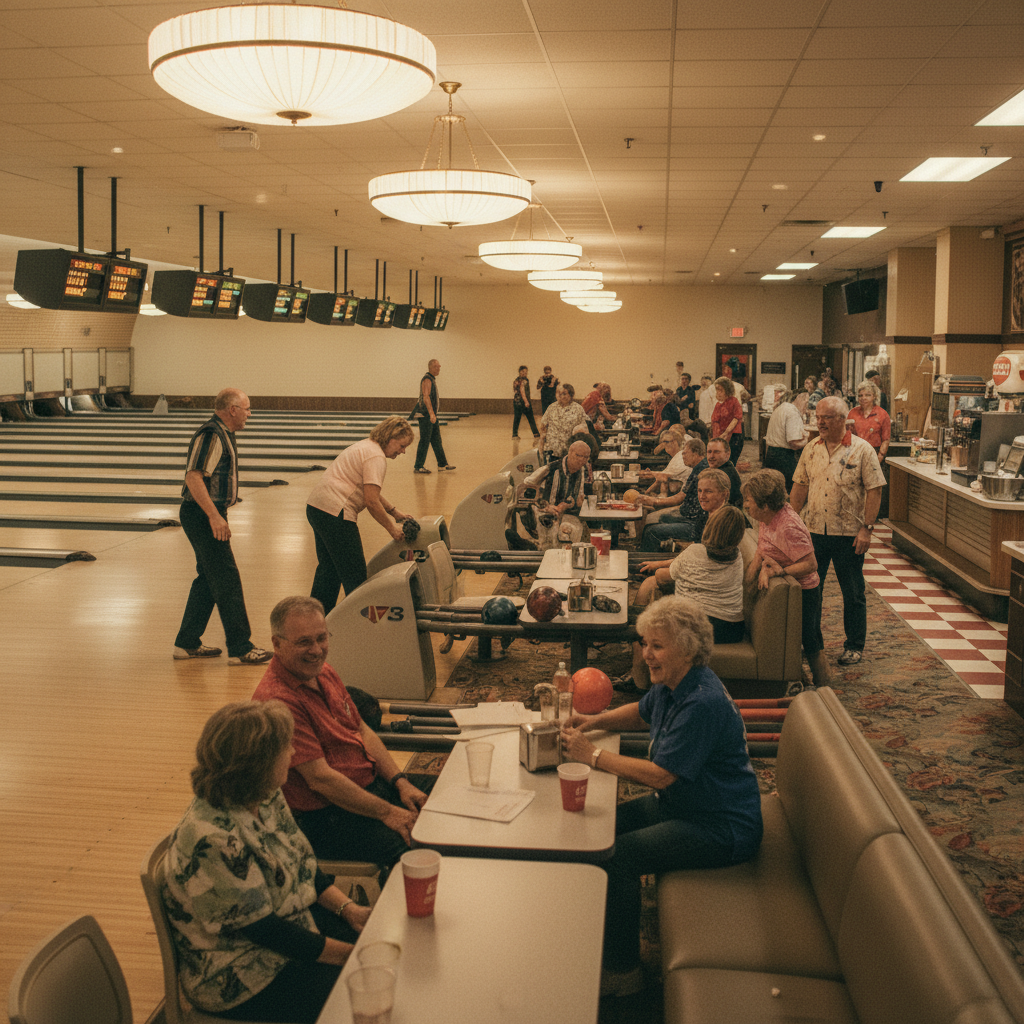
Overhead, the mechanical pinsetters hummed constantly, a complex system of cables, belts, and rotating sweeper bars that cleared dead wood and reset ten new pins in seconds. When a strike hit, the heavy steel deck dropped with a definitive thud, sorting the remaining timber while a mechanical arm swept the gutters clean. Scoring was handled manually on overhead paper projectored sheets or via early amber-screen monitors where a misplaced decimal point could cause a scoring dispute heard across three adjacent lanes.
Between turns, players retreated to molded plastic orange chairs set around cramped laminate tables littered with paper baskets of crinkle-cut fries and plastic cups of draft beer. Conversations moved seamlessly from neighborhood gossip and shifts at the local manufacturing plant to tips on thumb-hole inserts and wrist supports. Children darted between the seating rows, dodging score sheets and collecting empty soda bottles for the deposit refund.
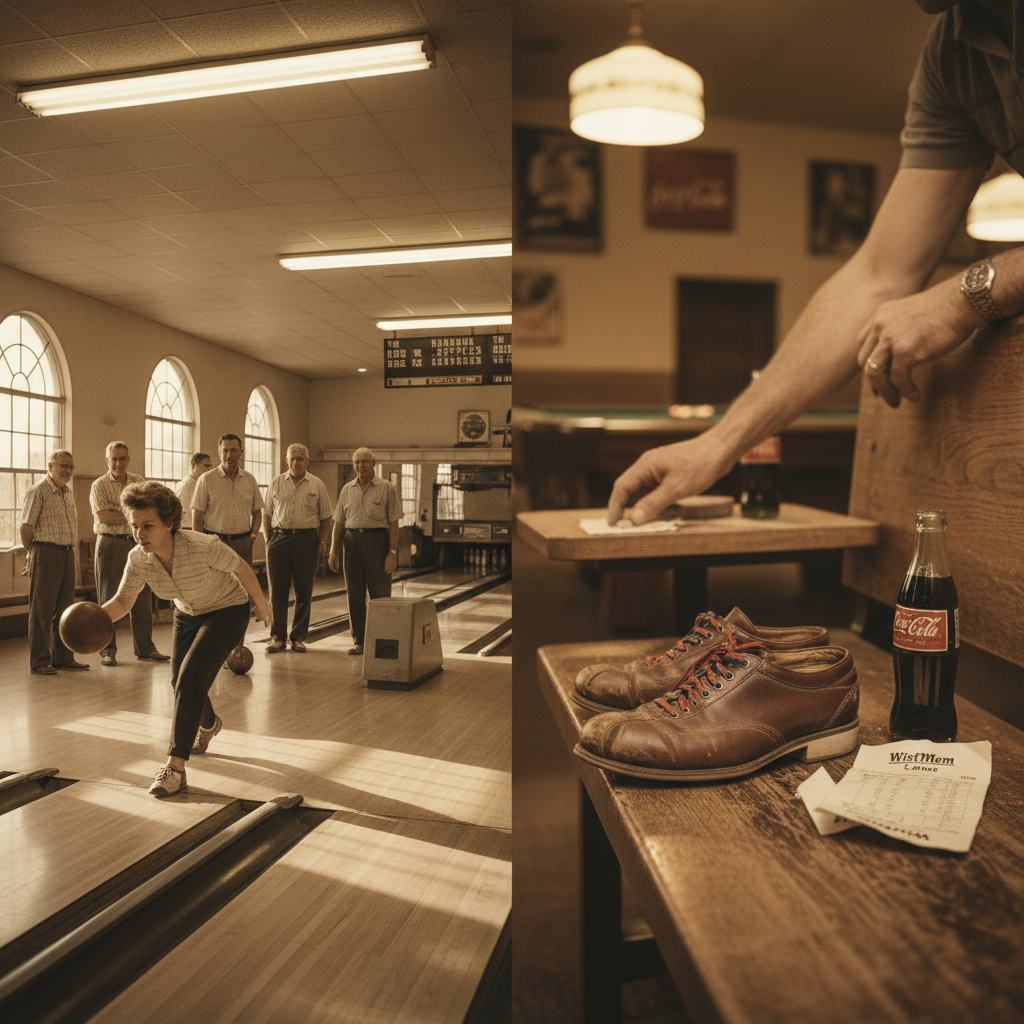
These bowling centers served as anchors for working-class social life across towns and cities for decades, operating seven nights a week with leagues for seniors, factory workers, and weekend amateurs. They required massive real estate footprints, heavy municipal water and electricity consumption, and constant mechanical maintenance by veteran pin-chasers who knew how to fix a jammed sweeper gear with a single wrench.
As manufacturing plants closed and suburban development shifted recreation patterns toward home entertainment centers and multiplexes, operating margins for independent bowling alleys grew thin. Many of the sprawling facilities were eventually demolished or retrofitted into retail strip malls, taking the clatter of the pins and the weekly league rosters down with them. What remained was the distinct memory of wet floor mats, heavy house balls, and the steady rhythm of a Tuesday night competition.
Does this bring back memories?
Share this story with someone who would remember.
Relive the Memory
Find Vintage Treasures on eBay
Searching for: vintage retro bowling alley league
Shop the Memory on eBayAs an eBay Partner, WistMem may earn from qualifying purchases.