Make this page easier to read
Your choices are saved on this device.
Long before plastic organizers filled our drawers, a sturdy metal biscuit tin served as the universal repository for loose buttons, tangled thread, and stray hardware.
"You would open it hoping for a sweet treat, only to find last quarter's gas bill."
Prying off the tight lid of a decorative metal tin always required a firm thumb and a gentle wiggle to break the factory seal. Once the tin of Jacob's or Huntley & Palmers was emptied of its original shortbread or digestives, it immediately transitioned to a second career in household management. These sturdy containers were never discarded because wastefulness was a sin in mid-century homes. Instead, they were wiped clean and handed a new assignment in the kitchen, sewing room, or garage.
In my grandmother’s house, a Huntley & Palmers box with faded Victorian portraits on the lid held a sprawling assortment of sewing supplies. Inside rested wooden spools of black and white thread, tangled embroidery floss, safety pins, and a heavy pair of fabric scissors that had been sharpened on a whetstone too many times to count. Another smaller tin contained a collection of spare buttons saved from worn-out shirts, sorted roughly by color rather than size.
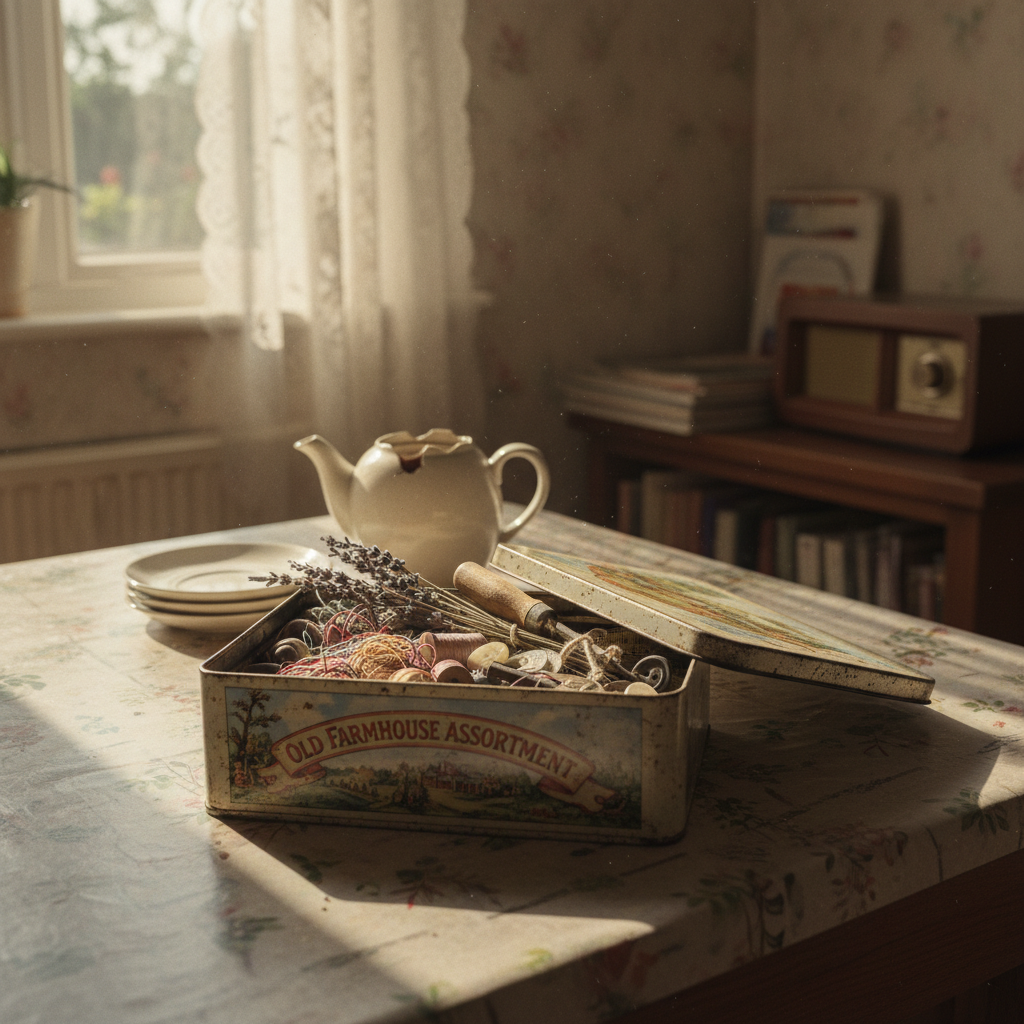
Out in the shed or tucked beneath the stairs, similar tins took on a heavier duty. They were filled with an assortment of rusted flathead screws, galvanized nails, copper washers, and stray picture hooks. The metal walls of the container could take the clatter of heavy iron components without denting, and the snug lid kept out dampness and dust. You could stack them two or three high on a wooden shelf, their contents identified only by a hasty label written in faded marker across the top.
Children quickly learned the minor heartbreak of the pantry search. The kitchen shelves were usually lined with identical metal containers, and lifting the lid in hopes of finding a leftover biscuit almost always resulted in disappointment. Instead of butter cookies, you encountered folded utility bills, grocery receipts, or stamps awaiting an envelope. Yet the routine persisted out of sheer habit, with every generation repeating the exact same hopeful check.
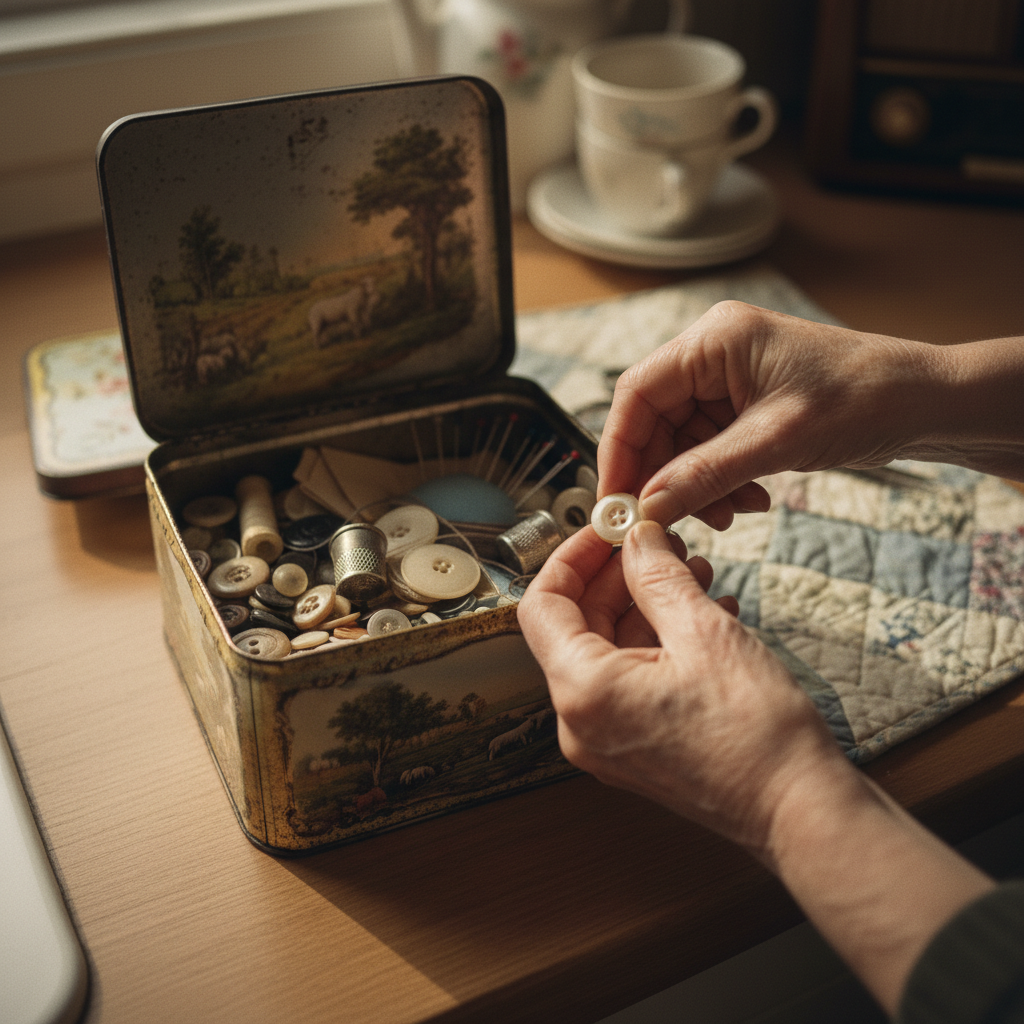
This system of reuse relied entirely on the durability of the packaging itself. Lithographed metal tins were built to withstand years of kitchen humidity and repeated handling. When manufacturers eventually shifted to flimsy cardboard boxes and thin plastic trays, the era of the multi-purpose container quietly came to an end. Modern packaging is designed for disposal rather than reinvention, leaving little room for the makeshift archives of the past.
Today, our storage solutions are specialized and uniform, purchased empty from department store aisles to match specific decor aesthetics. We have plastic drawer dividers and modular bins that keep everything cleanly partitioned. Yet those old metal tins represent an era when domestic life was patched together with what was already at hand, turning everyday waste into practical longevity.
Does this bring back memories?
Share this story with someone who would remember.
Relive the Memory
Find Vintage Treasures on eBay
Searching for: vintage antique biscuit tin held everything
Shop the Memory on eBayAs an eBay Partner, WistMem may earn from qualifying purchases.