Make this page easier to read
Your choices are saved on this device.
The click of keys came from typebars, ribbon, paper, and a moving carriage. A Smithsonian description of Maya Angelou's machine shows how the parts made a typed page.
A typewriter announced that someone was working. Keys made a rhythm from the next room, slowed when the writer searched for a word, and stopped for paper to be changed. A family might associate that sound with school essays, letters, accounts, or a person's job. The sound came from a physical sequence that made each mark on the page.
What happened when a key was pressed?
The Smithsonian's visual description of Maya Angelou's typewriter identifies metal typebars, an inked ribbon, a platen holding the sheet, and a carriage that moves as the characters are struck. That particular machine used a motor to propel its typebars, so its action should not be made identical to every manual typewriter. The shared principle is that a raised character meets ribbon and paper to leave an impression.
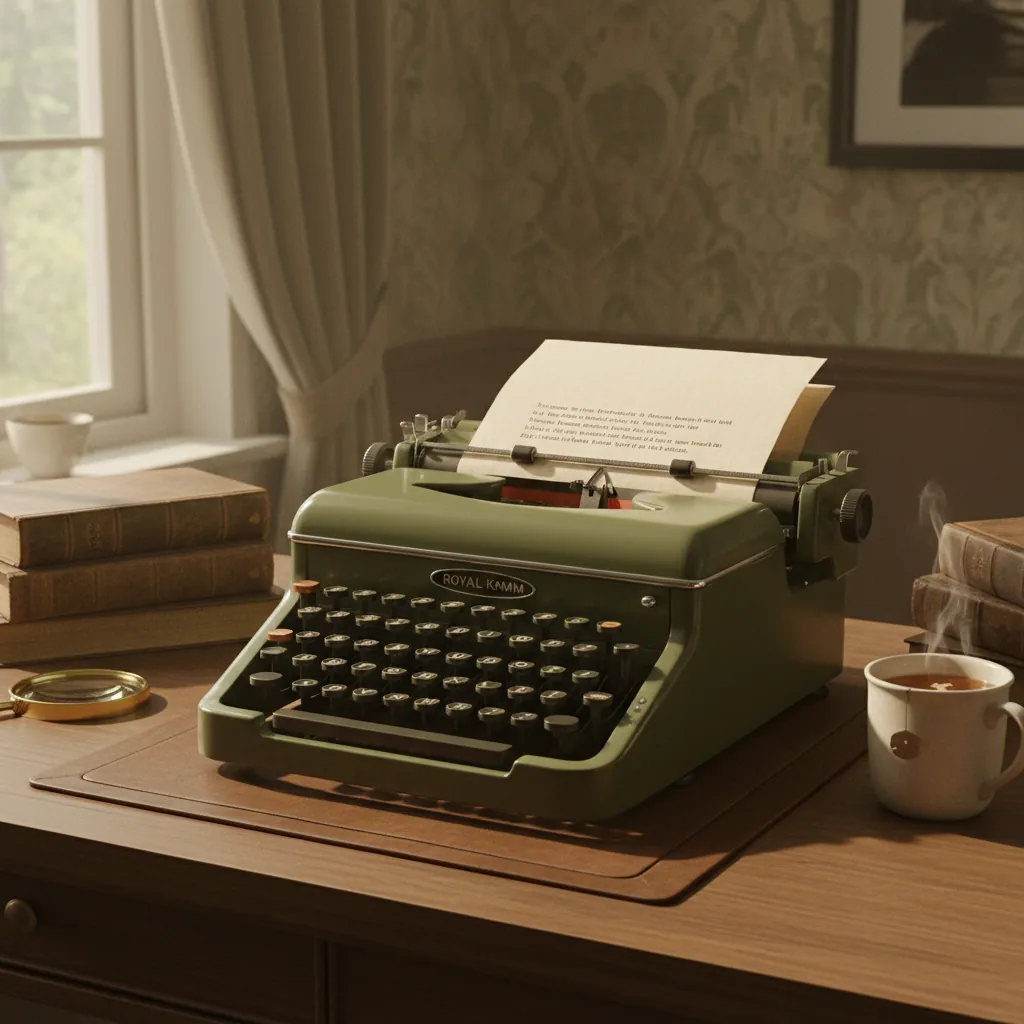 Illustration created for WistMem; not an archival photograph.
The mechanism shaped the work. A typing error could require correction fluid, retyping, or an entirely new sheet. A carbon copy could preserve a duplicate but also made careful alignment important. Ask who in the family typed, what they produced, and whether someone else dictated or edited the words. A school paper and an office document could sound alike from the hall while representing very different work.
What can a typed page reveal?
Keep the page with its envelope, date, or draft if they survive. Uneven letters may suggest a worn ribbon or a particular machine, but do not identify the writer by themselves. A signature, address, or family recollection is stronger evidence. The Smithsonian's Angelou description notes even a later sticker from a business-machine store on the object; such small additions can trace a machine's working life.
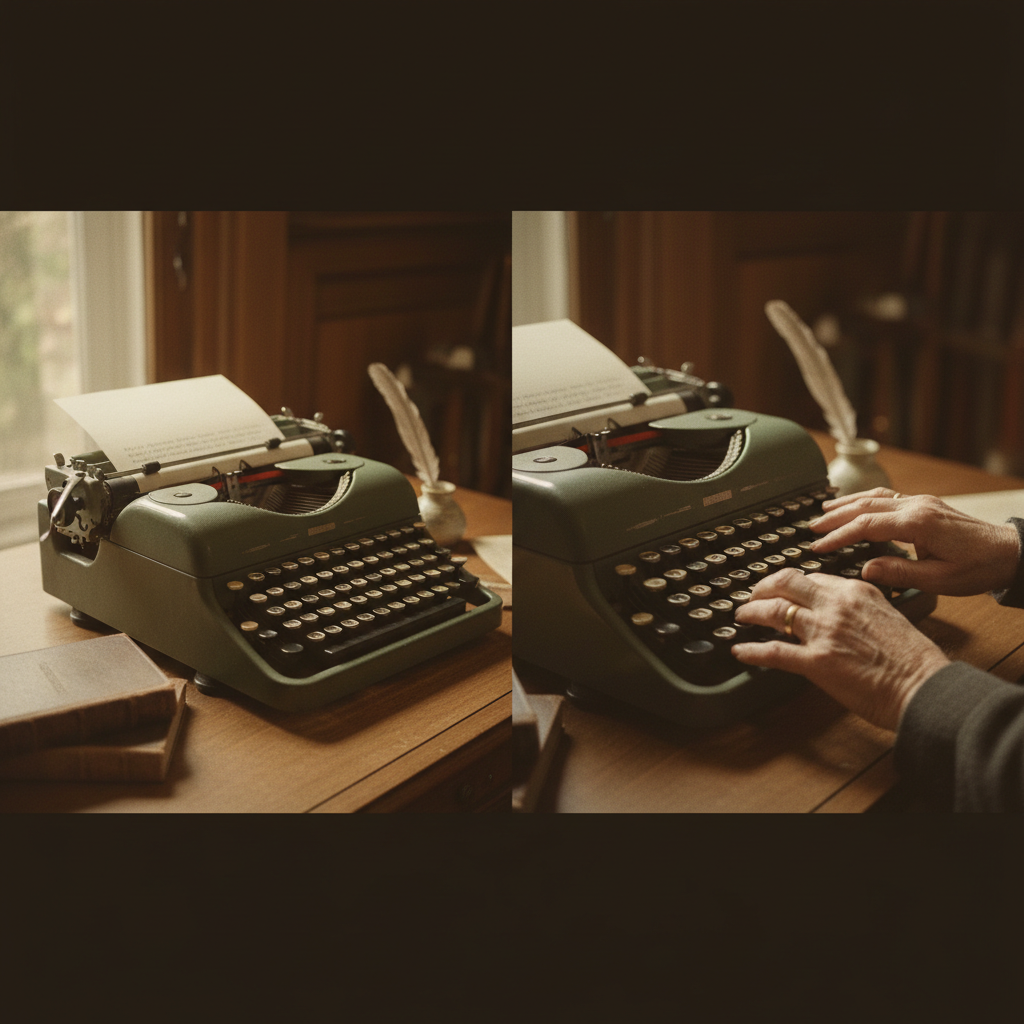 Illustration created for WistMem; not an archival photograph.
Try asking the person who remembers the clatter which task made the keys go late into the evening. The answer may be less about nostalgia for a machine than about a deadline or a letter that had to be sent. For another sound that marked a room, read The Transistor Radio on the Kitchen Counter.
What does it bring back for you?
Ask someone who remembers, or begin with your own version. A few words can be enough.
What object changed how you spent an ordinary day?
Then ask: How did you learn to use it, and what could it not do?
Find more conversation starters Choose what feels comfortable. Ask before recording or sharing someone’s words.Relive the Memory
Find a little of the story.
Something here bring back a memory? Take a look at what you can find today.
Searching for: vintage typewriter clatter
Vintage & collectible finds
Look for older objects and collectibles connected to this memory.
Search eBay (opens in a new tab)Related finds on Amazon
Explore items related to the same topic, from familiar styles to things made today.
Search Amazon (opens in a new tab)These links open search results. Items, prices, and availability vary.
Affiliate links. We may earn a commission at no extra cost to you.
As an Amazon Associate I earn from qualifying purchases. As an eBay Partner, WistMem may earn from qualifying purchases.
Does this bring back memories?
Share this story with someone who would remember.