Make this page easier to read
Your choices are saved on this device.
Tatami, cushions, and a low table make dining a spatial memory as well as a food memory. Museum and Japan House records help describe the room without reducing Japanese homes to one pattern.
A floor cushion pulled close to a low table changes how people gather. Shoes are left outside the room, dishes come within reach, and a child may remember the texture of the mat as clearly as the meal. A tatami room can be used for eating, resting, or welcoming visitors; which role it played in one household is a question for that family.
What is distinctive about the room?
Tatami is a floor surface rather than a style of meal. Japan House London's description of its tatami dining room notes the mat floor, a display alcove called a tokonoma, and slippers worn outside the room. This is a contemporary London setting designed with reference to Japanese interiors, not a record of every home in Japan. The Metropolitan Museum of Art's discussion of Thomas Struth's 1996 photograph identifies a real family photographed in a tatami room in Yamaguchi. The two examples show a room type crossing very different settings.
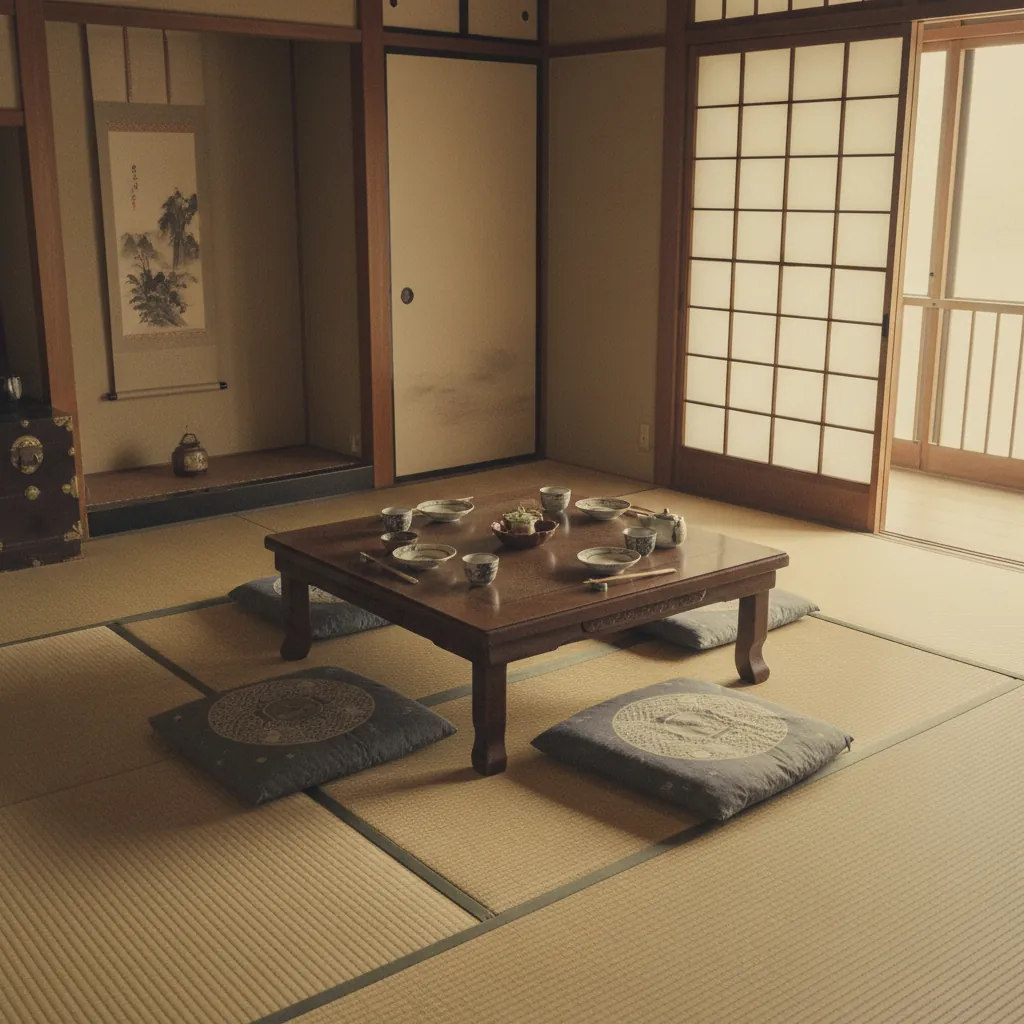 Illustration created for WistMem; not an archival photograph.
The floor changes posture and movement. People arrange cushions and dishes low, then reach toward a shared center. Which foods appeared, who served them, and where guests sat varied by household and occasion. A family memory might include the careful way a dish was passed or the sound of someone sliding a door closed behind them.
What should a family photograph tell you?
Look at the room before naming a tradition. Is there a low table, cushion, mat edge, or alcove? Ask who used the space on ordinary evenings and whether the layout changed for visitors. Record the location and year if a relative knows them. Avoid using a museum room as a substitute for their account: the family can explain why this dinner mattered.
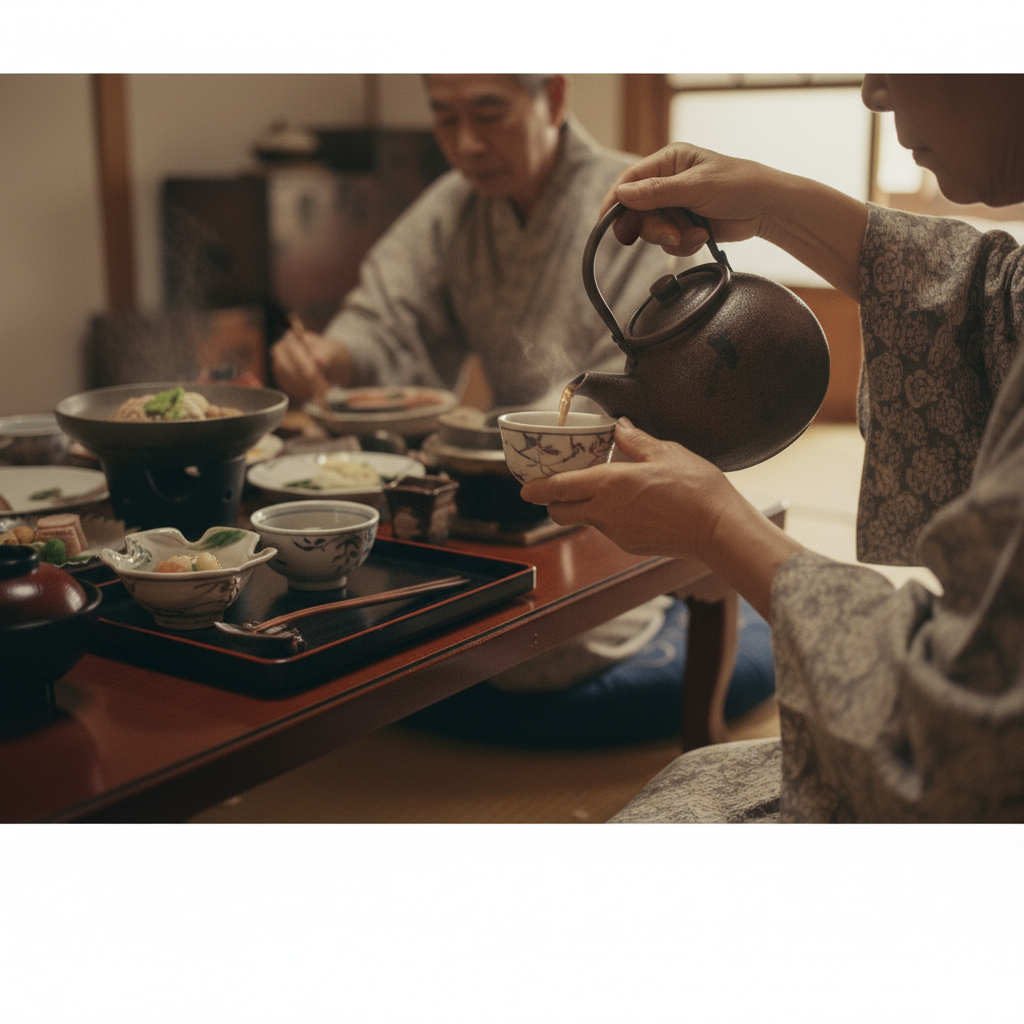 Illustration created for WistMem; not an archival photograph.
One useful question is, Who chose where to sit, and did that place change as children grew? It invites a story about people rather than a generic description of Japanese décor. For a different meal shaped by family routine, read The Sunday Roast and the Whole Family.
What does it bring back for you?
Ask someone who remembers, or begin with your own version. A few words can be enough.
What everyday sound or smell brings back a home you remember?
Then ask: Who was there, and what were they doing?
Find more conversation starters Choose what feels comfortable. Ask before recording or sharing someone’s words.Relive the Memory
Find a little of the story.
Something here bring back a memory? Take a look at what you can find today.
Searching for: vintage antique tatami room floor cushion
Vintage & collectible finds
Look for older objects and collectibles connected to this memory.
Search eBay (opens in a new tab)Related finds on Amazon
Explore items related to the same topic, from familiar styles to things made today.
Search Amazon (opens in a new tab)These links open search results. Items, prices, and availability vary.
Affiliate links. We may earn a commission at no extra cost to you.
As an Amazon Associate I earn from qualifying purchases. As an eBay Partner, WistMem may earn from qualifying purchases.
Does this bring back memories?
Share this story with someone who would remember.