Make this page easier to read
Your choices are saved on this device.
Radio commentary made sumo vivid without a picture. The wait before a bout, the announcer’s call, and family explanation all shaped the listening.
The room went quiet for a contest that might be over in seconds. Before the wrestlers met, there was a longer interval of preparation and expectation. A radio listener could not see every movement on the ring, so the announcer's pace and words had to carry the tension. Someone who knew the sport might explain the rankings or the ritual to a child; then both listened for the sudden result.
Broadcasting changed the timetable
The Japan Sumo Association's account of its history says NHK began live radio broadcasts of grand-sumo tournaments in 1928 and television broadcasts in 1953. Its historical quiz on the 1928 change explains that time limits for pre-bout preparation were introduced partly so all bouts could fit within broadcast time. Radio was therefore more than a passive window onto an unchanged event; it affected how the contest was scheduled and presented.
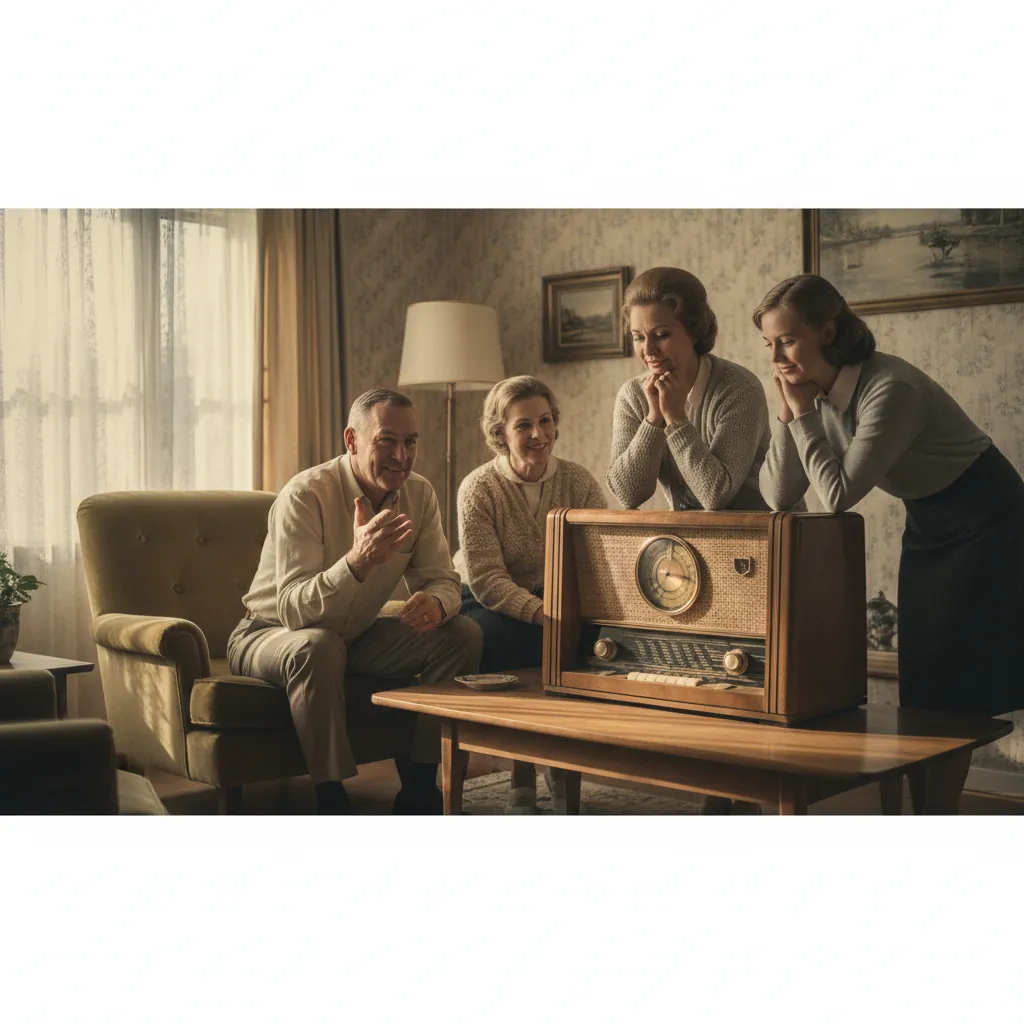 Illustration created for WistMem; not an archival photograph.
For families listening at home, the commentary made a distant arena immediate. A brief call could turn expectation into cheers or disappointment. The broadcast also brought unfamiliar names and ranks into daily conversation. A person might remember a favorite wrestler's name before recalling any technical detail of a bout. Others could be drawn by the cadence of the announcer and the household's reaction rather than by the result itself.
A shared lesson without a screen
Radio left space for one listener to teach another. What did the ring look like? Why had the start been delayed? Why was a particular match important? Those questions could be answered at the table while the broadcast continued. When television arrived, it added the visual detail, but it did not erase the habit of listening together or discussing the outcome afterward.

Ask which voice or call made the family turn toward the set. A named wrestler can anchor the recollection, but the small pause before a sudden shout may be the enduring sound. For another sport that filled a household through radio, read A Summer Test Match Heard on the Radio.
What does it bring back for you?
Ask someone who remembers, or begin with your own version. A few words can be enough.
What did you look forward to watching, hearing, or doing for fun?
Then ask: Who shared it with you, and what do you remember about that time?
Find more conversation starters Choose what feels comfortable. Ask before recording or sharing someone’s words.Relive the Memory
Find a little of the story.
Something here bring back a memory? Take a look at what you can find today.
Searching for: vintage retro sumo wrestling broadcast
Vintage & collectible finds
Look for older objects and collectibles connected to this memory.
Search eBay (opens in a new tab)Related finds on Amazon
Explore items related to the same topic, from familiar styles to things made today.
Search Amazon (opens in a new tab)These links open search results. Items, prices, and availability vary.
Affiliate links. We may earn a commission at no extra cost to you.
As an Amazon Associate I earn from qualifying purchases. As an eBay Partner, WistMem may earn from qualifying purchases.
Does this bring back memories?
Share this story with someone who would remember.