Make this page easier to read
Your choices are saved on this device.
A sewing basket held more than needles and thread: it kept repair work close at hand. Smithsonian workboxes show how varied these containers could be.
A sewing basket near a chair meant the work could be picked up in a spare moment. A loose button, torn hem, or unfinished piece of needlework waited beside scissors and thread. The basket's contents might look ordinary until someone needed the exact needle or matching color and knew, without searching, where it was.
What might be inside?
The Smithsonian's 1857 needleworker's workbox was elaborate, with fitted spaces for needles, hooks, scissors, spool holders, and a pincushion. A very different 1970 South Carolina sewing basket is made from coiled grass and palmetto leaf. These museum objects show variety in materials and scale; neither is the universal form of a household basket. The family's own container may have been a tin, drawer, bag, or carefully made box.
 Illustration created for WistMem; not an archival photograph.
What made it useful was the habit of keeping repair tools together. Someone could mend a child's clothing while conversation continued in the room. Sometimes the work was creative; sometimes it was necessary because replacement cost money or a garment had sentimental value. Ask which tasks the owner took on willingly and which ones always waited longest.
How can the basket's story be kept?
Before rearranging a surviving basket, photograph it as found. Look for a thimble with a name, thread brands, paper patterns, or a button saved from a garment that no longer exists. Record whose tools they were and who supplied that identification. A tool's maker or date can be researched later, but the household meaning often depends on a relative's recollection.
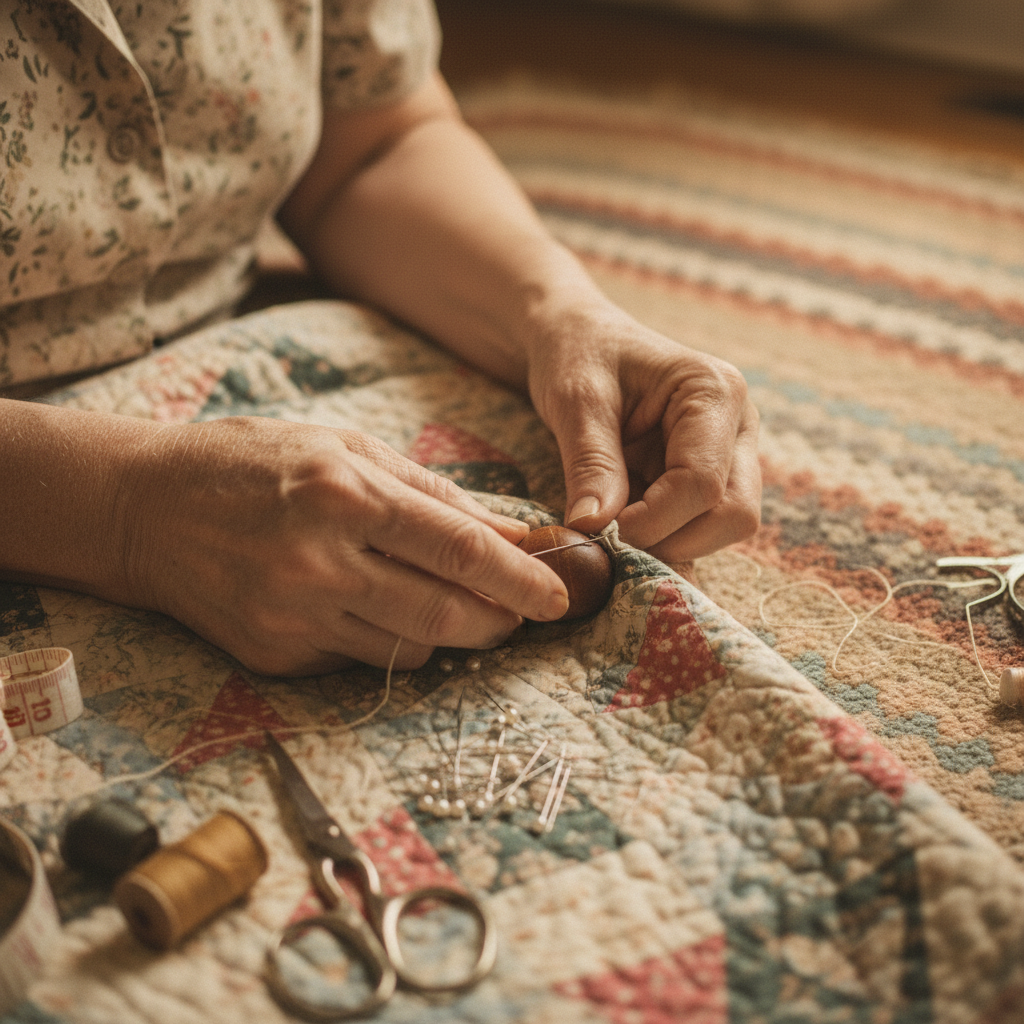 Illustration created for WistMem; not an archival photograph.
The Smithsonian notes that the maker of its 1857 box added initials and lodge symbols. Those marks make a crafted object personal. An unmarked basket can be just as personal when someone remembers the hands that reached into it. For another object that carried household knowledge across years, see The Handwritten Recipe Box.
What does it bring back for you?
Ask someone who remembers, or begin with your own version. A few words can be enough.
What everyday sound or smell brings back a home you remember?
Then ask: Who was there, and what were they doing?
Find more conversation starters Choose what feels comfortable. Ask before recording or sharing someone’s words.Relive the Memory
Find a little of the story.
Something here bring back a memory? Take a look at what you can find today.
Searching for: vintage antique sewing basket chair
Vintage & collectible finds
Look for older objects and collectibles connected to this memory.
Search eBay (opens in a new tab)Related finds on Amazon
Explore items related to the same topic, from familiar styles to things made today.
Search Amazon (opens in a new tab)These links open search results. Items, prices, and availability vary.
Affiliate links. We may earn a commission at no extra cost to you.
As an Amazon Associate I earn from qualifying purchases. As an eBay Partner, WistMem may earn from qualifying purchases.
Does this bring back memories?
Share this story with someone who would remember.