Make this page easier to read
Your choices are saved on this device.
A bicycle newspaper route was a sequence of addresses, bags, and customers. The rider learned how to make the same circuit reliably in changing weather.
The bicycle was loaded before the first delivery. A newspaper bag hung from the handlebars or across the rider's shoulder, with copies folded so they could be reached without unloading the lot. The route then broke a large stack into individual promises: this house wanted its paper, that one had a different place for it, and the next customer might be waiting at the door.
The route as a small job
The Library of Congress preserves a 1921 photograph titled “Times boy on bicycle”. It cannot tell us the entire working life of the young rider, but it documents that bicycle and newspaper delivery were paired in that setting. The rider's real skill was logistical. Papers had to be counted, the streets covered in a useful order, and mistakes corrected. Wind and rain could turn a short journey into a wet, slow one. A subscriber noticed when the routine broke.
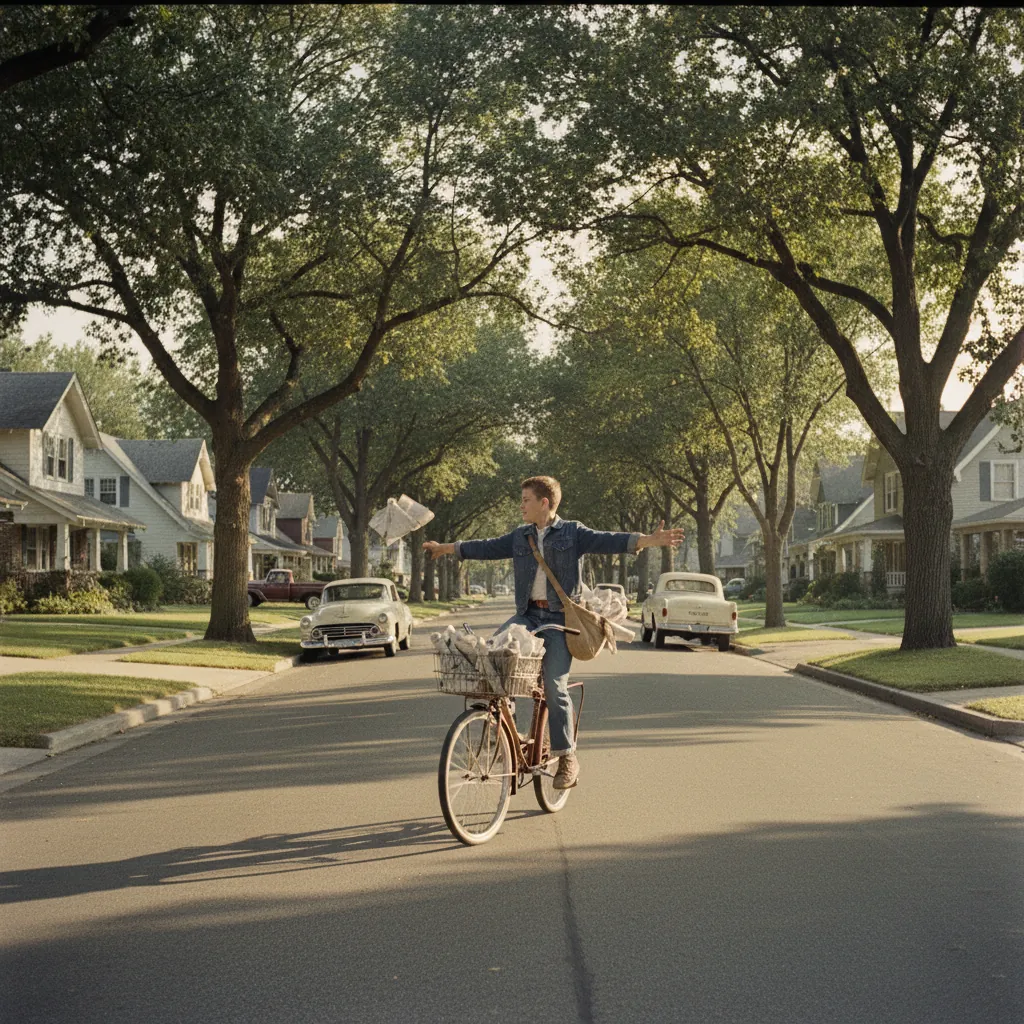 Illustration created for WistMem; not an archival photograph.
The bicycle made a route wider than a walk. It also imposed limits: a heavy bag changed the handling, and each stop required slowing, reaching, or dismounting. The delivery point could be a front step, a gate, or a mailbox depending on place and customer. Those details are more distinctive than a nostalgic picture of a child tossing papers from the street. Many riders learned exact household preferences through repetition rather than a written map.
Customers along the way
A regular route made brief relationships possible. Someone might call a greeting as the rider passed; another person might ask why yesterday's paper was late. The job was not all charm. It was paid work with expectations, and the child or teenager doing it had a morning or afternoon schedule of their own. The Smithsonian's catalog of a newspaper-boy bicycle sculpture shows how recognizable the paper bag, rolled copy, and bicycle became as a public image; an individual route, though, was built from much less tidy daily effort.
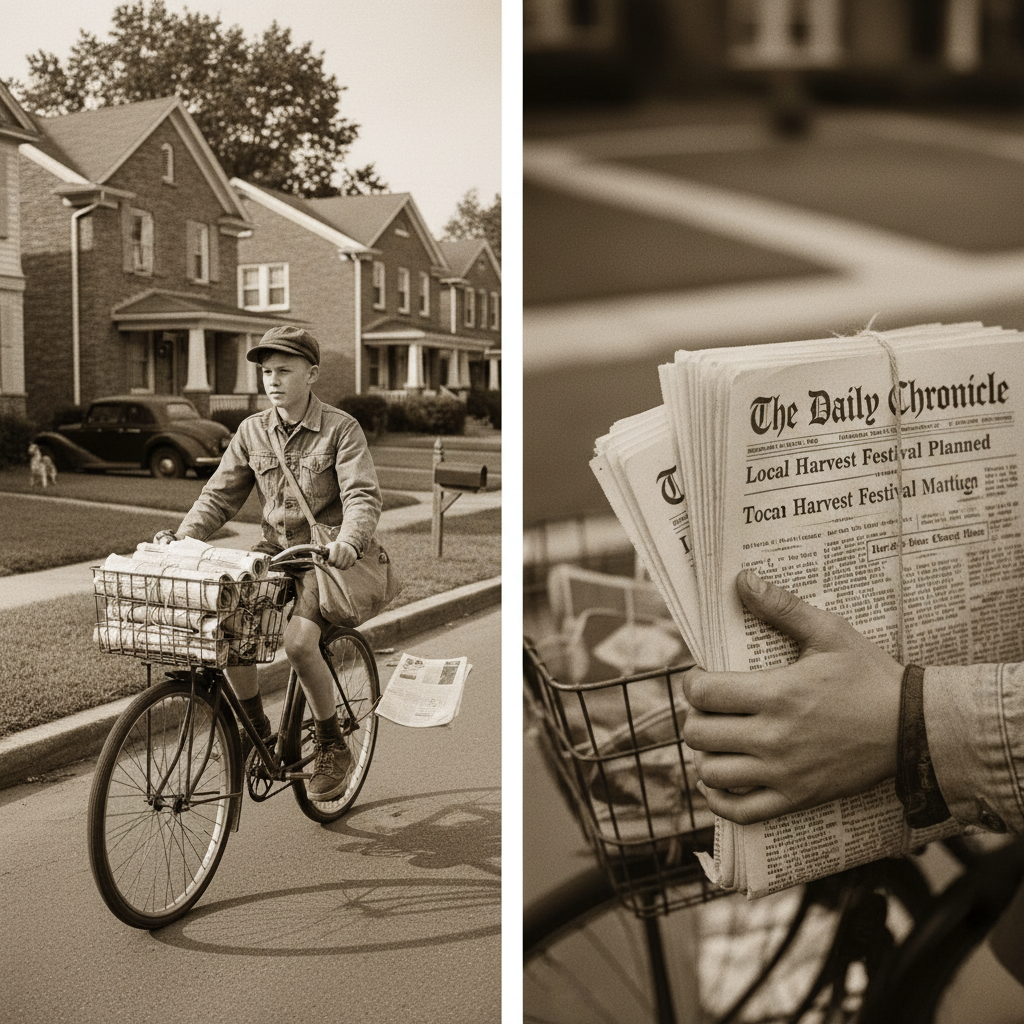 Illustration created for WistMem; not an archival photograph.
If someone in the family delivered papers, ask where they picked up the stack and which address was hardest to reach. Did a customer expect the paper at a particular door? Did they use the same bicycle for school afterward? Those answers describe the work itself. For the reader's end of another daily delivery, see Milk Bottles on the Doorstep.
What does it bring back for you?
Ask someone who remembers, or begin with your own version. A few words can be enough.
Which local place do you remember visiting often?
Then ask: What made a visit there different from anywhere else?
Find more conversation starters Choose what feels comfortable. Ask before recording or sharing someone’s words.Relive the Memory
Find a little of the story.
Something here bring back a memory? Take a look at what you can find today.
Searching for: vintage antique paperboy his bicycle
Vintage & collectible finds
Look for older objects and collectibles connected to this memory.
Search eBay (opens in a new tab)Related finds on Amazon
Explore items related to the same topic, from familiar styles to things made today.
Search Amazon (opens in a new tab)These links open search results. Items, prices, and availability vary.
Affiliate links. We may earn a commission at no extra cost to you.
As an Amazon Associate I earn from qualifying purchases. As an eBay Partner, WistMem may earn from qualifying purchases.
Does this bring back memories?
Share this story with someone who would remember.