Make this page easier to read
Your choices are saved on this device.
A pager could summon its wearer without completing a conversation. The next step was to find a phone and decide how urgently to call back.
The alert interrupted whatever was happening, but it did not explain everything. A person with a pager might look down at a number, recognize it, and start searching for a telephone. The device made the wearer reachable while still leaving the conversation for later. That gap between summons and response is what made a pager different from a phone in the pocket.
A signal with a narrow message
The Computer History Museum's mobile-computing exhibit traces pager networks from analog beginnings in the 1950s to later digital systems. Early devices could simply alert; later ones displayed numbers or short messages. The purpose was not to replace a full call but to say that a call was needed. The wearer had to interpret the signal through context: work, family, a hospital, or a friend with a familiar number.
A number-only page also left room for private conventions. A familiar caller might use a particular number or repeat a page when the reply could not wait. An unfamiliar number gave less guidance, so the wearer had to decide whether to interrupt the task at hand. An alphanumeric display later offered more information, but it still could not carry the back-and-forth of a conversation.
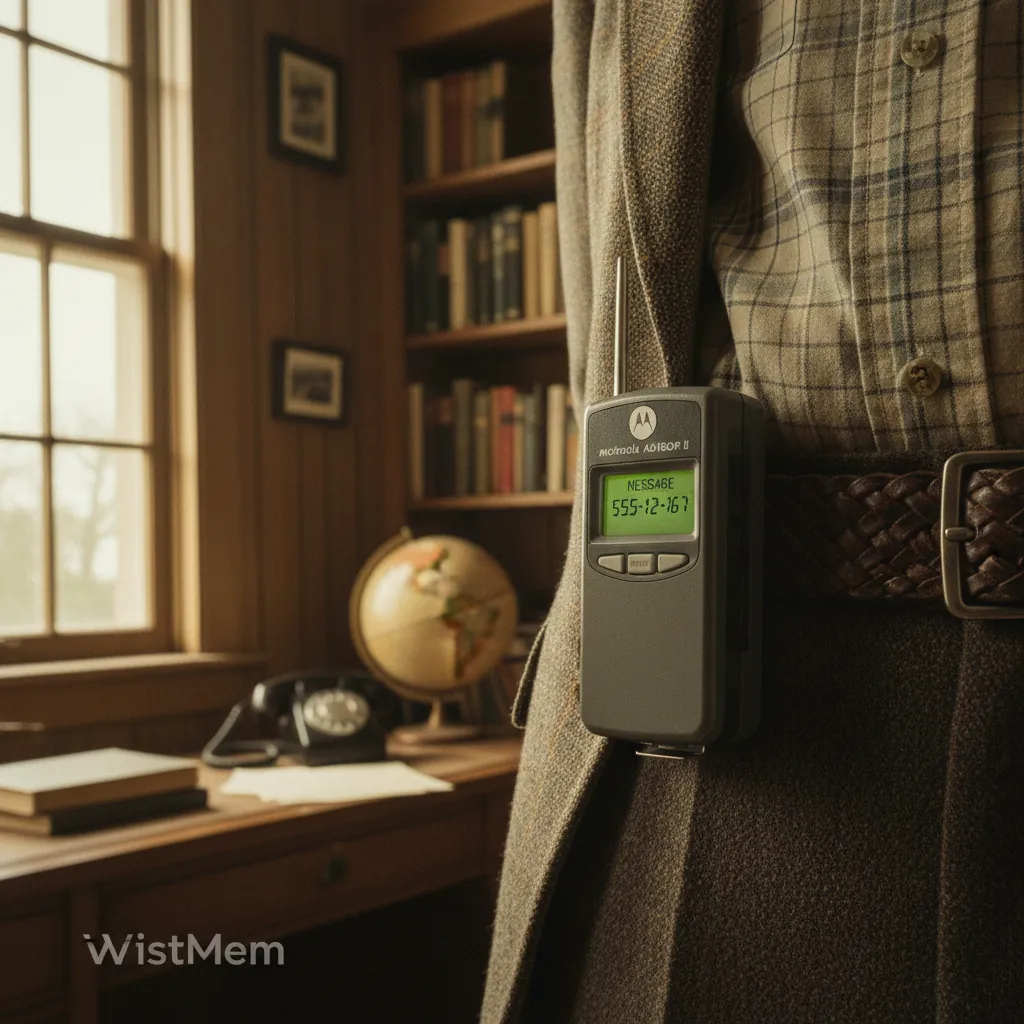 Illustration created for WistMem; not an archival photograph.
In a Computer History Museum oral history, Motorola engineer Martin Cooper recalls early hospital paging systems and the difficulty of making dependable devices for staff who needed to be summoned. That work setting explains the pager's demanding reputation. An alert could mean a patient, a deadline, or another person's urgent problem; the device carried the obligation to respond into places where a desk phone could not follow.
Finding the next phone
Receiving a number was only the first step. The wearer might leave a meal, queue at a public phone, or ask to use a landline. A return call could reveal that the matter was trivial—or that minutes mattered. People developed their own reading of repeat alerts and certain numbers. The pager's brief signal therefore changed behavior without telling the whole story.
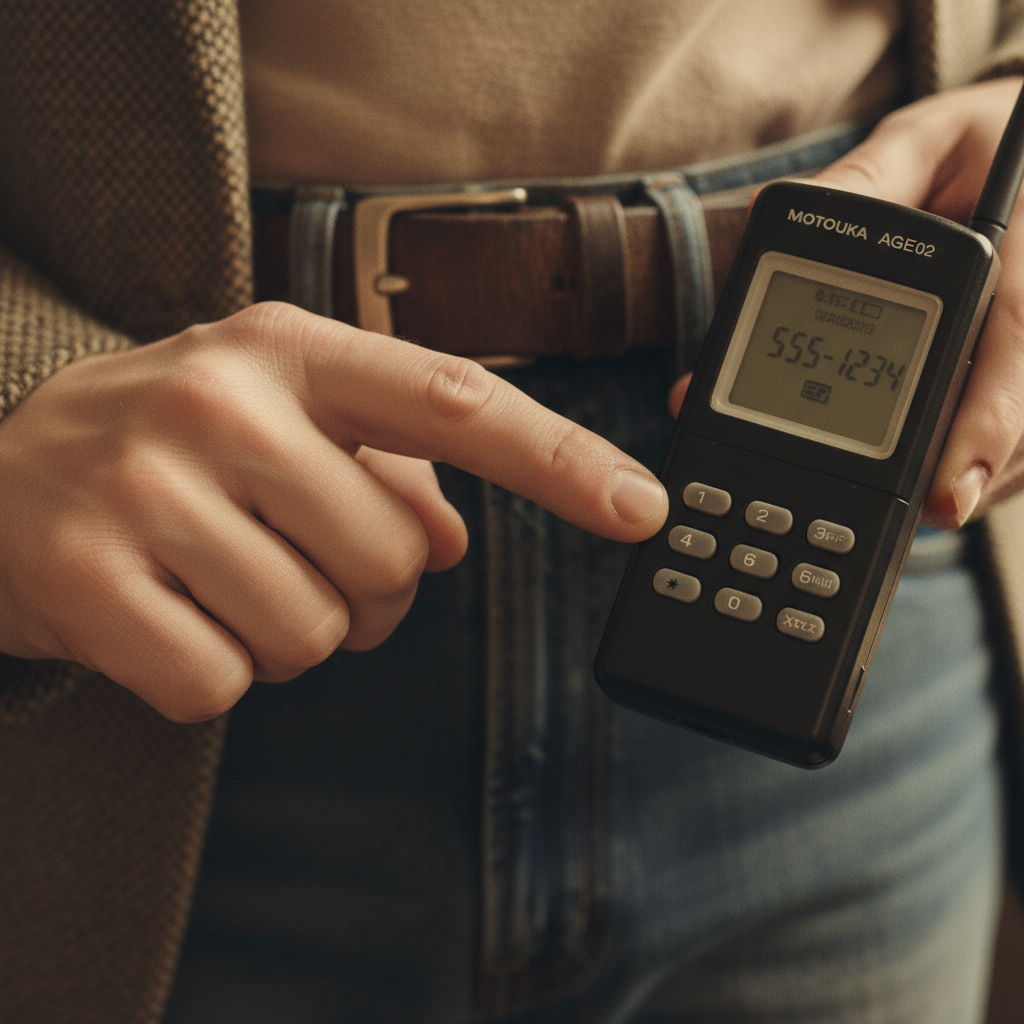 Illustration created for WistMem; not an archival photograph.
Where was the person when it beeped, and how did they get to a phone? That short journey is often the memory. For the shared public telephone that could complete the call, read The Phone Booth on the Corner.
What does it bring back for you?
Ask someone who remembers, or begin with your own version. A few words can be enough.
What object changed how you spent an ordinary day?
Then ask: How did you learn to use it, and what could it not do?
Find more conversation starters Choose what feels comfortable. Ask before recording or sharing someone’s words.Relive the Memory
Find a little of the story.
Something here bring back a memory? Take a look at what you can find today.
Searching for: vintage pager belt
Vintage & collectible finds
Look for older objects and collectibles connected to this memory.
Search eBay (opens in a new tab)Related finds on Amazon
Explore items related to the same topic, from familiar styles to things made today.
Search Amazon (opens in a new tab)These links open search results. Items, prices, and availability vary.
Affiliate links. We may earn a commission at no extra cost to you.
As an Amazon Associate I earn from qualifying purchases. As an eBay Partner, WistMem may earn from qualifying purchases.
Does this bring back memories?
Share this story with someone who would remember.