Make this page easier to read
Your choices are saved on this device.
In many Black American communities, a barbershop could be a business, a place to meet, and a rare setting for frank conversation. Its particular owner and customers shaped that role.
The customer in the chair could see the room in the mirror. Someone waiting might be reading, playing a game, or joining a conversation that began before the haircut. Clippers and scissors made the shop a workplace, yet the people who returned each week could give it a second purpose: a place where community news passed between generations.
The work and the gathering place
The Smithsonian's National Museum of African American History and Culture describes Black barber and beauty shops as places for hair care and for conversations about politics, local affairs, and private concerns. Some customers played chess, cards, or dominoes there. That social function was not a substitute for the barber's skill. A good cut, trust in the person holding the clippers, and the time spent waiting were part of why people kept returning.
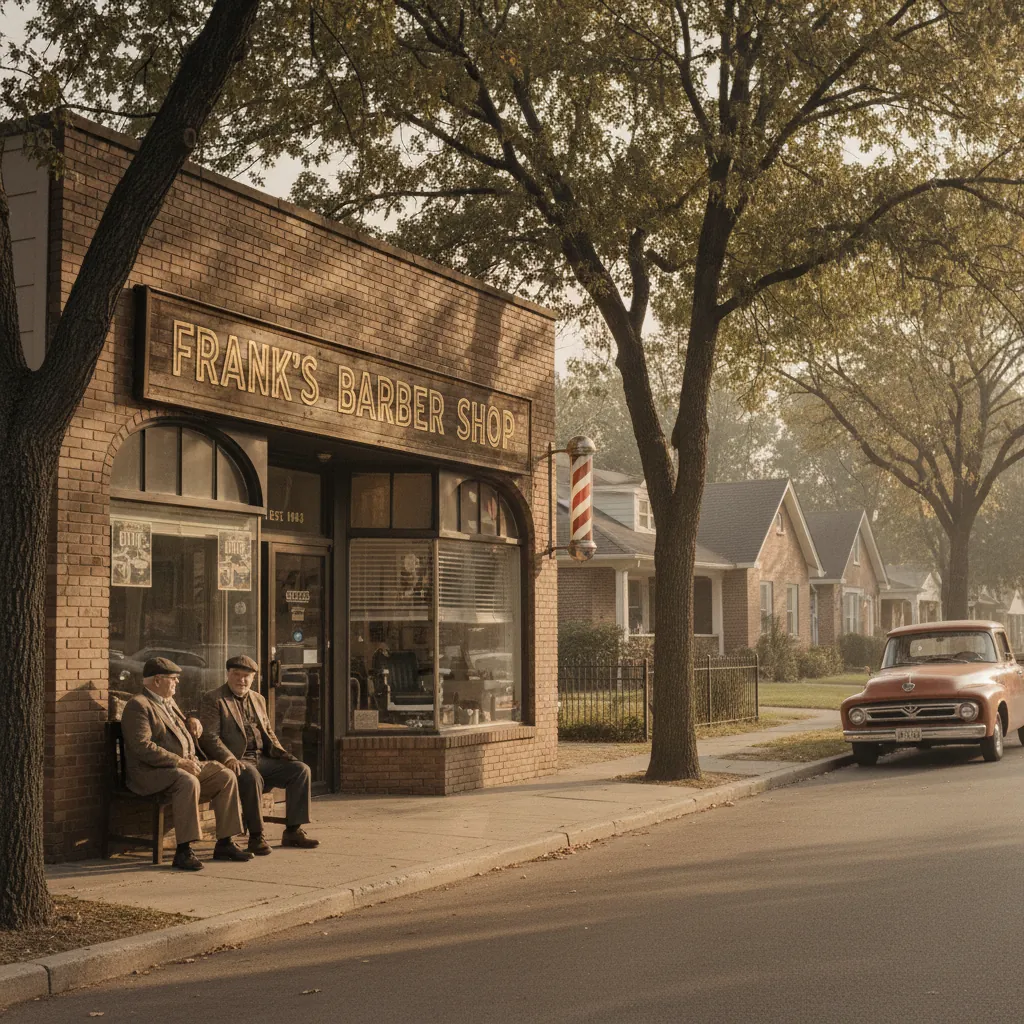 Illustration created for WistMem; not an archival photograph.
The shop also had an owner with bills, suppliers, and a working day. A Smithsonian oral-history record for Robert H. Dyson identifies his barbershop on Howard Road in Washington, D.C., and notes that he talked about families and other local business owners. His interview places one establishment among a network of people, rather than treating it as a timeless scene. Another shop in another city would have had its own rules, clientele, and subjects that were safe or difficult to discuss.
Who felt at home there?
The room could teach a young visitor how adults debated an issue, teased one another, or settled a disagreement. A familiar barber might remember a customer's previous style or ask about a relative. For some, that was welcome recognition. For others, conversation was optional; a quiet haircut could still be valuable. The shop was neither a public meeting hall nor a single story shared by all Black Americans.
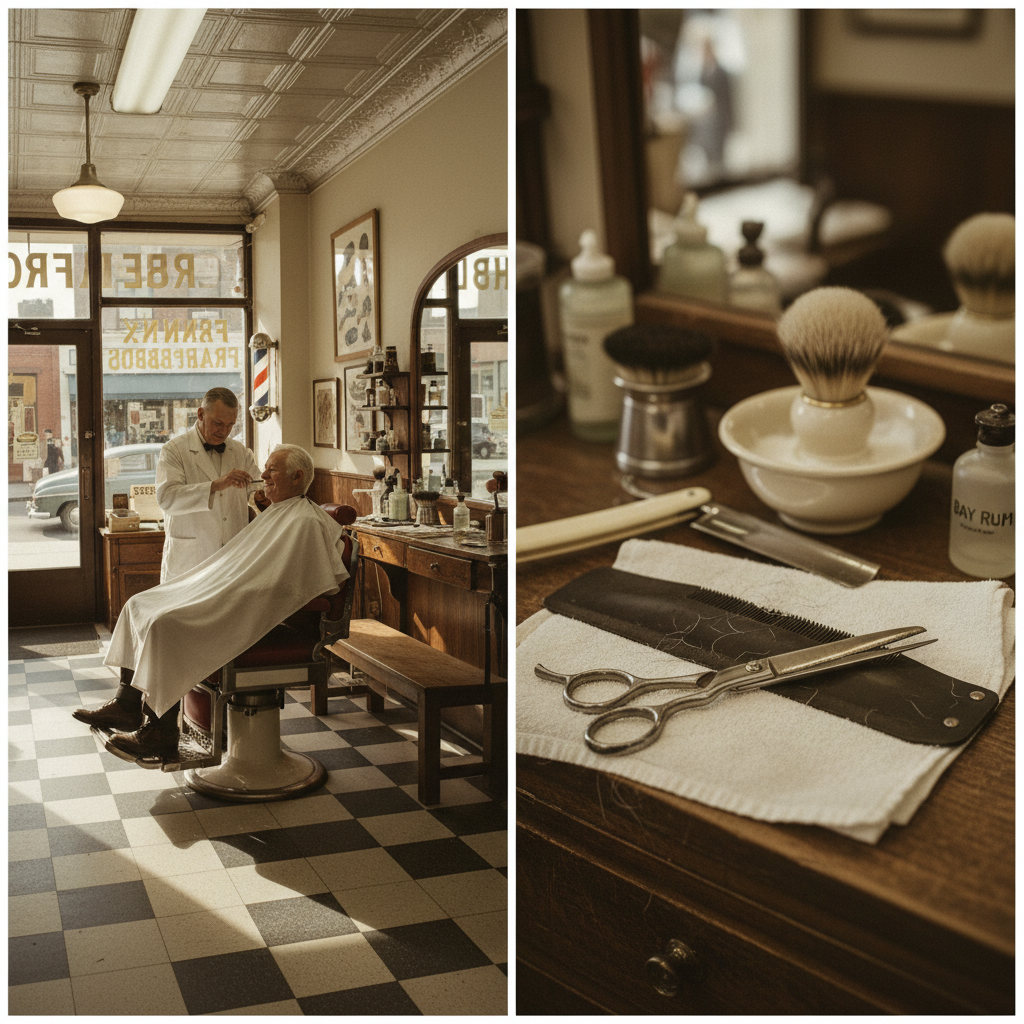 Illustration created for WistMem; not an archival photograph.
If a relative mentions a barbershop, ask for its owner or address before asking what everyone discussed. Who cut their hair? Who usually waited there? Was there a game in progress, music playing, or a particular person whose arrival changed the conversation? These details recover a living business and the people who made it matter.
For a different high-street barber story in Britain, read Inside the Neighbourhood Barber Shop.
What does it bring back for you?
Ask someone who remembers, or begin with your own version. A few words can be enough.
Which local place do you remember visiting often?
Then ask: What made a visit there different from anywhere else?
Find more conversation starters Choose what feels comfortable. Ask before recording or sharing someone’s words.Relive the Memory
Find a little of the story.
Something here bring back a memory? Take a look at what you can find today.
Searching for: vintage antique neighborhood barber shop
Vintage & collectible finds
Look for older objects and collectibles connected to this memory.
Search eBay (opens in a new tab)Related finds on Amazon
Explore items related to the same topic, from familiar styles to things made today.
Search Amazon (opens in a new tab)These links open search results. Items, prices, and availability vary.
Affiliate links. We may earn a commission at no extra cost to you.
As an Amazon Associate I earn from qualifying purchases. As an eBay Partner, WistMem may earn from qualifying purchases.
Does this bring back memories?
Share this story with someone who would remember.