Make this page easier to read
Your choices are saved on this device.
A neighborhood lemonade stand gave children a stage for choosing a price, counting change, and discovering who would actually stop on a warm afternoon.
A card table appeared at the edge of the yard with a pitcher, a stack of cups, and a sign large enough to read from the pavement. Before any customer arrived, there were serious decisions: where the shade would fall, who would pour, and whether the letters on the cardboard were bold enough. Then came the longest part of the business: watching people walk past.
Setting out the stand
The work was small but real. Someone had to bring water and lemons or a prepared drink, keep the cups within reach, and decide on a price. The Smithsonian's activity about a children's lemonade stand uses it to explore coins, change, and the choices involved in attracting customers. Those were the practical lessons inside a summer game. A child could write a price on the sign and discover that selling a cup also meant counting the coins handed back.
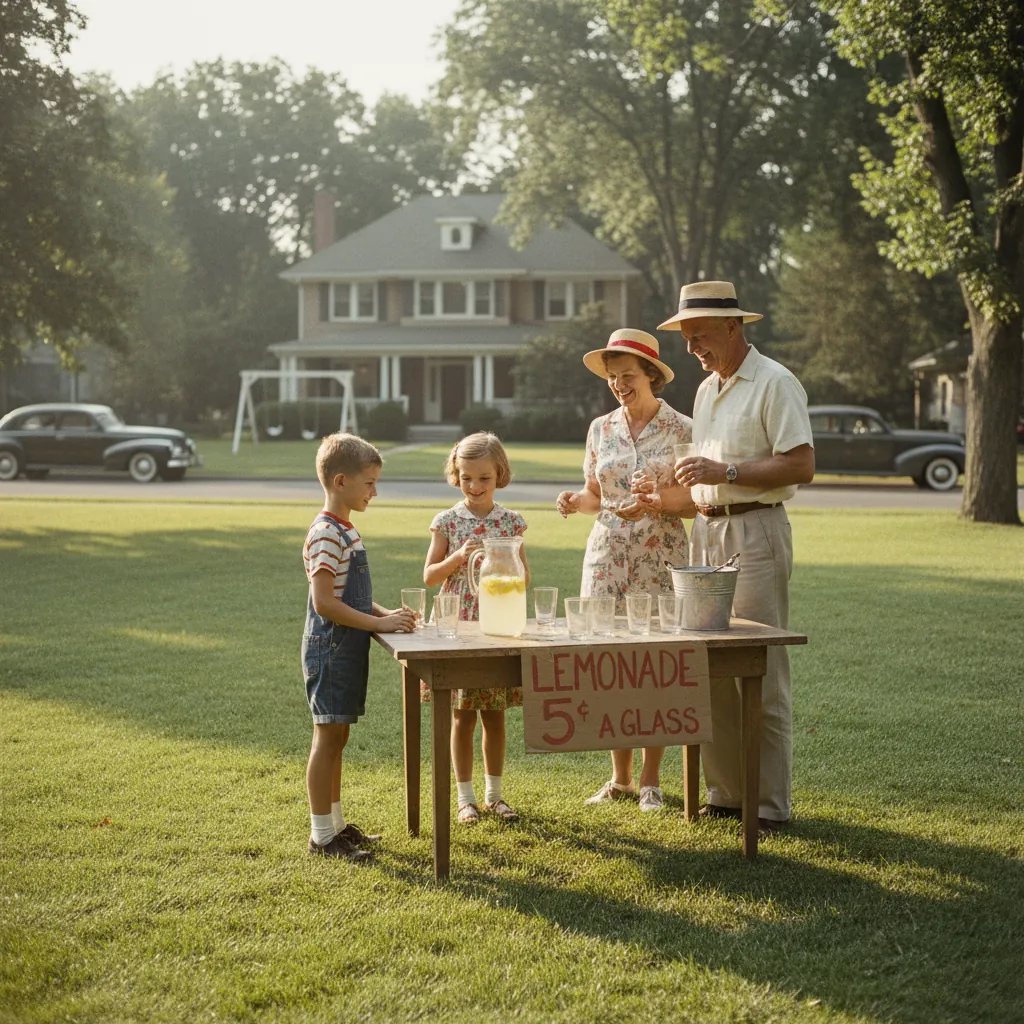 Illustration created for WistMem; not an archival photograph.
Who stopped for a cup?
A neighbor on a walk might be the first buyer. Others waved without stopping, and one person could ask a question the sellers had not expected. A pitcher looked full at the beginning and oddly unchanged after a slow hour. The children might revise the sign, call out to a familiar passerby, or decide to share a cup with a friend. Even when very little money changed hands, the stand rearranged the usual relationship with the street: for a while, the children were the people behind the counter.
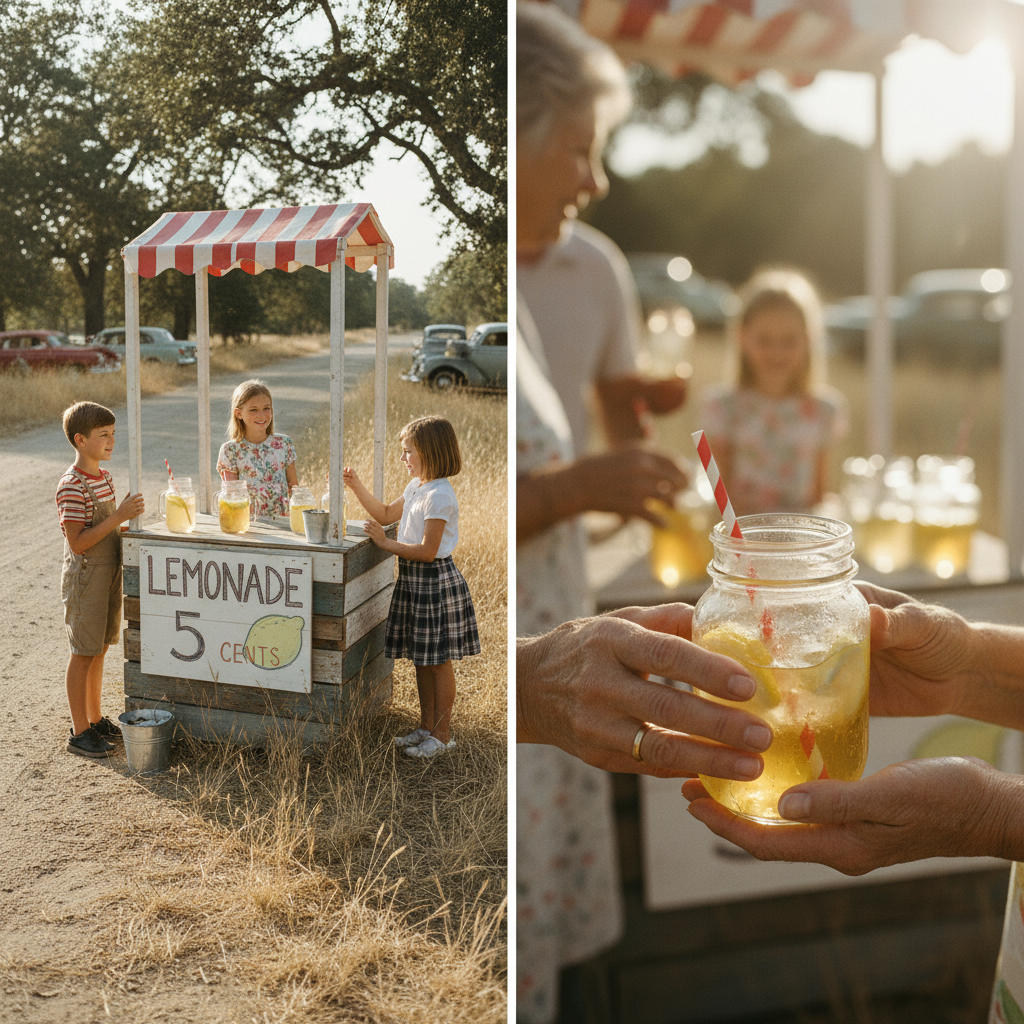 Illustration created for WistMem; not an archival photograph.
Closing time at the card table
The sign came down when the shade moved, the ice melted, or someone was called in for supper. Counting the takings was one part of the ending; remembering the first person who stopped could be another. The Library of Congress's history of lemonade shows the drink's longer story through old recipes, but a family stand is most clearly remembered through its own small details. Ask who made the sign and whether anyone kept it. The first sale was exciting; the waiting made it a whole afternoon.
For another childhood purchase made with a few coins, visit The Penny Sweets Counter.
What does it bring back for you?
Ask someone who remembers, or begin with your own version. A few words can be enough.
Where did you like to spend an afternoon when you were young?
Then ask: What could keep you there longer than you planned?
Find more conversation starters Choose what feels comfortable. Ask before recording or sharing someone’s words.Relive the Memory
Find a little of the story.
Something here bring back a memory? Take a look at what you can find today.
Searching for: vintage retro lemonade stand hot summer
Vintage & collectible finds
Look for older objects and collectibles connected to this memory.
Search eBay (opens in a new tab)Related finds on Amazon
Explore items related to the same topic, from familiar styles to things made today.
Search Amazon (opens in a new tab)These links open search results. Items, prices, and availability vary.
Affiliate links. We may earn a commission at no extra cost to you.
As an Amazon Associate I earn from qualifying purchases. As an eBay Partner, WistMem may earn from qualifying purchases.
Does this bring back memories?
Share this story with someone who would remember.