Make this page easier to read
Your choices are saved on this device.
A piece of chalk, a small marker, and a stretch of pavement made a hopscotch court that could vanish in the rain and return in a different shape the next day.
The pavement looked blank until someone found the chalk. A child knelt to draw the first square, stood to judge its size, then added the next one slightly crooked. By the time the numbers were written in, the doorstep had become a place to wait for a turn. A pebble or flat tile went down near a shoe; everybody could see whose throw had landed close to the line.
The game drawn underfoot
The squares could be laid out differently from one street to another. A player tossed a marker into a numbered space, hopped around it, and tried to collect it on the way back without losing balance. The Library of Congress collection of games includes a photograph of children playing hopscotch in New York, while its account of older game books points to a printed version from 1787. The game was old, but every new grid was drawn for that day's players.
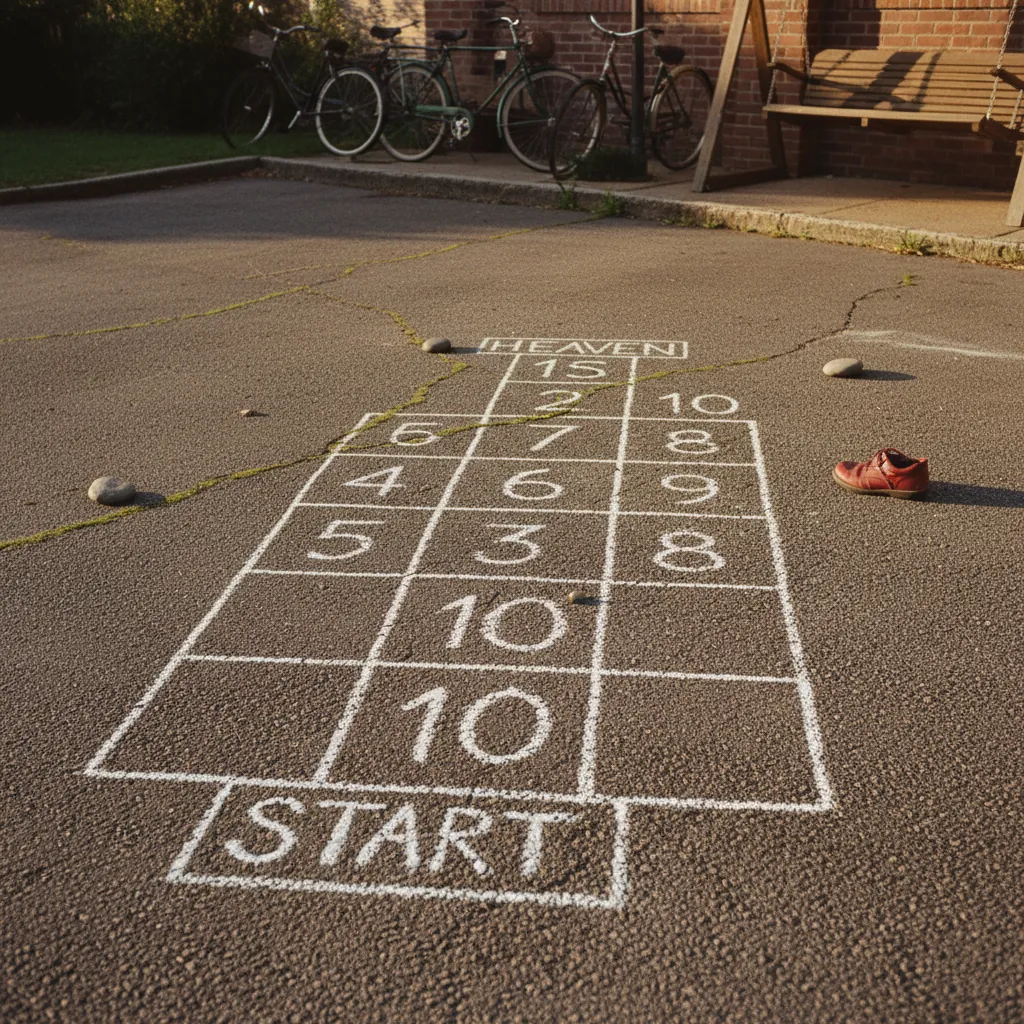 Illustration created for WistMem; not an archival photograph.
Who decided the rules?
Children did. The hard part might be reaching the far square, turning without putting a second foot down, or deciding whether a marker touched a chalk line. One child drew generous rectangles; another insisted on narrow ones. The little disputes were part of the afternoon, as were the amendments announced after somebody made an impossible jump. The Library's American Folklife Center treats children's games and playground customs as folklore worth recording, because players carry variations from one group to another.
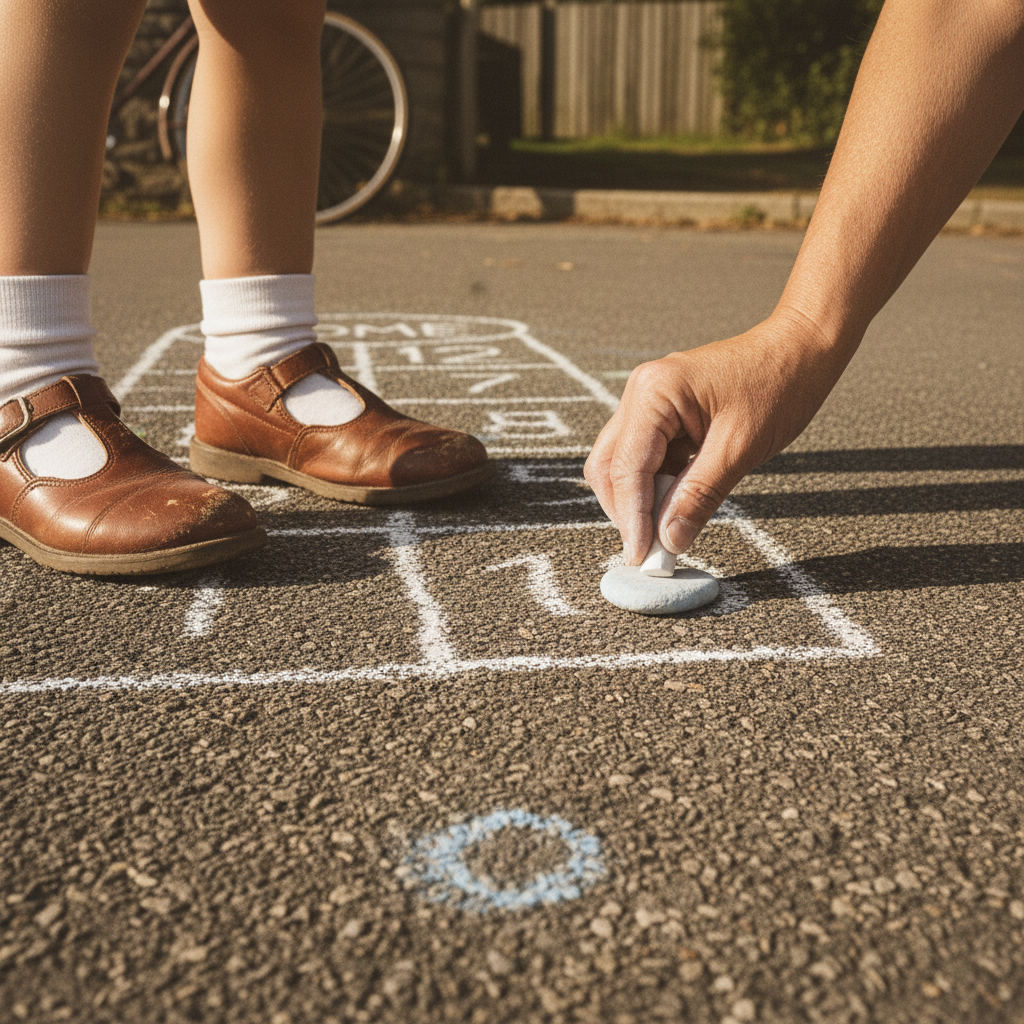 Illustration created for WistMem; not an archival photograph.
What the rain could erase
A chalk court did not need storage space. Shoes wore away the corners and a shower softened the numbers into pale smudges. The next day someone could draw it again, move the finish line, or make room for a younger player. If an old photograph catches a grid in the background, ask who usually drew it and which square caused the most argument. The court lasted until the rain; the rules lasted until the next game.
Hear another playground rhythm in The Skipping Rope Rhymes at Lunchtime.
What does it bring back for you?
Ask someone who remembers, or begin with your own version. A few words can be enough.
Where did you like to spend an afternoon when you were young?
Then ask: What could keep you there longer than you planned?
Find more conversation starters Choose what feels comfortable. Ask before recording or sharing someone’s words.Relive the Memory
Find a little of the story.
Something here bring back a memory? Take a look at what you can find today.
Searching for: vintage retro hopscotch chalk pavement
Vintage & collectible finds
Look for older objects and collectibles connected to this memory.
Search eBay (opens in a new tab)Related finds on Amazon
Explore items related to the same topic, from familiar styles to things made today.
Search Amazon (opens in a new tab)These links open search results. Items, prices, and availability vary.
Affiliate links. We may earn a commission at no extra cost to you.
As an Amazon Associate I earn from qualifying purchases. As an eBay Partner, WistMem may earn from qualifying purchases.
Does this bring back memories?
Share this story with someone who would remember.