Make this page easier to read
Your choices are saved on this device.
Long before air conditioning and television drew families inward, the front porch served as the vital community hub of the American evening.
"Neighbors would stroll by, stopping for a chat, leaning against the railing, sharing news of the day."
The screen door would slam with a familiar spring twang, signaling the official end of the workday chores. Carrying a galvanized bucket of ice cubes or a chipped glass pitcher of sweet tea, you headed out to the wooden planks of the front porch. As the sun dipped low behind the roofline, the day’s oppressive heat began to lift, replaced by a cooling evening breeze that stirred the dust along the curb.
Porches from the 1930s onward were deliberately constructed as outdoor living rooms. They featured wicker rocking chairs, heavy wooden gliders suspended by chains, and modest concrete steps that doubled as extra seating for neighborhood children. This architecture bridged the private domestic sphere and the public sidewalk, creating a semi-public zone where isolation was nearly impossible.
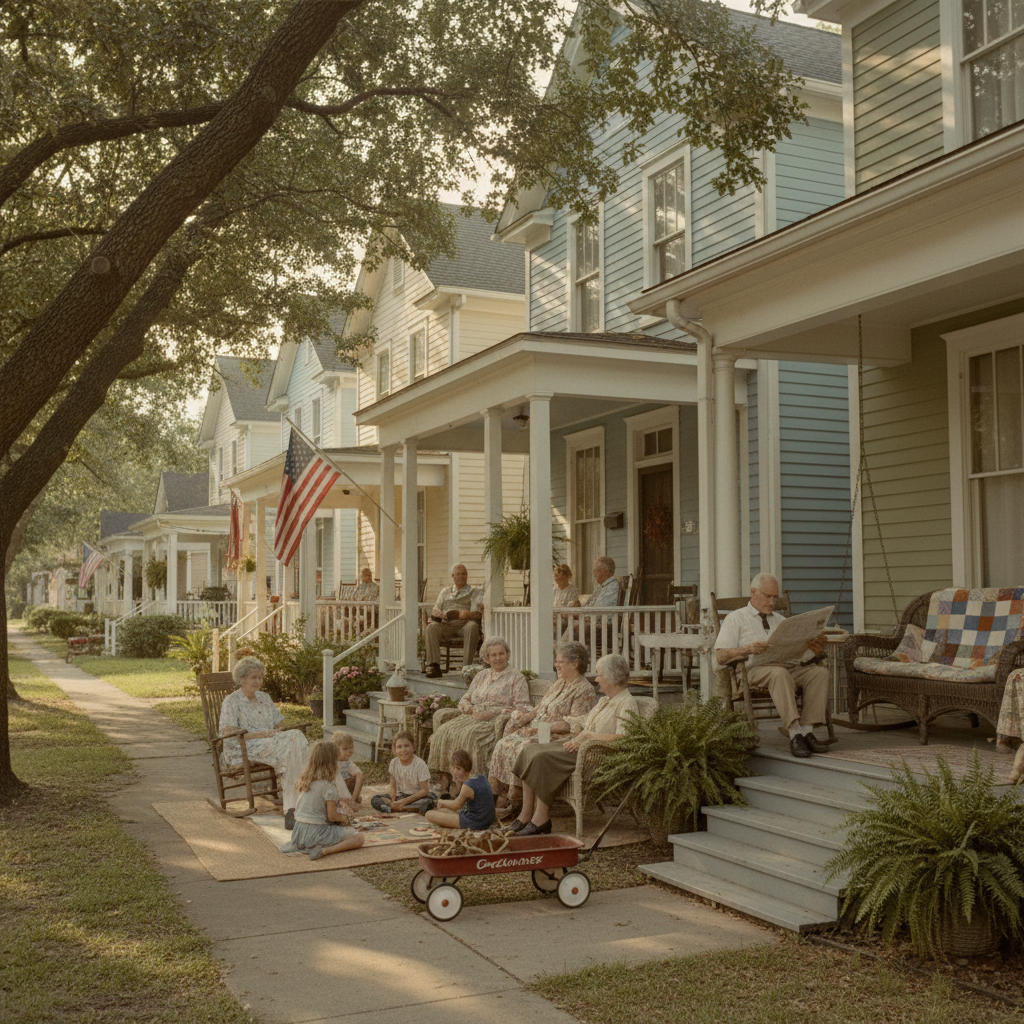
As twilight deepened, the street came alive with unscripted social interaction. Children played kick-the-can or hopscotch under the fading amber glow of streetlamps, their shouts echoing against the clapboard houses. Adults leaned over porch railings to discuss garden yields, local factory shifts, or the price of groceries, while passing pedestrians routinely paused to join the conversation without needing an invitation.
Sensory details anchored these quiet hours firmly in the local landscape. The heavy scent of blooming honeysuckle and freshly mowed Kentucky bluegrass mingled with the distant aroma of supper frying in cast-iron skillets down the block. Cicadas buzzed a steady, rhythmic drone in the oak trees, accompanied by the occasional squeak of porch swing chains moving back and forth in a predictable cadence.
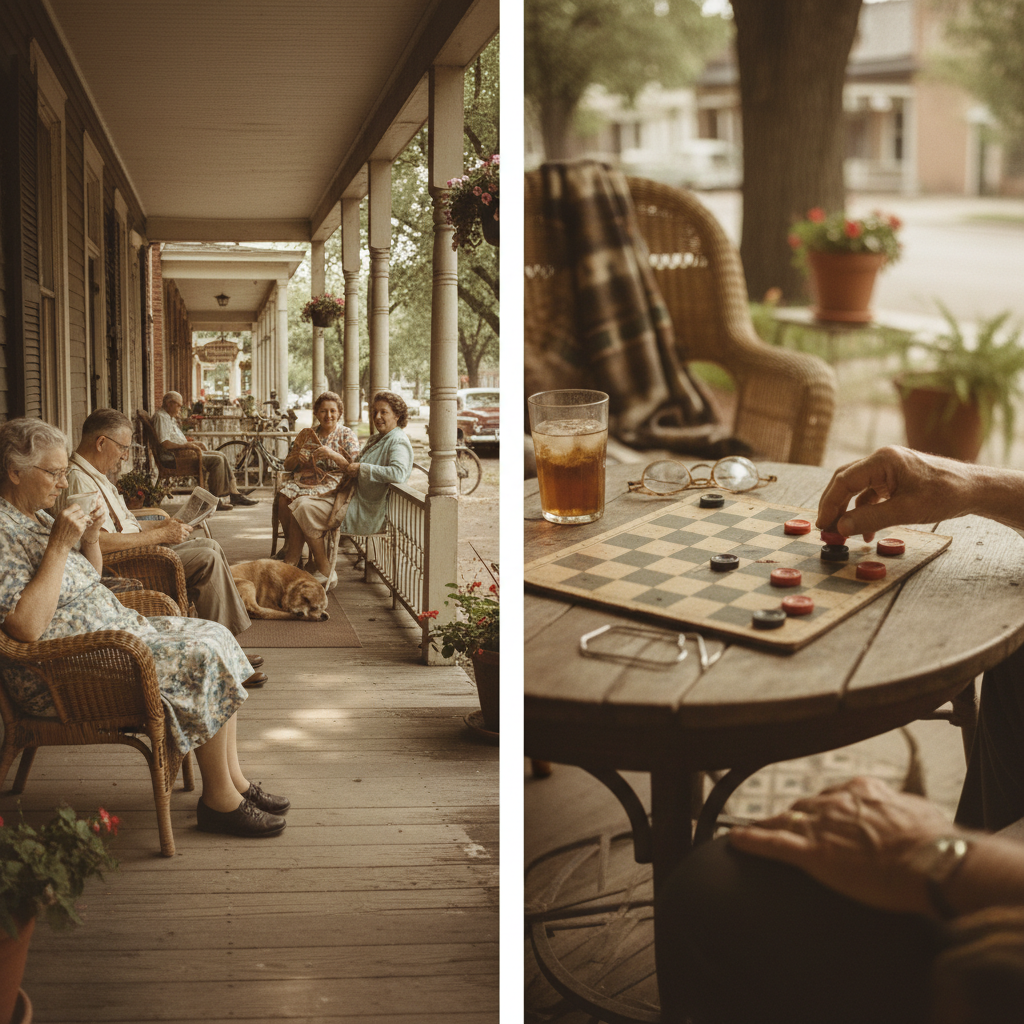
These gatherings required no planning, no calendar invites, and no formal hosting preparation. People simply showed up because everyone knew where everyone else would be once the sun went down. It was a shared social contract built on proximity, offering a reliable space to decompress after long hours of physical labor or household management.
That organic rhythm shifted permanently by the late twentieth century. The widespread adoption of residential air conditioning made sealed, climate-controlled indoor rooms vastly more comfortable during muggy summer nights. At the same time, television programming captured evening attention spans, while suburban architectural trends moved garages and private back patios to the forefront of home design.
Front porches largely transformed from social stages into decorative facades or storage spots for discarded bicycles and seasonal wreaths. Yet the structural design of older neighborhoods still reflects that vanished era, preserving the physical footprint of a time when communities gathered openly on their own doorsteps.
Does this bring back memories?
Share this story with someone who would remember.
Relive the Memory
Find Vintage Treasures on eBay
Searching for: vintage antique front porch sitting
Shop the Memory on eBayAs an eBay Partner, WistMem may earn from qualifying purchases.