Make this page easier to read
Your choices are saved on this device.
A fax made a paper page travel as a reproduced image over a line. The speed changed office expectations, even though the result still had to be checked and filed.
A document fed into the machine at one office could begin emerging from another before its sender had put down the telephone handset. That was the fax machine's practical shock. A signature, marked-up sketch, or handwritten note could arrive as an image rather than be described in a call or wait for a courier. The receiving office still needed to pick up the pages, check them, and act on them.
The page became a signal
Fax equipment scanned the page and transmitted information that another machine used to reproduce it. The Library of Congress guide to office communications places fax machines among tools that changed the speed of business exchange. Technical standards mattered because machines from different makers had to communicate; the Library's description of Group 4 fax compression traces the shift from analog to digital facsimile standards. For a clerk, the result was more immediate: a page arrived where previously only a voice or telegram might have.
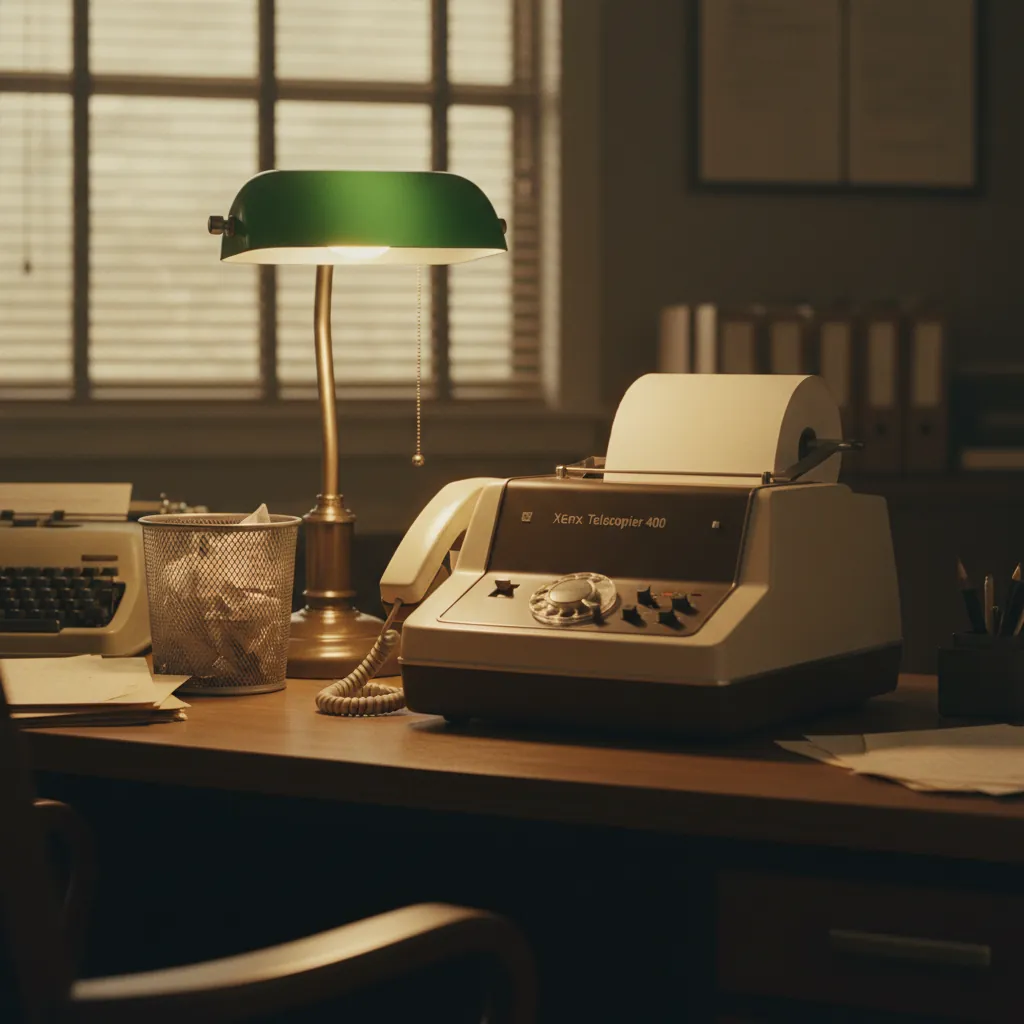 Illustration created for WistMem; not an archival photograph.
Sending was not effortless. The operator had to dial the correct number, orient the original, wait for the connection, and confirm that the remote machine received all pages. A faint printout or a missing second page could matter more than the speed of the first. The machine's confirmation slip became part of the routine because “sent” and “read correctly” were not the same thing.
The new pace of work
Faster delivery could create faster demands. A contract faxed near the end of a workday might prompt an immediate call asking whether it had arrived. A colleague no longer needed to wait for the post to see a draft. The paper tray became a point of interruption in the office: someone heard it start, walked over, and decided whose desk the page belonged on. That little routing step remained human.
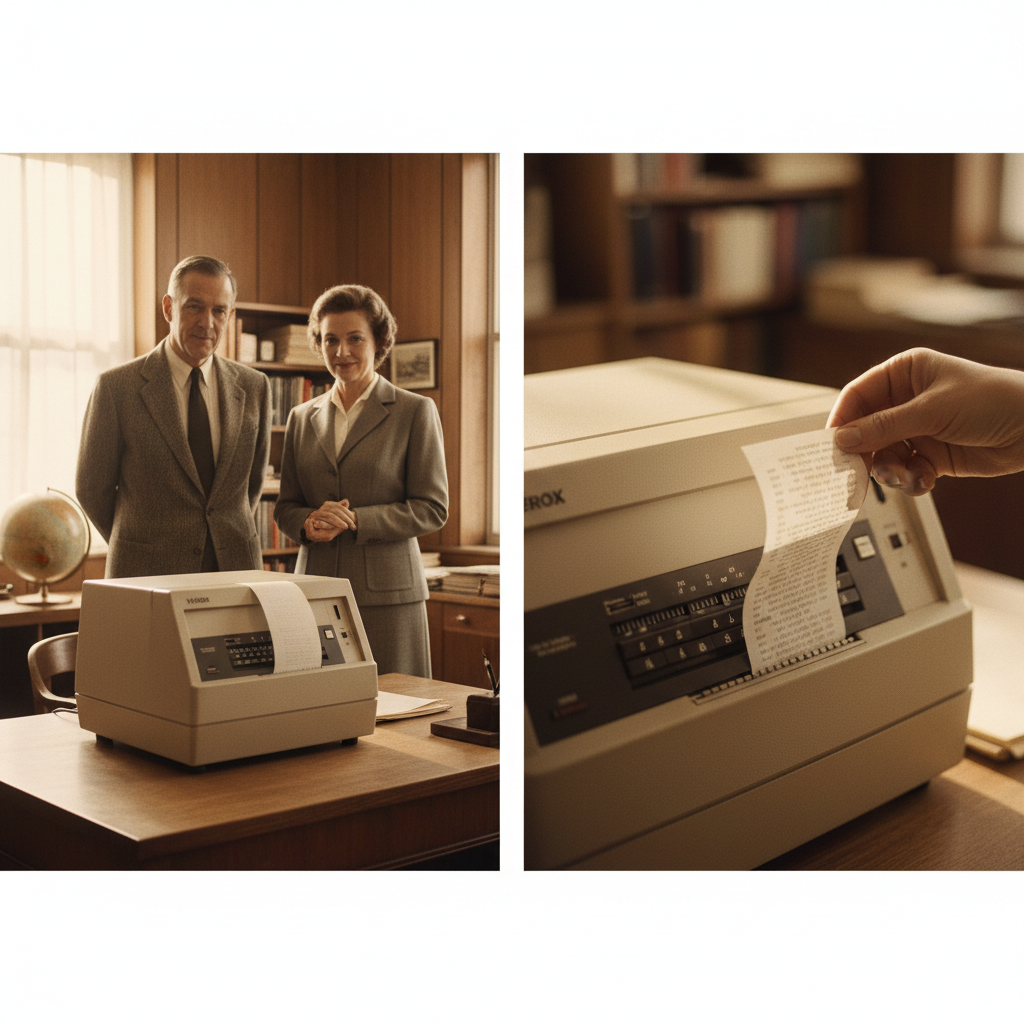 Illustration created for WistMem; not an archival photograph.
What document made a person hurry to the fax machine? It may have been a deadline, a drawing, or a message from someone far away. For an earlier office copy made at the writer's desk rather than transmitted, read Carbon Paper and the Copy Made While You Typed.
What does it bring back for you?
Ask someone who remembers, or begin with your own version. A few words can be enough.
What object changed how you spent an ordinary day?
Then ask: How did you learn to use it, and what could it not do?
Find more conversation starters Choose what feels comfortable. Ask before recording or sharing someone’s words.Relive the Memory
Find a little of the story.
Something here bring back a memory? Take a look at what you can find today.
Searching for: vintage electronics fax machine that
Vintage & collectible finds
Look for older objects and collectibles connected to this memory.
Search eBay (opens in a new tab)Related finds on Amazon
Explore items related to the same topic, from familiar styles to things made today.
Search Amazon (opens in a new tab)These links open search results. Items, prices, and availability vary.
Affiliate links. We may earn a commission at no extra cost to you.
As an Amazon Associate I earn from qualifying purchases. As an eBay Partner, WistMem may earn from qualifying purchases.
Does this bring back memories?
Share this story with someone who would remember.