Make this page easier to read
Your choices are saved on this device.
The modem’s squeal was data being negotiated across a telephone line. The sound also marked a household decision: the line was now busy.
The call began like a telephone call and then became a sequence of tones no person would speak. For a household waiting to go online, that sound was a suspenseful introduction: had the number answered, would the computers agree on a connection, and would it stay up? A successful handshake was followed by a quieter screen full of possibilities. A failed one sent someone back to the dial button.
Why computers made noise
Ordinary telephone lines were built to carry sound, not digital bits. The Computer History Museum's explanation of modems describes devices that changed computer data into audible signals for a voice circuit and converted received signals back into data. The tones at connection time were part of two machines finding a way to communicate over that line. Different equipment and standards sounded different; the familiar screech was not one universal recording played for effect.
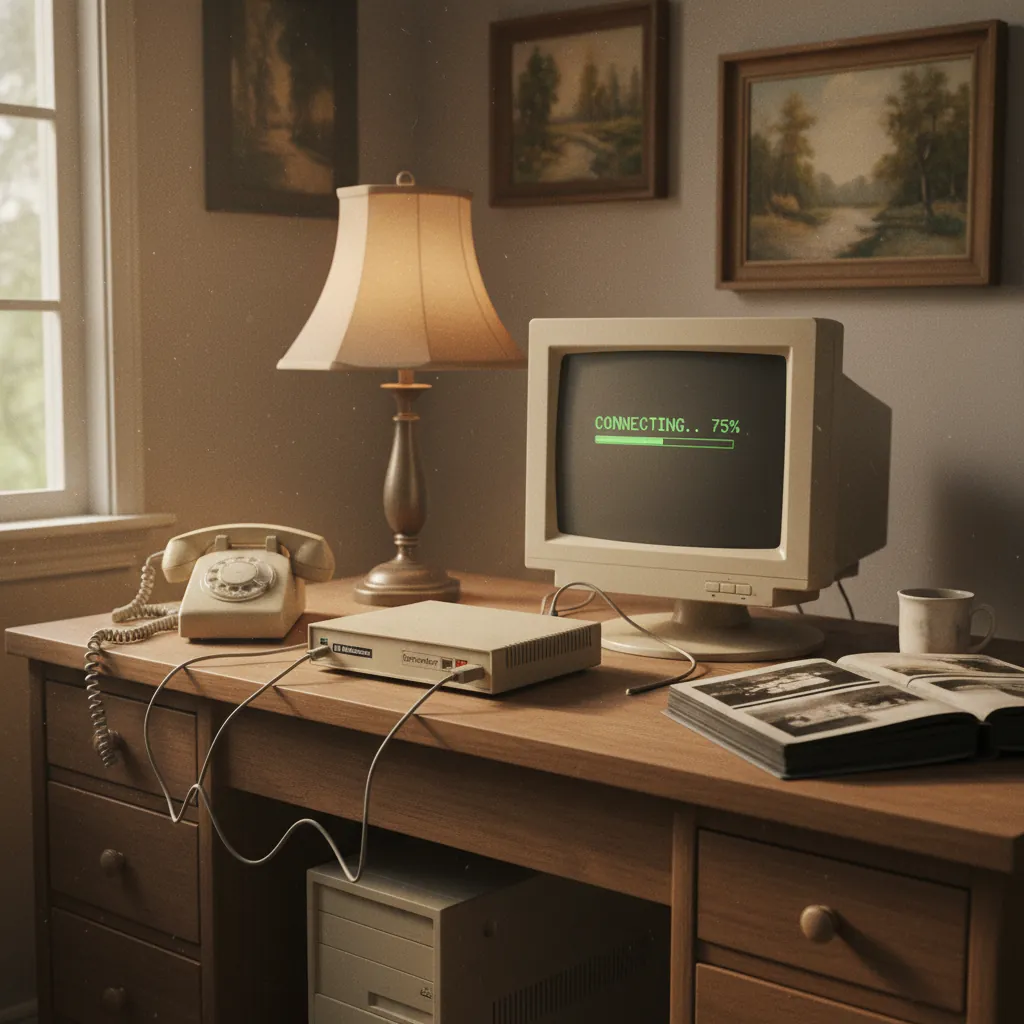 Illustration created for WistMem; not an archival photograph.
The sound had a social consequence. In many homes, the internet call occupied the same line people used for conversation. Someone expecting a call might object to going online; someone already connected might plead for a few more minutes before disconnecting. The connection gave access to a larger world but temporarily narrowed the household's ordinary phone access. That tradeoff made the moment of dialing surprisingly public.
Waiting after the handshake
Getting connected did not make everything quick. The Computer History Museum's software exhibit notes that downloading a CD-quality song over a common dial-up modem could take hours. Images assembled slowly, and a lost connection could undo the wait. The noises at the start therefore promised effort as well as access. A person might plan to read a page while it loaded or avoid tying up the line for a large file.
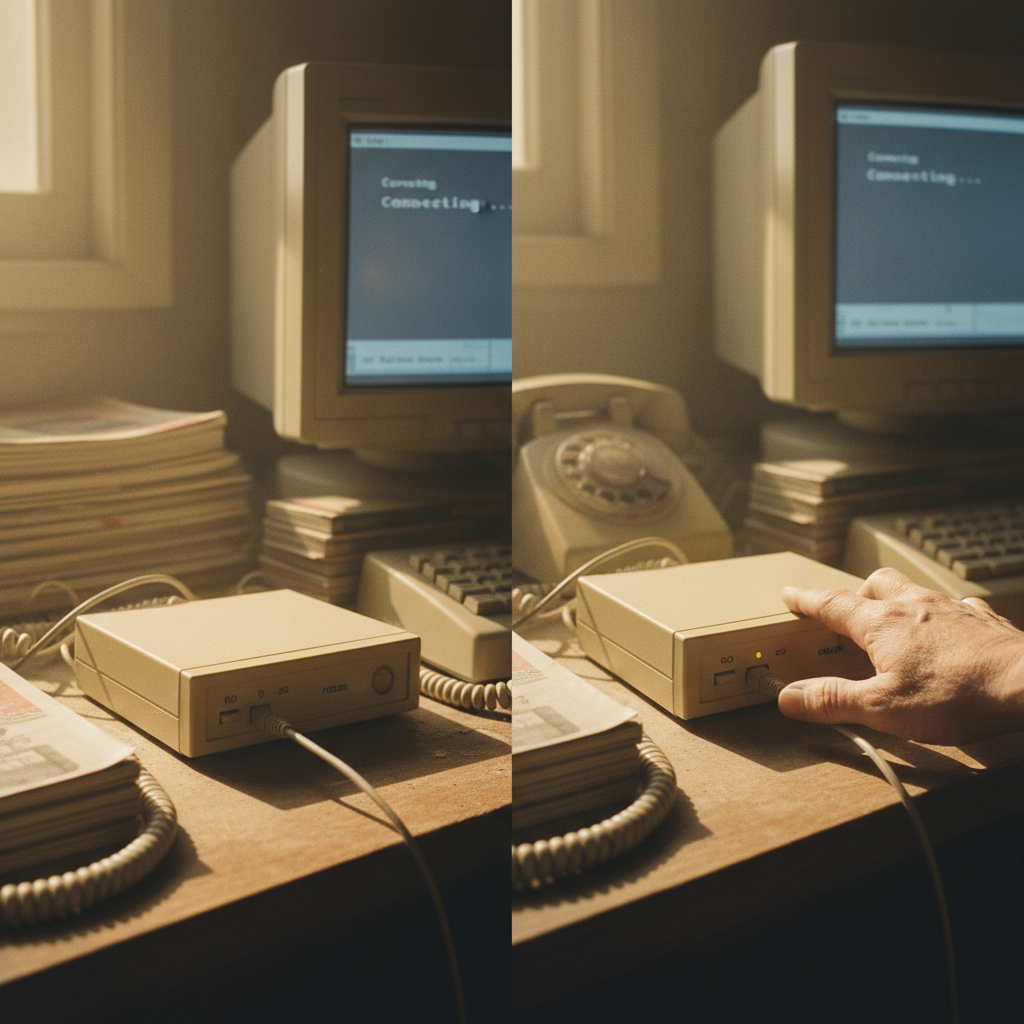 Illustration created for WistMem; not an archival photograph.
What was the first thing the household tried to do after the tones stopped? The answer may lead to a chat room, an email, a game, or a patient wait for a picture. For another communications device whose alert interrupted daily life, see The Pager on Your Belt.
What does it bring back for you?
Ask someone who remembers, or begin with your own version. A few words can be enough.
What object changed how you spent an ordinary day?
Then ask: How did you learn to use it, and what could it not do?
Find more conversation starters Choose what feels comfortable. Ask before recording or sharing someone’s words.Relive the Memory
Find a little of the story.
Something here bring back a memory? Take a look at what you can find today.
Searching for: vintage dial modem screeching connect
Vintage & collectible finds
Look for older objects and collectibles connected to this memory.
Search eBay (opens in a new tab)Related finds on Amazon
Explore items related to the same topic, from familiar styles to things made today.
Search Amazon (opens in a new tab)These links open search results. Items, prices, and availability vary.
Affiliate links. We may earn a commission at no extra cost to you.
As an Amazon Associate I earn from qualifying purchases. As an eBay Partner, WistMem may earn from qualifying purchases.
Does this bring back memories?
Share this story with someone who would remember.