Make this page easier to read
Your choices are saved on this device.
Cricket radio could travel from the kitchen to the garden or workshop. The long pauses and sudden wickets made a match part of the day's rhythm.
A Test match could be present without anyone sitting still to watch it. The radio might be on in the kitchen while lunch was made, carried into a garden, or tuned in beside a workshop bench. For hours, a commentator's voice described a field that listeners could not see. Then the tone changed, a wicket fell, and people in different rooms called out to one another.
Sport that fitted into the day
Cricket's long form made the broadcast distinctive. Between deliveries there was room for the score, the weather, the crowd, and a conversation in the commentary box. The BBC's history of its 1950s broadcasts records the first ball-by-ball Test Match Special transmission on 30 June 1957. That date anchors one influential program; radio cricket and local listening habits have varied by country and generation.
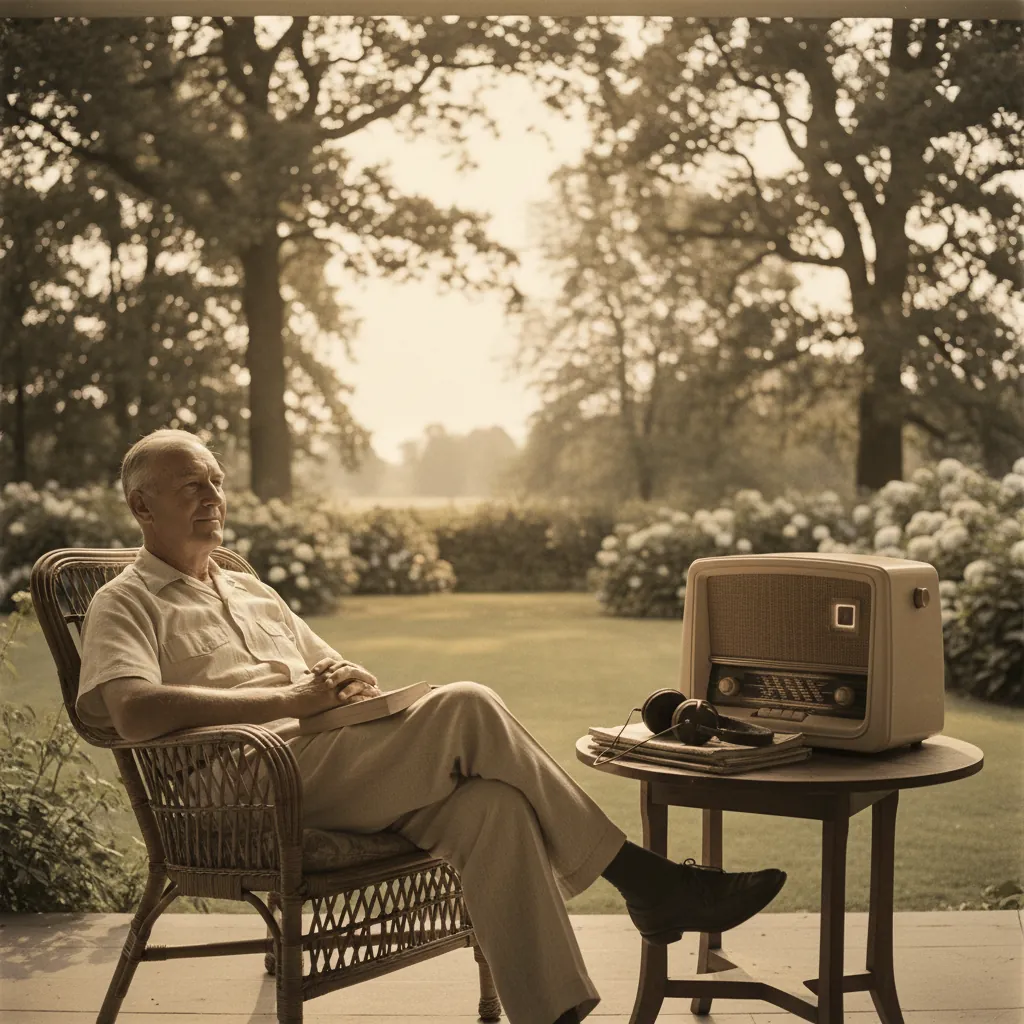 Illustration created for WistMem; not an archival photograph.
For the listener, the match was partly imagined. Commentary made the field legible, but the image formed in the mind. A parent could explain what a fielding position meant; a child might remember the names and voices before understanding the rules. A rain delay could interrupt both the match and the household's plan for the afternoon. The radio did not demand the same gaze as a television, which let the score travel alongside other work.
The day between wickets
A listener could step away for ten minutes and return to a score that had barely changed—or to a sudden collapse. This uneven pace rewarded the person who kept the radio nearby. Tea breaks and bad weather created natural pauses, while a new bowler or a tight finish pulled attention back. The commentary box supplied continuity through those changes. Its voices could become familiar companions over a season, even when the ground and players changed.
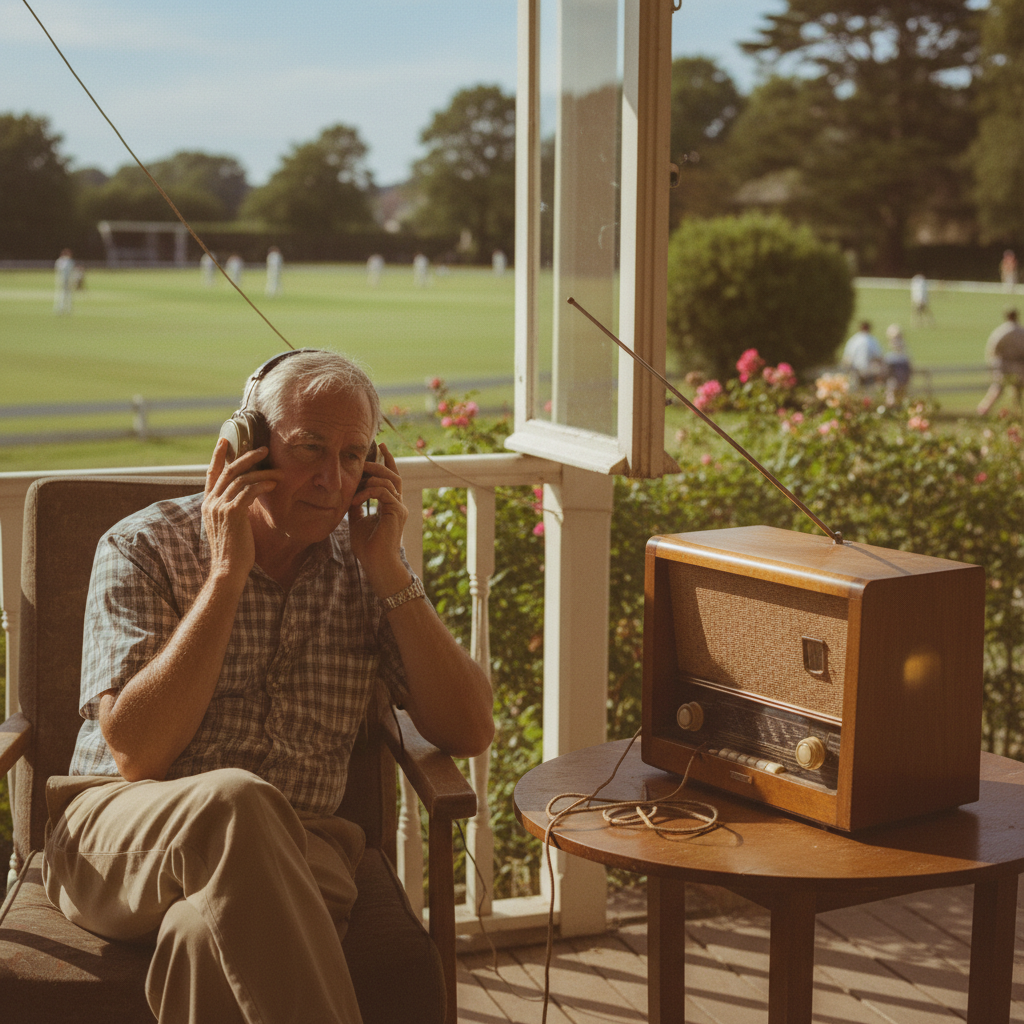 Illustration created for WistMem; not an archival photograph.
Was there a voice that told the household it was summer before anyone mentioned the weather? A person may remember a commentator's cadence, a parent's sudden shout, or the quiet after a wicket more sharply than the final score.
For another radio event that gathered a family after dark, read The Radio Serial Drama After Dinner.
What does it bring back for you?
Ask someone who remembers, or begin with your own version. A few words can be enough.
What did you look forward to watching, hearing, or doing for fun?
Then ask: Who shared it with you, and what do you remember about that time?
Find more conversation starters Choose what feels comfortable. Ask before recording or sharing someone’s words.Relive the Memory
Find a little of the story.
Something here bring back a memory? Take a look at what you can find today.
Searching for: vintage cricket radio summer long
Vintage & collectible finds
Look for older objects and collectibles connected to this memory.
Search eBay (opens in a new tab)Related finds on Amazon
Explore items related to the same topic, from familiar styles to things made today.
Search Amazon (opens in a new tab)These links open search results. Items, prices, and availability vary.
Affiliate links. We may earn a commission at no extra cost to you.
As an Amazon Associate I earn from qualifying purchases. As an eBay Partner, WistMem may earn from qualifying purchases.
Does this bring back memories?
Share this story with someone who would remember.