Make this page easier to read
Your choices are saved on this device.
Turn a baseball card over and its small print can reveal a maker, series, sponsor, or player detail. Library of Congress examples show why the back deserves as much attention as the portrait.
The front of a card made a player recognizable. The back made the collector turn it over, hold it closer to the light, and ask what all the small print meant. That side can still help identify a family card long after the packet and its original owner are gone.
What is printed on the reverse?
It depends on the issue. Some later cards carry season statistics or a brief biography; an earlier card may emphasize the company that distributed it. The Library of Congress provides front and back images of a 1911 Christy Mathewson/Albert Bridwell card sponsored by the American Tobacco Company. The Library's collection history explains that many cards from 1887 to 1914 were advertising placed in cigarette packs. That is why a collector should identify the card's actual publisher and year before assuming it came with gum or that every reverse was a statistics panel.
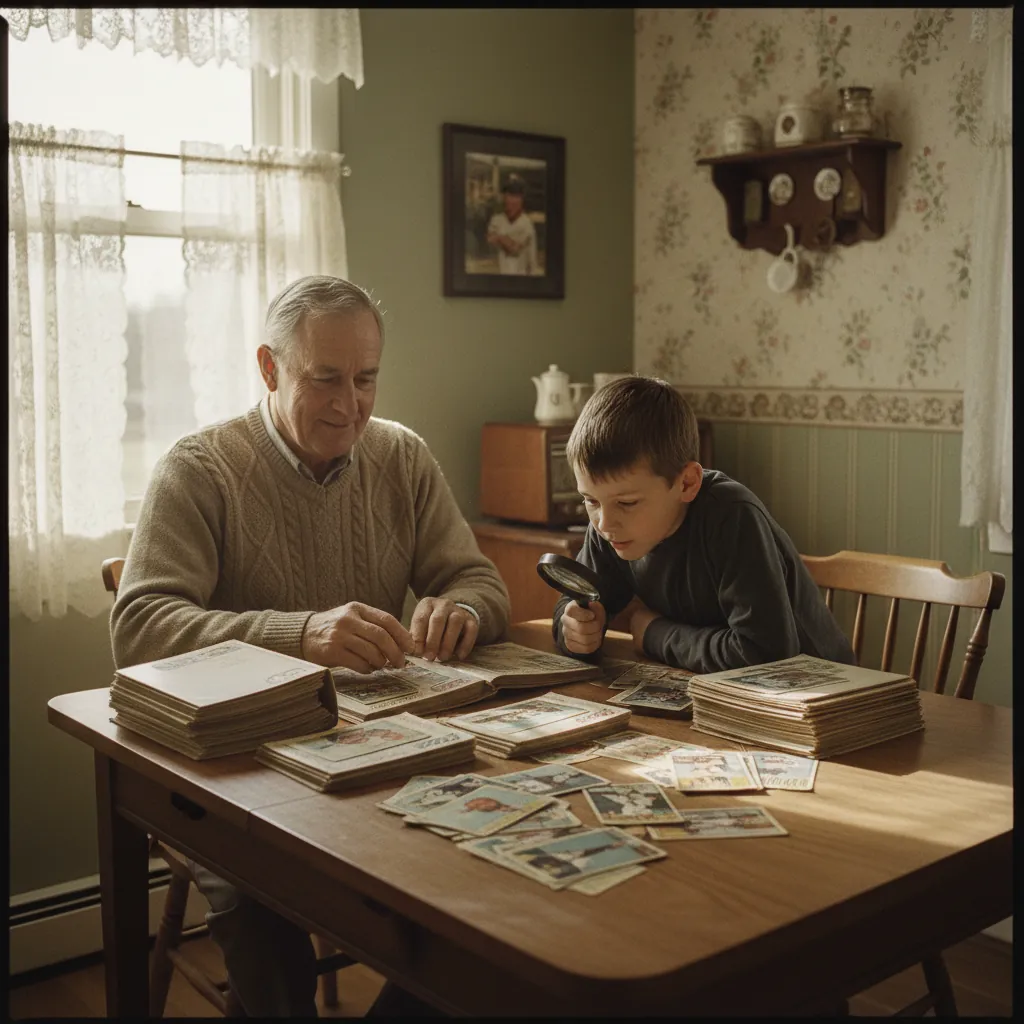 Illustration created for WistMem; not an archival photograph.
More than the printed information
Turn the card in your hand and its wear becomes visible too. A bent corner may show where it was tucked into a pocket; an inscription may be a former owner's name. A card glued into an album cannot be read on the back without risking damage. In the Smithsonian's 1952 Topps set, the set and numbered grouping are part of the catalog record. For a family card, keeping the front, back, and any album page together can preserve that same context.
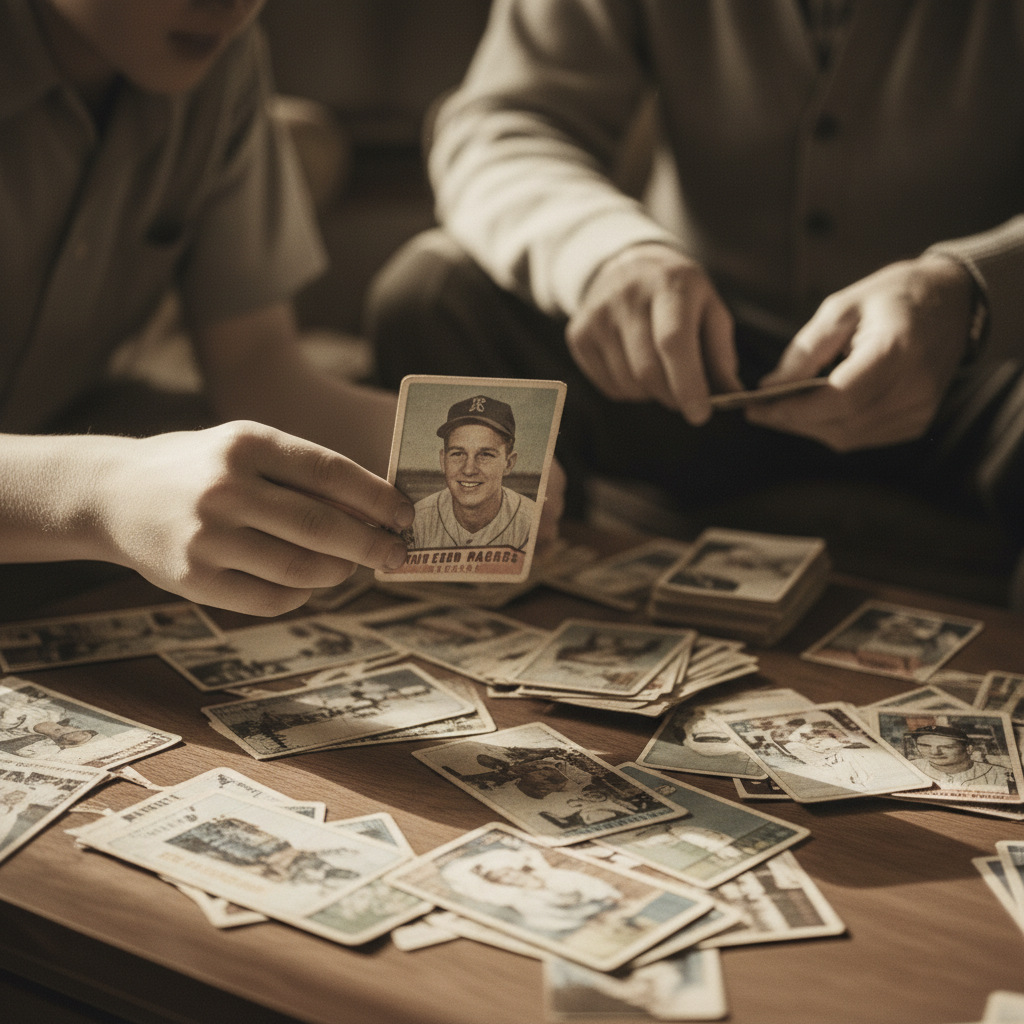 Illustration created for WistMem; not an archival photograph.
The question a card cannot print
The tiny type may identify a player and a maker, but it will not tell you who saved the card or whether it was the one a friend finally agreed to trade. Photograph both sides before separating it from a family box, and ask the person who kept it what they remember. A name scribbled on a page may be the start of a better story than a price guide. The portrait invited you in; the back told you which card you held.
For the social side of the hobby, read Collecting Baseball Cards: The Pack and the Trade.
What does it bring back for you?
Ask someone who remembers, or begin with your own version. A few words can be enough.
Where did you like to spend an afternoon when you were young?
Then ask: What could keep you there longer than you planned?
Find more conversation starters Choose what feels comfortable. Ask before recording or sharing someone’s words.Relive the Memory
Find a little of the story.
Something here bring back a memory? Take a look at what you can find today.
Searching for: vintage retro collecting baseball cards
Vintage & collectible finds
Look for older objects and collectibles connected to this memory.
Search eBay (opens in a new tab)Related finds on Amazon
Explore items related to the same topic, from familiar styles to things made today.
Search Amazon (opens in a new tab)These links open search results. Items, prices, and availability vary.
Affiliate links. We may earn a commission at no extra cost to you.
As an Amazon Associate I earn from qualifying purchases. As an eBay Partner, WistMem may earn from qualifying purchases.
Does this bring back memories?
Share this story with someone who would remember.