Make this page easier to read
Your choices are saved on this device.
A ballroom evening was as much about finding a partner and learning the room as it was about knowing the steps. Follow the social details behind the dance.
Before the first dance, there was the room: chairs around the edge, a floor polished for movement, music being tested, and people deciding whether to join in. Saturday night ballroom dancing could feel formal from the doorway. Once the band or record began, it became a series of small decisions: whom to ask, where to stand, and whether to try a step you had only practiced at home.
The floor was a social map
Couple dances allowed partners to move together, but they also made newcomers visible. A confident dancer might know how to navigate the traffic; a beginner might watch one number before risking the floor. The Library of Congress social-dance collection shows how dance manuals recorded changing steps, dress, and ideas about etiquette. A manual describes what teachers hoped dancers would do. A remembered local hall tells us how people actually met, hesitated, laughed, and learned.
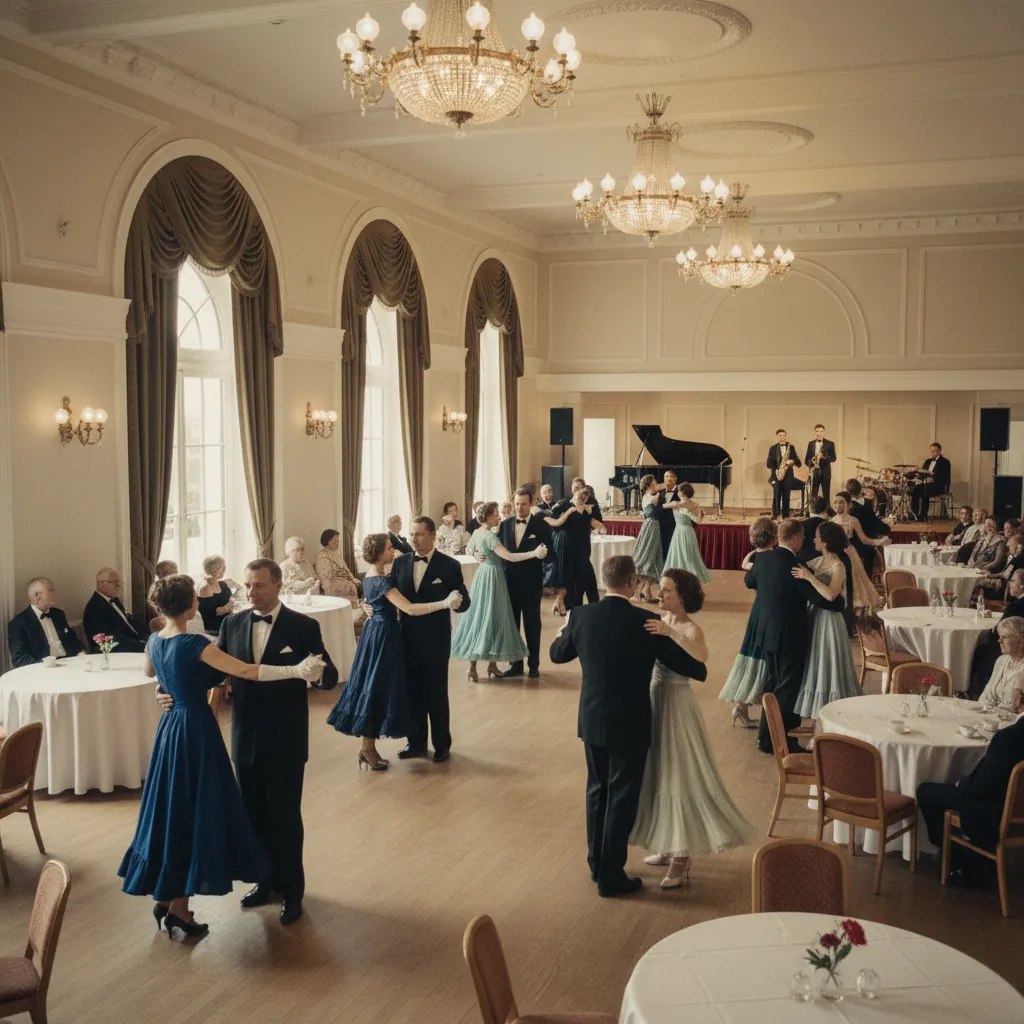 Illustration created for WistMem; not an archival photograph.
The music mattered because it changed the room's pace. A slow number might bring a different partner onto the floor from a livelier one. Friends could spend as much time talking by the wall as dancing. The evening also had practical edges: the journey there, the cost of entry, the last dance, and the way home. Those details keep a memory from becoming an anonymous picture of swirling dresses.
From the first number to the last
The sequence of music could change a dancer's confidence. Someone willing to follow a slow tune might sit out a faster one, then return when a familiar rhythm began. The Library's overview of social dance describes how public styles changed after the First World War, including the Charleston, fox trot, and Lindy Hop. A Saturday dance need not have included every fashionable step. What mattered in one hall was the band's repertoire and the unwritten agreement about who led, who followed, and how much space each pair had.
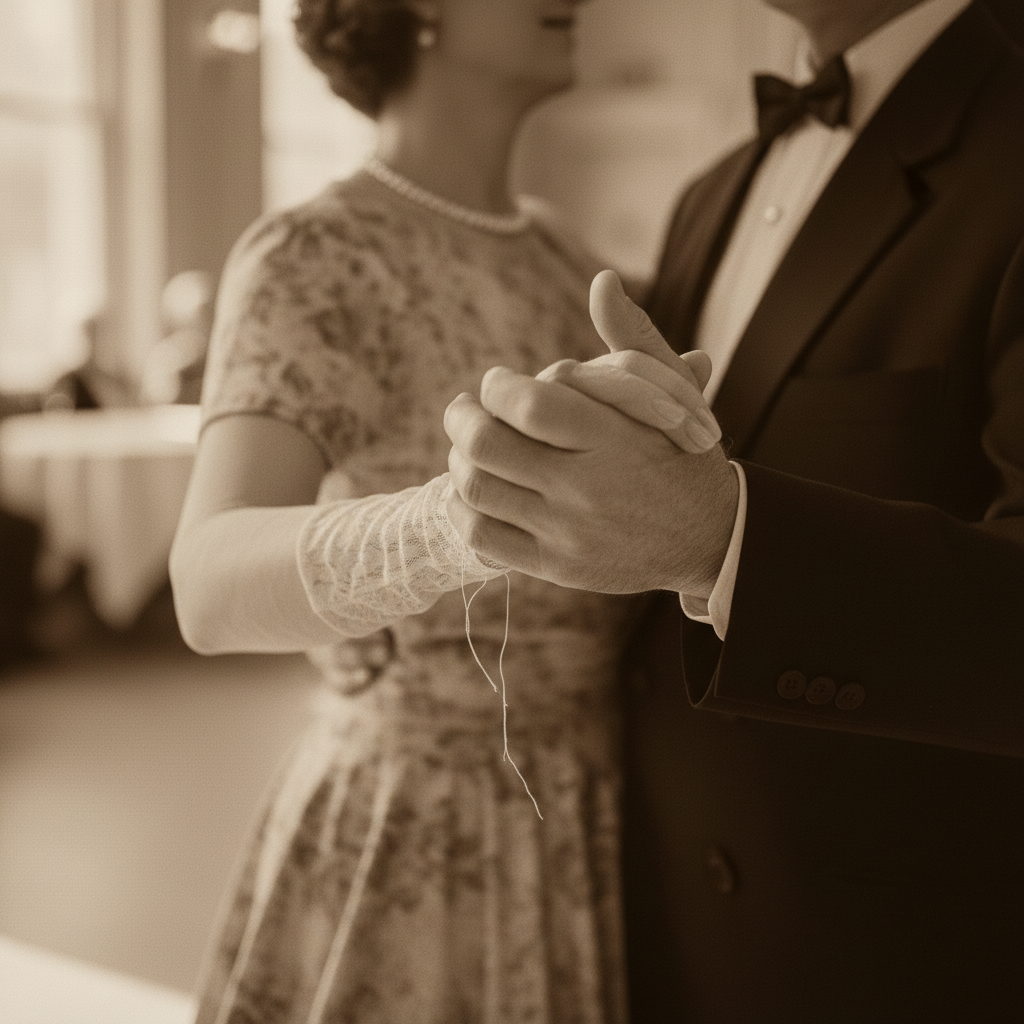 Illustration created for WistMem; not an archival photograph.
The last number could settle the evening's story. Did the person have a partner waiting, or did they stay with friends by the wall? The journey home after the music stopped may have given them the first quiet chance to say what the dance had meant.
For a different social dance with its own school-age rules, visit The Sock Hop in the School Gymnasium.
What does it bring back for you?
Ask someone who remembers, or begin with your own version. A few words can be enough.
What did you look forward to watching, hearing, or doing for fun?
Then ask: Who shared it with you, and what do you remember about that time?
Find more conversation starters Choose what feels comfortable. Ask before recording or sharing someone’s words.Relive the Memory
Find a little of the story.
Something here bring back a memory? Take a look at what you can find today.
Searching for: vintage retro ballroom dancing saturday
Vintage & collectible finds
Look for older objects and collectibles connected to this memory.
Search eBay (opens in a new tab)Related finds on Amazon
Explore items related to the same topic, from familiar styles to things made today.
Search Amazon (opens in a new tab)These links open search results. Items, prices, and availability vary.
Affiliate links. We may earn a commission at no extra cost to you.
As an Amazon Associate I earn from qualifying purchases. As an eBay Partner, WistMem may earn from qualifying purchases.
Does this bring back memories?
Share this story with someone who would remember.