Make this page easier to read
Your choices are saved on this device.
An AGA stored heat in cast iron and gave different ovens different jobs. Its steady warmth shaped how a household cooked and where people gathered, though modern models work differently.
In a kitchen with a traditional AGA, the range could feel like part of the room rather than a machine switched on for dinner. A pan might move from a hotplate to a simmering oven while someone set a damp coat nearby. Those details belong to particular households, but the cooker's design helps explain why so many people remember its warmth as much as its food.
How did an AGA cook without constant adjustment?
The central idea was heat storage. Cast-iron ovens absorbed heat and released it from their surfaces. Instead of asking one oven to do every job by turning a dial up and down, a cook used separate heat environments for roasting, baking, and simmering. AGA's explanation of its ovens describes that method. It helps explain the remembered rhythm: place a dish in one oven, move another pan elsewhere, and return to a pot that has been cooking slowly.
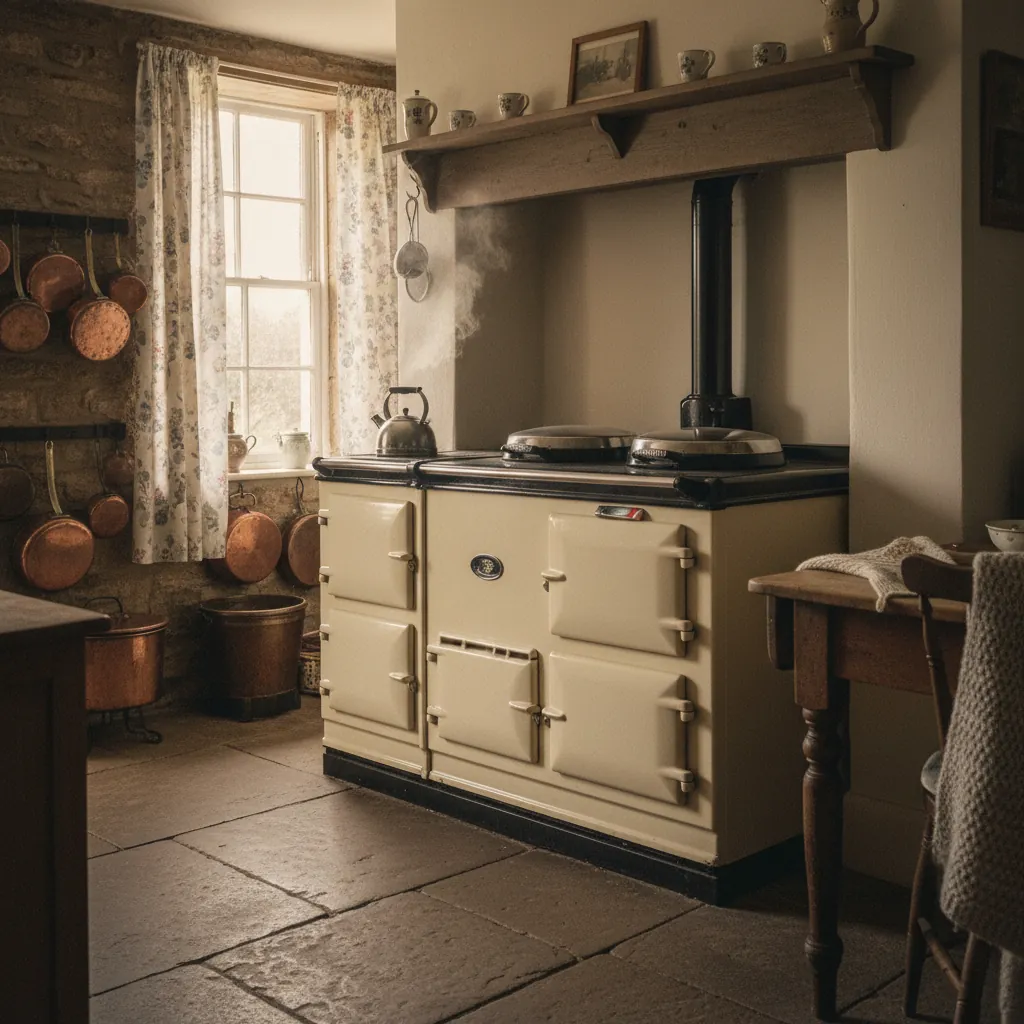 Illustration created for WistMem; not an archival photograph.
The familiar claim that an AGA was always warm describes many older heat-storage installations, not every cooker sold today. A manufacturer's gas-fired manual describes a burner that operates continuously, while AGA says many current models allow ovens and hotplates to be turned on and off. If you are identifying one from a family kitchen, the fuel, number of ovens, and controls matter more than the enamel color alone.
A range with a long history
AGA dates the original cooker to Gustaf Dalén's 1922 invention and says production at its Shropshire site began in 1947. The brand's own timeline records later changes, including oil-fired and gas-fired versions. That history sits behind a very domestic memory: a range whose hot lids and heavy doors told a cook where to put the kettle, the casserole, or the bread.
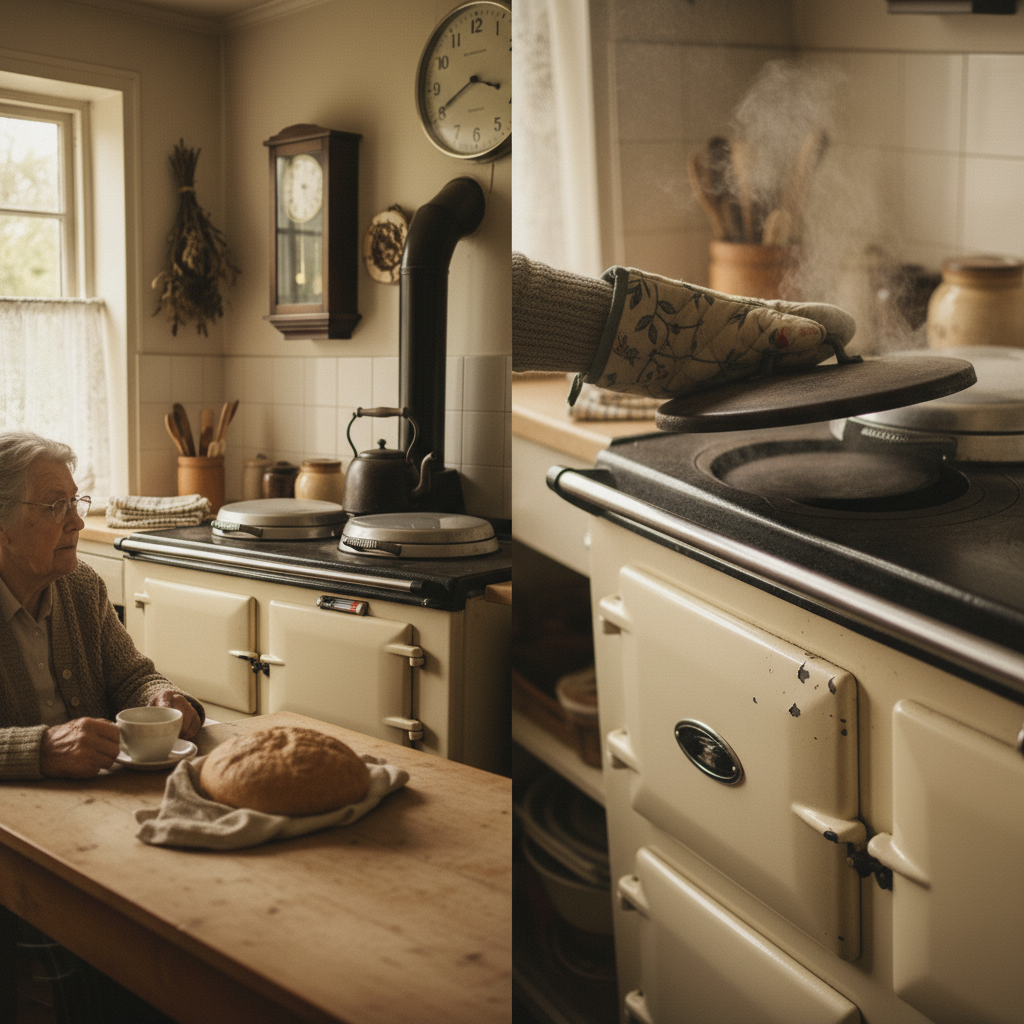 Illustration created for WistMem; not an archival photograph.
Ask someone who used one which oven they trusted for a special dish and who taught them the order of operations. Was the range a practical necessity, a chosen luxury, or simply the cooker that came with the house? The answer is more revealing than a generalized picture of a country kitchen.
For another cast-iron object whose care became a household lesson, read The Cast Iron Skillet Passed Down Generations.
What does it bring back for you?
Ask someone who remembers, or begin with your own version. A few words can be enough.
What everyday sound or smell brings back a home you remember?
Then ask: Who was there, and what were they doing?
Find more conversation starters Choose what feels comfortable. Ask before recording or sharing someone’s words.Relive the Memory
Find a little of the story.
Something here bring back a memory? Take a look at what you can find today.
Searching for: vintage kitchen aga cooker that
Vintage & collectible finds
Look for older objects and collectibles connected to this memory.
Search eBay (opens in a new tab)Related finds on Amazon
Explore items related to the same topic, from familiar styles to things made today.
Search Amazon (opens in a new tab)These links open search results. Items, prices, and availability vary.
Affiliate links. We may earn a commission at no extra cost to you.
As an Amazon Associate I earn from qualifying purchases. As an eBay Partner, WistMem may earn from qualifying purchases.
Does this bring back memories?
Share this story with someone who would remember.