Make this page easier to read
Your choices are saved on this device.
A daytime serial left its story open at the same hour each day. Remember who watched, who caught up a neighbor, and how the program fitted around work at home.
The episode ended, but the argument on screen did not. A character paused in a doorway, someone else's secret was almost exposed, and the announcer promised the story would continue tomorrow. An afternoon soap opera asked viewers to return at a particular hour. For a person working at home, caring for children, or taking a break between tasks, that hour could become a small marker in the day.
A story built for returning
The serial format gave ordinary conversation a long memory. A viewer could miss one installment and still understand the broad relationships, yet a single missed confession might become the next day's question. The Library of Congress account of The Guiding Light traces that program from radio in 1937 to television in 1952. It is a useful example of how a continuing story followed its audience from one household medium to another. It does not stand for every soap opera, but it explains why the habit outlasted a particular screen.
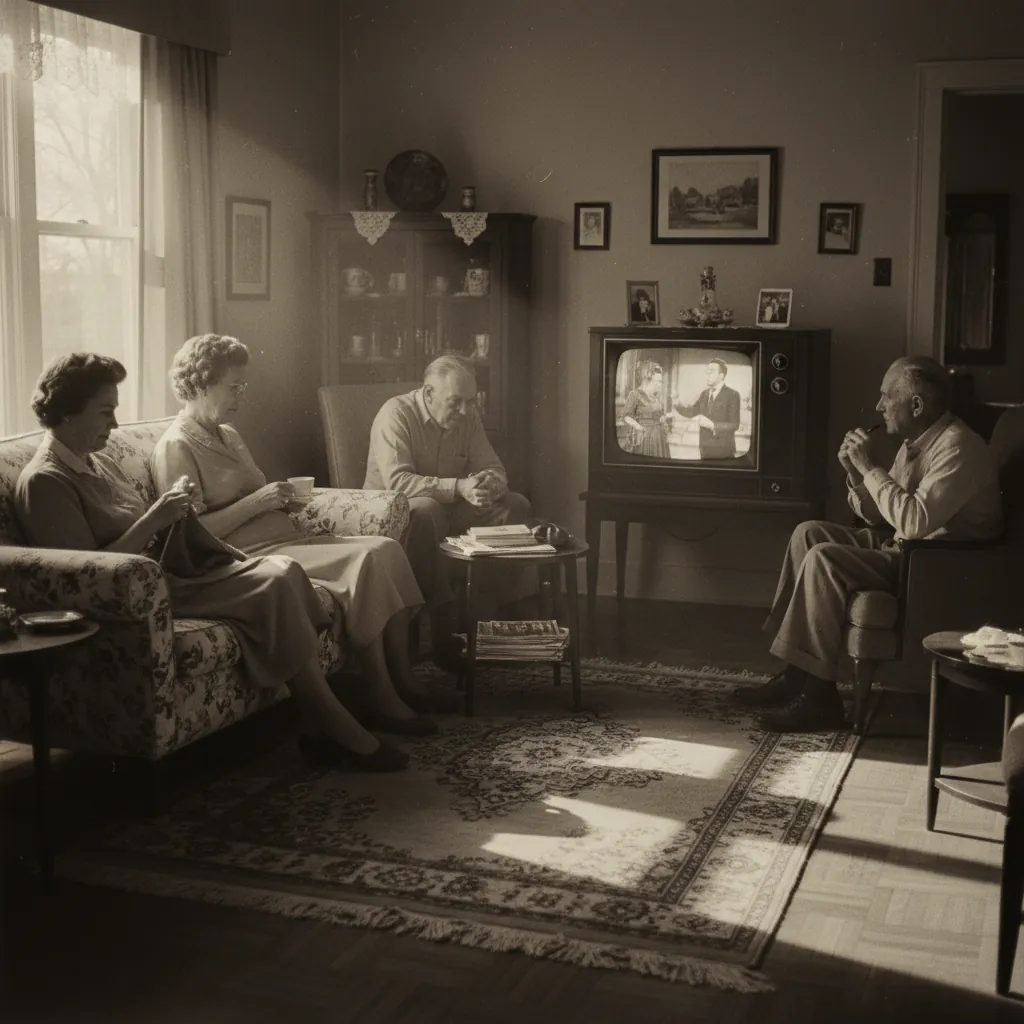 Illustration created for WistMem; not an archival photograph.
The domestic setting was part of the memory. Some people watched while folding laundry; others heard dialogue from another room and came back for the final scene. A neighbor who missed an episode could learn the crucial turn over tea or on the telephone. The characters belonged to a fictional town, yet the conversation about them belonged to a real community.
When the episode left the screen
The unfinished plot made conversation part of the format. A neighbor who worked through the broadcast could ask for the missing turn; a viewer who had watched might exaggerate the cliffhanger for effect. Radio soaps had already developed this daily intimacy. The Library of Congress guide to women in radio describes how daytime serials drew audiences that sponsors valued. When television took over a living room, the same long story could be shared through a new set of gestures: leaving a task for the final scene, arguing over a character's choice, and returning tomorrow to see whether the prediction was right.
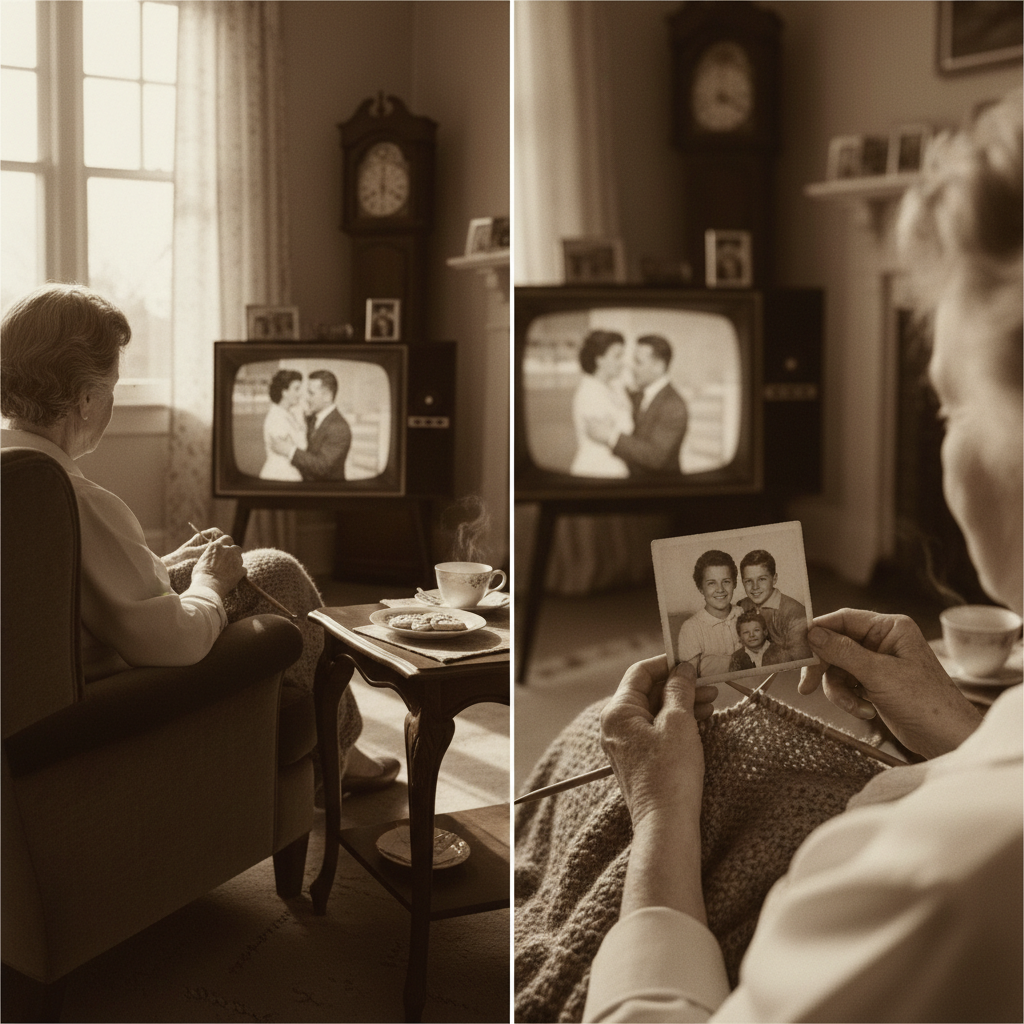 Illustration created for WistMem; not an archival photograph.
Which character prompted the most arguments in the household? The answer can carry the opening music, the hour of the day, and the people who came into the room for the last scene.
For an earlier kind of story that also depended on a returning listener, read The Radio Serial Drama After Dinner.
What does it bring back for you?
Ask someone who remembers, or begin with your own version. A few words can be enough.
What did you look forward to watching, hearing, or doing for fun?
Then ask: Who shared it with you, and what do you remember about that time?
Find more conversation starters Choose what feels comfortable. Ask before recording or sharing someone’s words.Relive the Memory
Find a little of the story.
Something here bring back a memory? Take a look at what you can find today.
Searching for: vintage retro afternoon soap opera
Vintage & collectible finds
Look for older objects and collectibles connected to this memory.
Search eBay (opens in a new tab)Related finds on Amazon
Explore items related to the same topic, from familiar styles to things made today.
Search Amazon (opens in a new tab)These links open search results. Items, prices, and availability vary.
Affiliate links. We may earn a commission at no extra cost to you.
As an Amazon Associate I earn from qualifying purchases. As an eBay Partner, WistMem may earn from qualifying purchases.
Does this bring back memories?
Share this story with someone who would remember.