Make this page easier to read
Your choices are saved on this device.
For many families, the streetlight marked the end of an outdoor game. Oral histories show how streets, games, traffic, and household rules shaped those long afternoons.
“Come home when the lights turn on” could stretch an ordinary afternoon into one last game. There was always a reason to play another round: the sides had finally become even, someone new had joined, or the ball had only just been found. Then the sky changed color and the corner lamp offered a signal everyone could see.
Where could children play?
The National Park Service's account of postwar play describes group games in streets, vacant lots, fields, and woods, with city and rural children using different spaces. In a Library of Congress oral history from Paterson, New Jersey, Al Buonforte remembers street games such as stickball and handball and connects them to the traffic of his neighborhood. It is a useful detail: that street was a play space because its particular conditions allowed it, not because every street felt the same.
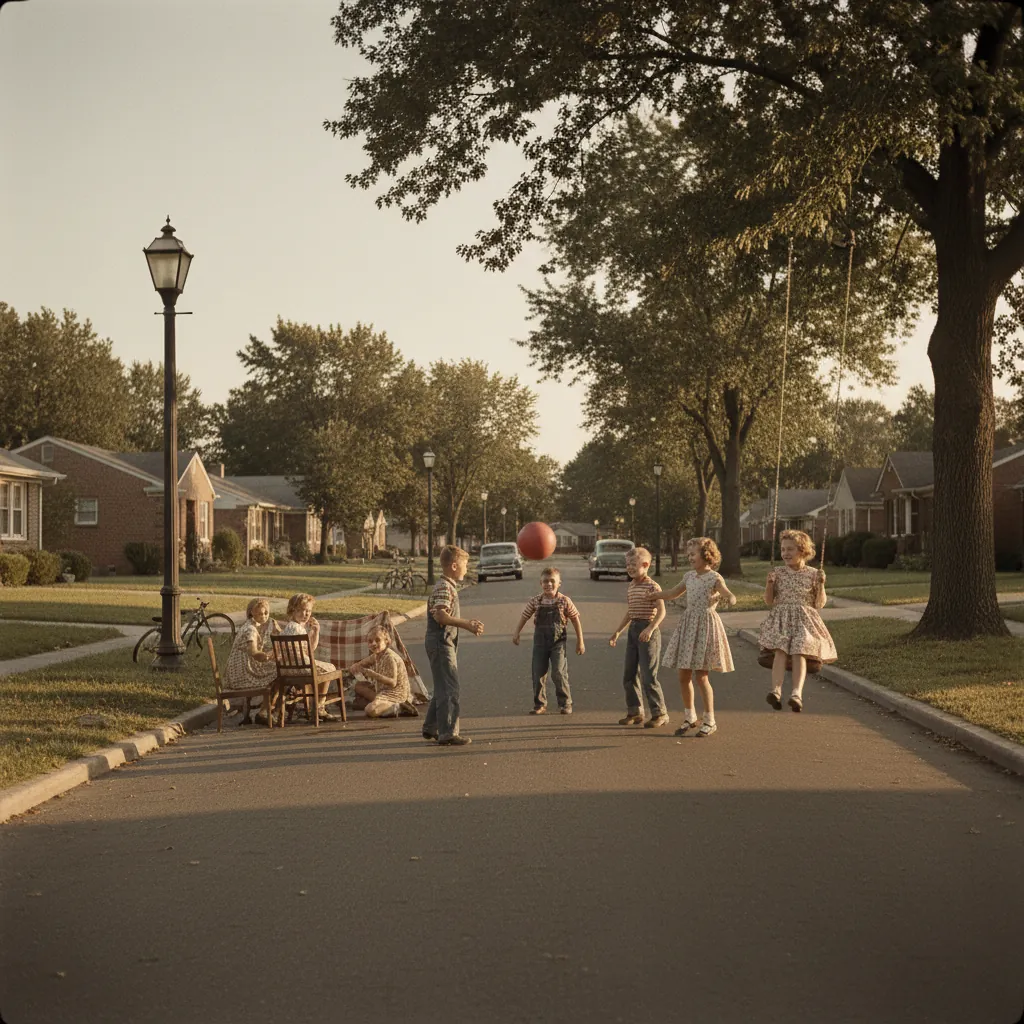 Illustration created for WistMem; not an archival photograph.
How did an afternoon take shape?
Games needed people more than equipment. A ball, an agreed boundary, and a few neighbors could be enough. The gutter became an edge of the field; a tree or pavement crack served as a base. Rules changed when someone went inside for supper and the teams became uneven. A younger child might be asked to fetch the ball or finally invited into the next round. The place mattered as much as the game: a quiet block, shared yard, or nearby park offered different freedoms, and an unsafe crossing could end an adventure before it began.
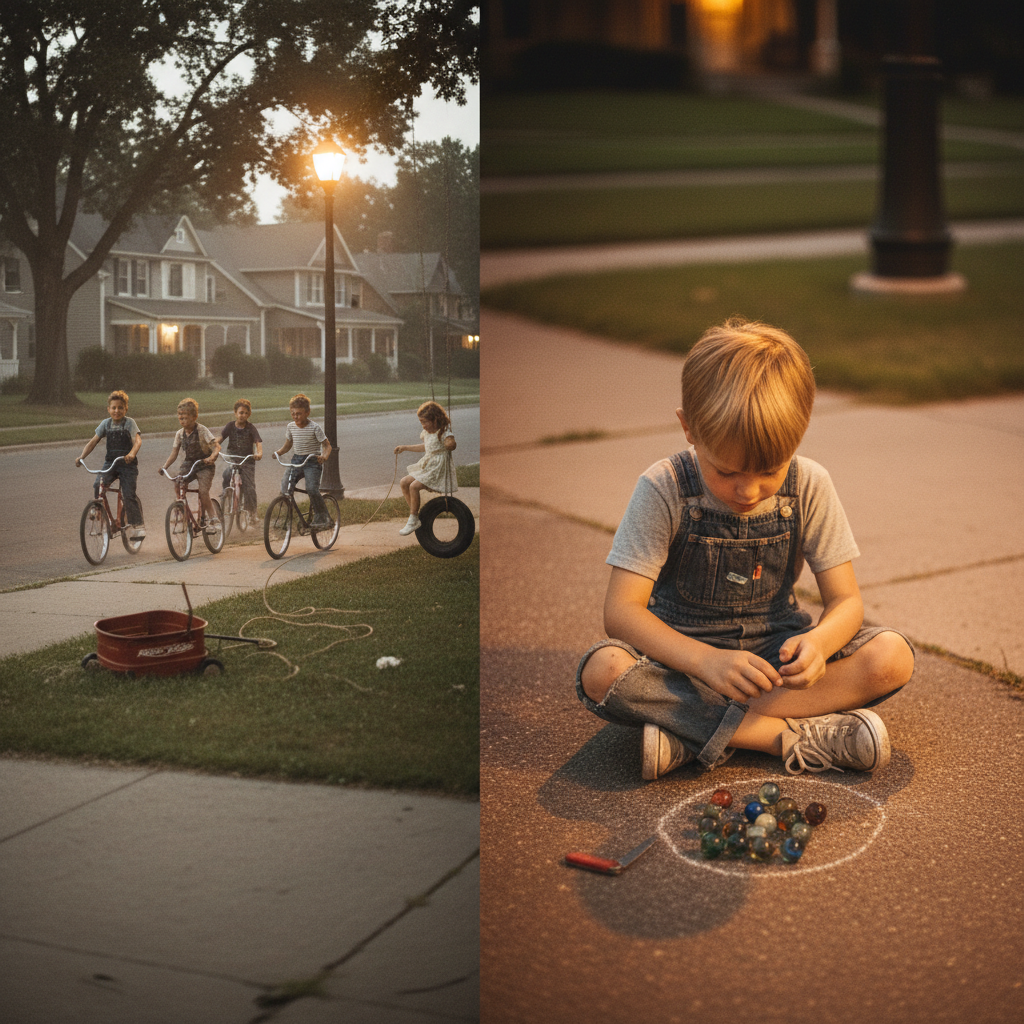 Illustration created for WistMem; not an archival photograph.
What did the streetlight actually signal?
The first light often appeared while the players were still bargaining over whether a ball had landed fair. Someone would point, someone would insist it was not quite dark, and then a screen door or familiar voice settled the question. In one family the lamp meant go home immediately; in another it meant finish the inning and start walking. Ask which corner held the light and who gave the rule. The answer turns a stock phrase into a real route home. The light did not make the rule; the people at home did.
For one sound children made while travelling between games, read The Bicycle with Playing Cards in the Spokes.
What does it bring back for you?
Ask someone who remembers, or begin with your own version. A few words can be enough.
Where did you like to spend an afternoon when you were young?
Then ask: What could keep you there longer than you planned?
Find more conversation starters Choose what feels comfortable. Ask before recording or sharing someone’s words.Relive the Memory
Find a little of the story.
Something here bring back a memory? Take a look at what you can find today.
Searching for: vintage retro playing outside until
Vintage & collectible finds
Look for older objects and collectibles connected to this memory.
Search eBay (opens in a new tab)Related finds on Amazon
Explore items related to the same topic, from familiar styles to things made today.
Search Amazon (opens in a new tab)These links open search results. Items, prices, and availability vary.
Affiliate links. We may earn a commission at no extra cost to you.
As an Amazon Associate I earn from qualifying purchases. As an eBay Partner, WistMem may earn from qualifying purchases.
Does this bring back memories?
Share this story with someone who would remember.